Governance methods and techniques to intensify control and security policies against citizens' fundamental freedoms

What are the methods and techniques of the Islamic Republic's government in order to deprive citizens of their freedoms? How do the authorities of the Islamic Republic implement their control and security policies?
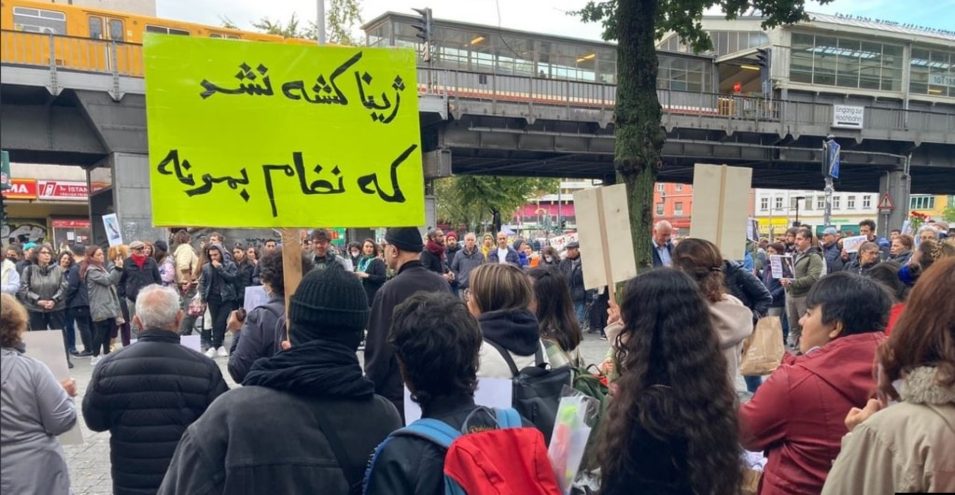
What are the examples of these control policies and security perspectives and the methods of the government's interference in the private lives of citizens? From the launch of the university course "Enjoining the good and forbidding the evil" to the cooperation of security and military institutions with organizations such as the Tehran Municipality under the pretext of monitoring and confronting social issues and problems, these are new examples of the government's approach in this field. The increasing role of security and military institutions in the daily lives of citizens and the authorities' insistence on implementing such plans, regardless of the deprivation of citizens' fundamental rights and freedoms, are clear contradictions with those principles of the Constitution that specifically emphasize citizens' rights and freedom of expression. The government's decisions to intensify its control and security policies, even if they were in the form of legislation, are contrary to Article 9 of the Iranian Constitution, which states that "no authority has the right to deprive legitimate freedoms in the name of preserving the independence and territorial integrity of the country, even by enacting laws and regulations." Although the Iranian government relies on Article 8 of the Constitution to implement these policies against the fundamental freedoms of citizens, the issue is that in implementing this policy, in practice, contrary to this legal principle, no place has been given to the people's right to enjoin what is right and forbid what is wrong by addressing the government. In other words, careful attention to these constitutional principles reflects the contradictory behavior of many elements of the Islamic Republic's government with the law, which ultimately targets the "rule of law." Of course, it should be noted that the government's continued approach based on controlling citizens and securing the social space, in addition to questioning the "rule of law," also narrows the field for popular protests among different segments of society.
Launching the academic program "Enjoining Good and Forbidding Evil"
For many Iranian citizens, the issue of "promoting good and forbidding evil" has a direct link to the concept of "guidance patrol" and, in fact, the issue of "interference" in the private lives of citizens. An issue whose examples have been manifested in the lives of many citizens in various ways during the past years of the Islamic Republic's rule in Iran; perhaps it can be said that the government's continued strict approach to the issue of "hijab" is the best example of the government's continued view of the "daily life" of citizens, which has been revealed throughout all these years under the concept of "promoting good and forbidding evil."
Article 8 of the Constitution of the Islamic Republic of Iran states that “In the Islamic Republic of Iran, calling for goodness, enjoining what is right and forbidding what is wrong is a universal and mutual duty on the part of the people towards each other, the state towards the people and the people towards the state. Its conditions, limits and quality are determined by law.” In fact, the emphasis on the mutual relationship between the state and the people in the issue of “enjoining what is right and forbidding what is wrong” is a place that has been completely ignored in the approach of the government. Of course, this issue is more than anything the result of the continuation of a view that gradually became a basis for essentially depriving the “people” of the benefit of this legal principle. It can be said that the establishment of the “Headquarters for Enjoining What is Right and Forbidding What is Wrong” in the early 1970s is one of the examples of the government’s view of this constitutional principle. The headquarters, which has always been publicly supported by the highest authorities of the system throughout its years of activity, has carried out many projects at heavy costs to expand its activities and influence in educational and training institutions.
In late October of this year, a spokesperson for the Headquarters for Encouraging Good and Forbidding Evil announced the launch of a bachelor's and master's degree program in "Encouraging Good and Forbidding Evil" at Azad University. Although, according to the official, there is no "commitment" to hiring graduates of this program, these individuals can be used "in the field of training professors, trainers, and in the councils for encouraging good and forbidding evil in departments."
The very existence of the "Amrbeh Ma'ruf and Nahi Az Munkar" headquarters, whose members are all government officials and officials, and the illegal and sometimes inhumane behaviors and interactions of the "Guideline Patrol" officers with citizens, has in itself created a great gap between the government's approach and what is in the law regarding "Amrbeh Ma'ruf and Nahi Az Munkar." The efforts of the "Amrbeh Ma'ruf and Nahi Az Munkar" headquarters to launch a university program and benefit from graduates in the aforementioned fields, in fact, make this "gap" wider than before.
Although government officials in Iran insist on insinuating that the issue of "promoting good and forbidding evil" is different from "interference in the private lives" of individuals, the existing reality and, of course, the authorities' own constant emphasis on this "difference" show that the dominant narrative of the issue of "promoting good and forbidding evil" in Iranian society is equivalent to "interference in the private lives" of people.
On the other hand, measures such as the establishment of university courses in this field are also a kind of attempt by the government to legitimize interference in the daily lives of citizens. Putting together many government measures such as widespread filtering of social networks and efforts to more easily control citizens in the virtual world through the completion of the National Internet Project, as well as the fear of intensifying protests from different segments of society and civil activists and efforts to suppress opposing voices, are signs of the government's determination to "secure" the social space even more than before and control and monitor the daily lives of Iranian citizens. A project whose other layers are also seen in the pillars of governance.
The IRGC enters the field of social issues by setting up a "headquarters" in Tehran Municipality
According to many analysts, after the Ebrahim Raisi government came to power, the macro-environment of governance became more "united" than at any other time in the past forty-odd years; a parliament headed by Mohammad Baqer Qalibaf and a judiciary headed by former deputy Ebrahim Raisi, and of course the presence of security and military figures in other important positions in the country, such as the mayor of Tehran. One of the most important effects of this "united" approach is the promotion of a security perspective in various contexts of society and, of course, behaviors based on "taste," which ultimately leads to the destruction of the "rule of law" in society.
Undoubtedly, one of the most important aspects of this trend is the government's attempt to deprive citizens of their freedoms by deploying military and security forces such as the Basij and the IRGC to neighborhoods in various cities in Iran. Plans such as "Basij-led neighborhood patrols" were mainly justified by the need to maintain security and were pursued more seriously after the January 2017 and November 2019 protests.
One of the consequences of continuing and, of course, advertising such schemes is to make them appear “legal.” Where legal responsibility for confronting and resolving social problems or establishing order and discipline has been assigned to specific organs and institutions as specified in the law, insisting on implementing such schemes in the long term takes on a legal appearance and, of course, also weakens the functioning of the law.
Article 9 of the Iranian Constitution states, "In the Islamic Republic of Iran, freedom, independence, unity, and territorial integrity of the country are inseparable from each other, and their preservation is the duty of the state and the people. No individual, group, or authority has the right to cause the slightest harm to the political, cultural, economic, or military independence and territorial integrity of Iran in the name of exercising freedom, and no authority has the right to deprive legitimate freedoms in the name of preserving the country's independence and territorial integrity, even by enacting laws and regulations."
In fact, looking at this constitutional principle can indicate the contradictory behavior of many of the pillars of governance with the law, which ultimately targets the rule of law. A few months after Alireza Zakani took office as mayor of Tehran, news was released about the launch of a “social headquarters” in the metropolis of Tehran. A headquarters that will be run by the “Khatam-ol-Anbia Headquarters of the Revolutionary Guards and with the help of mosques and Friday imams” will pursue the issue of “social sponsorship.” In explaining the work of this headquarters, Alireza Zakani, the mayor of Tehran, had mentioned cooperation in dealing with some social issues and problems, such as the presence of addicts in some parts of Tehran. The increasing role of military and security forces in different layers of social life and the dominance of the military and security narrative in the government’s dealing with social issues, have increased concerns about the “more secure” atmosphere. This is especially true in a situation where a large part of Iranian society is struggling with numerous economic and social problems and has no choice but to protest and strike.
Source: Human Rights Campaign