Proposal to increase punishment for cooperation with hostile countries; Parliament's determination to expand the death penalty

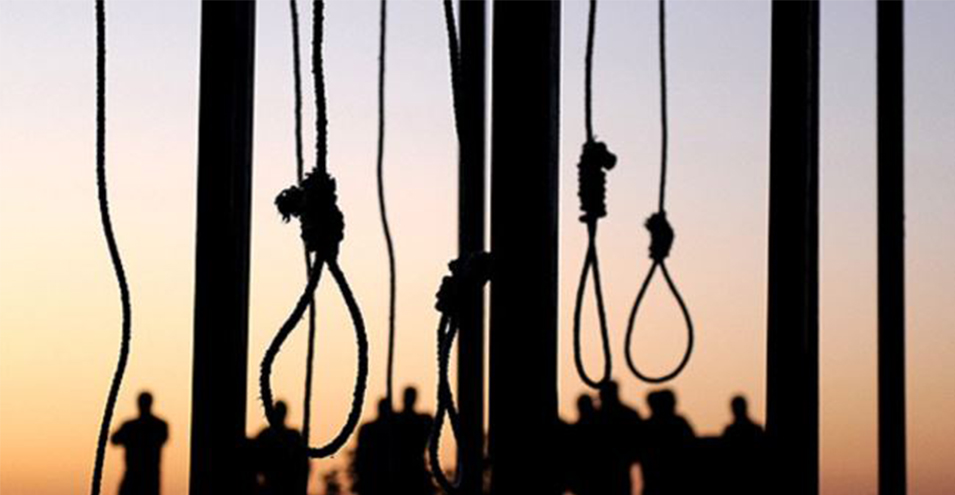
In late June of this year, the general outlines of the plan to “intensify the punishment of those who collaborate with hostile countries’ actions against national security and interests” were approved by the Islamic Consultative Assembly. If finally approved, the plan would consider espionage or cooperation with “hostile” governments, including the United States, against national security or national interests as “corruption on earth” and could be subject to the death penalty. The plan also includes severe punishment for those who film certain crime scenes and send the relevant images to “hostile or foreign” networks.
On the other hand, this plan has paved the way for the security forces to interfere and influence judicial processes and courts more than ever before, and in a sense, has legitimized the usually hidden role and influence of the security forces in the judicial system.
The blatant violation of human rights in the proposal of the Judicial Commission of the Islamic Consultative Assembly is clearly evident, both in expanding the possibility of imposing the death penalty on individuals and in imposing heavy penalties on citizen journalists.
After the coming to power of Ebrahim Raisi's government and the increasing unification of the three branches of government, especially the intellectual affinity between the heads of the executive and legislative branches, there is a fear that the process of implementing such plans will become easier than before.
Why is the final approval of the new parliamentary bill worrying?
The plan to "intensify the punishment of collaborators with actions of hostile countries against national security and interests" is organized into seven articles; in part of the introduction or so-called "justification reasons" of the plan, it is claimed that the regulations of the Iranian legal system in the field of "crimes against security" have serious ambiguities and flaws in various aspects, such as "the introduction and identification of hostile countries" as well as "the weakness of deterrent enforcement guarantees."
Article 1 of this law states: "From the date of enactment of this law, espionage or cooperation with hostile states, including the United States government, contrary to national security or national interests, is considered corruption on earth and is subject to the punishment set forth in Article (286) of the Islamic Penal Code."
Mohammad Moghimi, a lawyer and attorney, pointed out that “Article 286 of the Islamic Penal Code has fundamental religious and legal objections,” and told the Campaign for Human Rights in Iran: “The religious objection to this legal article is that, according to Article 15 of the Islamic Penal Code, “hadd” is a punishment whose cause, type, amount, and quality of execution are determined in the holy Sharia. However, in Article 286 of the aforementioned law, the legislator has interfered with divine limits and expanded the scope of examples of the crime of corruption on earth, which is part of divine limits, which is contrary to Sharia, including the jurisprudential rule of “the ugliness of punishment is beyond description.” Furthermore, some jurists believe that the hadd does not apply during occultation and should only be carried out by the infallible Imam.”
According to Mohammad Moghimi, the legal objection to Article 286 of the Islamic Penal Code is that "the aforementioned article is contrary to the principle of innocence and, consequently, to the principle of limited interpretation of criminal laws and the principle of interpreting criminal laws in favor of the accused."
Referring to the parliament's bill's emphasis on Article 286 of the Islamic Penal Code to deal with the individuals mentioned in the bill, Mohammad Moghimi told the Campaign for Human Rights in Iran: "This new bill seeks to broaden the scope of its application by citing the aforementioned article."
Mohammad Moghimi, looking at the concept of "hostile state" in the aforementioned bill, said: "Hostile states are a state that has entered into war with Iran, and the court must determine this in the judicial process, observing legal principles and standards, and impartially, which is usually not the case in revolutionary courts."
Explaining why the US government was specifically mentioned in this plan and why it was also included in the list of hostile states, Mohammad Moghimi said, "In some cases, the courts, after inquiring from the Ministry of Foreign Affairs, did not recognize the US government as a hostile state, and some defendants were acquitted in this way. However, some courts, without inquiring from the Ministry of Foreign Affairs or disregarding inquiries that had been made in the past, have recognized the US government as a hostile state and issued a conviction."
It seems that the emphasis on the name of the US government is in some way intended to eliminate the issue of identifying the hostile state. The note to Article 1 of the recent draft emphasizes that “cooperation with covert organizations and institutions affiliated with the intelligence services of the United States of America is considered an example of the crime covered by this article.”
Providing a path for security agencies to interfere in the judicial system
The note to Article 1 of the bill, “Intensifying the Punishment of Collaborators with Actions of Hostile Countries Against National Security and Interests,” states that “a committee consisting of the Deputy Minister of Intelligence, the Deputy Director of Intelligence of the Islamic Revolutionary Guard Corps, the Deputy Director of Intelligence of the Islamic Republic of Iran Army, and a representative of the National Security Commission of the Parliament, headed by the Intelligence Officer of the General Staff of the Armed Forces, has been designated as the authority to determine the crimes of individuals, and it has been stipulated that “the decisions of this committee, which are communicated with the signature of the Chief of General Staff of the Armed Forces, are binding on all intelligence agencies and judicial courts and are the basis for issuing court rulings in this regard.”
The emphasis on the direct role of security organizations and institutions in determining the conditions of this note in Article 1 of the draft indicates the legitimacy of the presence of security forces in the country's judicial system; an issue that has had a long history in the Iranian judicial system, but the emphasis on such powers by security institutions in the judicial process is rare or even unprecedented.
Referring to this note, Mohammad Moghimi told the Human Rights Campaign in Iran: "It would have been better if this matter had been left to the courts, and courts can usually use reports from security agencies. But this way, the ground for the security agencies to exert more influence may be prepared."
However, the entry of intelligence and security agencies into the Islamic Republic's judicial system had previously been established by the Islamic Consultative Assembly with unconventional amendments to the Criminal Procedure Code. Clause (b) of Article 29 of the Criminal Procedure Code, which was added to this law in the amendments dated June 14, 2015, recognized "officers of the Ministry of Intelligence, the IRGC Intelligence Organization, and officers of the Basij Resistance Force of the Islamic Revolutionary Guard Corps" as judicial officers, thus providing legal grounds for the country's security sector to infiltrate the judicial system.
Intensifying pressure on civil society activists and citizen journalists in the parliament's plan
Another point of interest in the recent bill by the representatives of the Islamic Consultative Assembly is Article 7 of the bill; this article states that "Any filming or photographing of the scene of crimes leading to the deprivation of life, life imprisonment, or crimes punishable by amputation, or intentional crimes against physical integrity, or accidents and incidents leading to death or bodily injury, or terrorist acts, except in cases stipulated by law, including Article 131 of the Criminal Procedure Code, is considered a crime and the perpetrator is sentenced to a fifth-degree ta'zir prison sentence."
This article also states that "the publication or re-publication of the aforementioned recorded film or images that were illegally produced or legally captured by CCTV cameras or otherwise legally produced shall be subject to the aforementioned punishment. If the aforementioned film or images are sent to hostile or foreign networks, the perpetrator shall be sentenced to the maximum punishment mentioned above."
Paying attention to the details of this article shows that the goal of the drafters is to provide the grounds for confronting citizen journalists who, in recent years, have drawn the world's attention to the human rights situation in Iran by sending various films and images of human rights violations in Iran.
In response to the question of what concerns and crises the aforementioned bill in the parliament essentially causes for human rights activists in Iran, Mohammad Moghimi said: "Personally, I am against the death penalty, and on the other hand, I believe that as much as possible, it should be decriminalized and not criminalized, and instead, the crime should be prevented by adopting preventive measures. However, the cases I mentioned are about crimes and misdemeanors, not about political and ideological crimes, which are referred to in Iran under the title of security crimes. Plans like this are also intended to intensify the punishment of such defendants and put more pressure on civil activists and protesters."
Many human rights activists believe that Ebrahim Raisi's appointment as head of the executive branch and his intellectual affinity with the majority of current members of the Islamic Consultative Assembly, led by Baqir Qalibaf, the Speaker of the Assembly, and the alignment of other decision-making institutions in enacting and implementing such laws will intensify the pressure on civil and political activists.
Source: Iran Human Rights Campaign