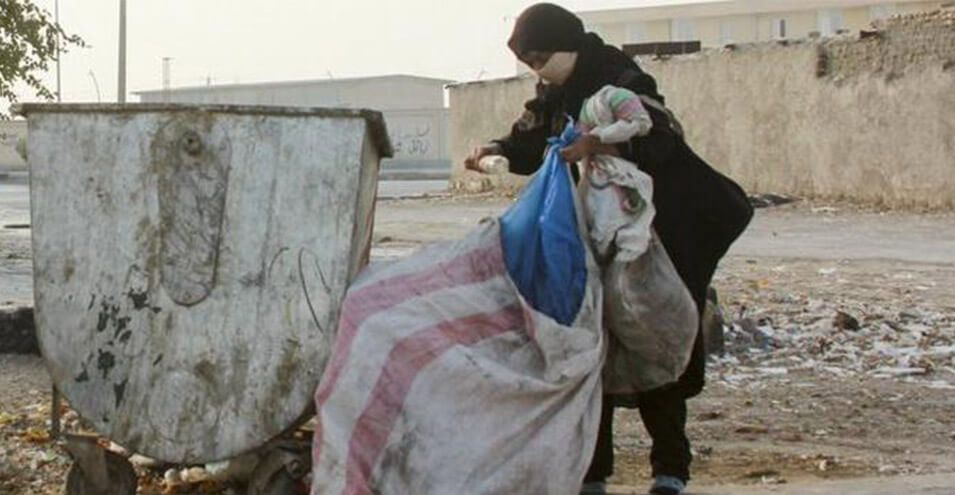
Chamber of Commerce member says not all of Iran's "freed money" is spent on "economic goals"
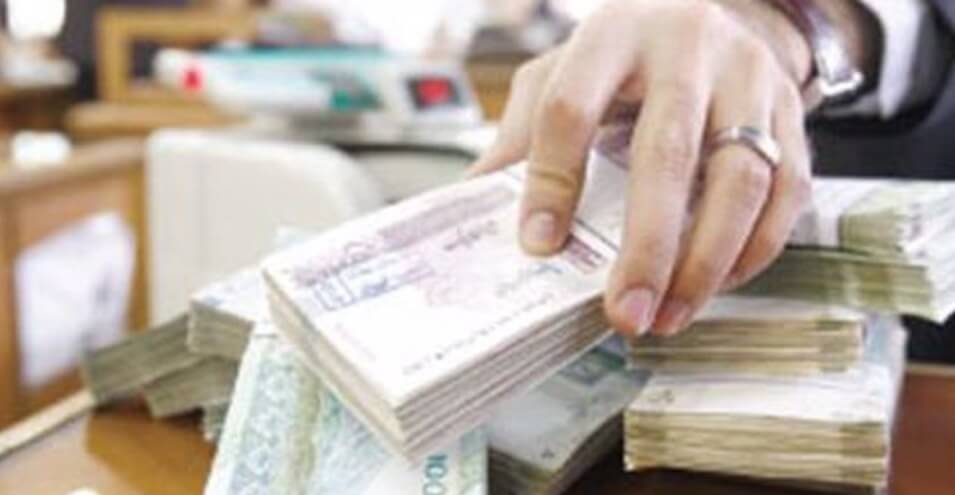
Despite the occasional discussion of "liberating Iran's frozen assets" by Islamic Republic officials or media outlets close to Tehran, it is unclear where these funds are spent.
A board member of the Iran-Iraq Chamber of Commerce told ISNA news agency on Wednesday, regarding the "organization or institution" to which the released funds will be given: "First, we need to see which funds will be released and in what form, and then we need to investigate where these blocked funds belonged."
Citing "the information we have," Hamid Hosseini identified the next release location as "South Korea," and regarding the details of this exchange, he said that "about 23 percent of this money belongs to the National Development Fund and 14 percent to the oil company," and that part of it "belongs to the Ministry of Defense."
In the last case of the release of frozen funds, at the end of Esfand 1402, during the exchange of Nazanin Zaghari and Anousheh Ashouri, Iranian-British dual nationals were held captive. They were eventually released after London paid "390 million pounds" through the mediation of Oman, and the British Foreign Secretary announced that Tehran could only spend this amount on "humanitarian" matters.
However, after the exchange of prisoners and the receipt of the payment from the Islamic Republic, Tehran denied the connection between the two events, and Saeed Khatibzadeh, spokesman for the Iranian Ministry of Foreign Affairs, stated: "There is no connection between the repayment of the debt and the release of the aforementioned prisoners."
After government officials in the Islamic Republic claimed in recent months, as prices rapidly rose, that they were selling "high levels of oil under sanctions" and that news of receiving money from Britain was also published, many Iranian social media users and political figures questioned the impact of these newly announced assets on the daily lives of society.
On the other hand, this member of the board of directors of the Iran-Iraq Chamber of Commerce stated regarding the use of these funds that not all money that is released will necessarily be "directly" provided to the "government" and will not enter the "treasury."
Hamid Hosseini, announcing that it is not always the case that the released funds are spent on the "economic goals of the executive team" of the Islamic Republic government, said that each of the entrusted institutions, such as the National Development Fund, the oil company, or military institutions, "has its own structure and conditions" and "planning" should be done based on that.
In November 2017, the "Khabar Online" website quoted Mehrdad Emadi, an economic advisor to the European Union, as saying that "Iran had deposits of more than half a billion dollars in 21 countries by 2019," and during the administration of Mahmoud Ahmadinejad, "more than 31 billion dollars" were transferred to "Moscow" and received "roubles" in return. This is in addition to the 30 billion dollars in "various accounts" in China.
In December 2017, the "Ansaf News" website, based on "statements by official officials" of the Islamic Republic, wrote that in 2021, Iran had "eight billion dollars in Iraq, three billion dollars in Japan, seven billion dollars in South Korea, and, with a slightly different perspective, 20 billion in China" in frozen assets.
A board member of the Iran-Iraq Chamber of Commerce added regarding the possible money released from South Korea: "Of course, part of these resources are for the government and it will be possible to use them in some parts of the economy, but we cannot look at all these resources the same way."
Hamid Hosseini also predicted that if the JCPOA is "revived" and sanctions are "removed," Iran's daily income will increase "by up to $200 million" and "an opening will be created in securing credit and pursuing economic goals."
In January 2020, the "Economy24" website, citing statistics published by the Asia Times news website, estimated the total volume of Iran's blocked foreign assets at "$100 billion" and wrote: "With our country's population of 83 million, each Iranian will receive more than 30 million tomans."
Source: Voice of America