Ali Khamenei: The fall of the Assad regime was a joint plan between the US and Israel
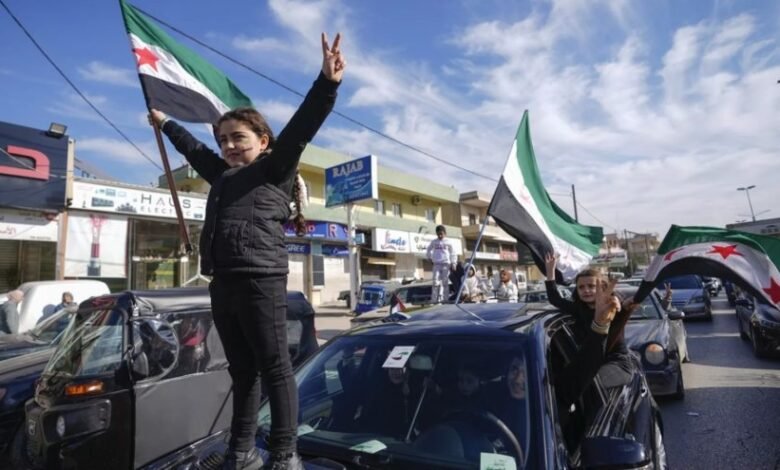
In response to the fall of the Bashar al-Assad regime, Ali Khamenei stated that this was a joint plan between the United States and Israel.
The rebel offensive, which began in the northwestern province of Idlib, captured Damascus, the seat of power for Bashar al-Assad, within a week. This development ended the rule of the Assad family. Bashar's government adopted a repressive structure after coming to power.
Although there were initially hopes for reforms, not only did those hopes not come to fruition, but instead of reforms, he used his power to severely suppress protesters, and as a result, the peaceful protests of 2011 led to a civil war that left more than half a million dead and millions displaced.
In response to the fall of the Bashar al-Assad regime in Syria, Ali Khamenei announced that the fall of the regime was a joint plan of the United States and Israel, and without mentioning the name of a specific country, he announced that a neighboring country in Syria also played a clear role in this incident.
On Wednesday, December 11, he added regarding the cooperation of neighboring Syria: "Everyone knows this, but the main agents, conspirators, and planners of the collapse of the Assad regime are Israel and the United States. It seems that Turkey has been one of the most important supporters of the armed Syrian rebels after the decline of Iran's and Russia's influence in the Syrian political scene."
Ali Khamenei's statements come at a time when Iran, in addition to sending its own military forces extensively, has also played an important role in the Syrian civil war for Bashar al-Assad in the form of the two "Fatemiyoun" and "Zainbiyoun" divisions, in exchange for financial aid and Iranian residency cards.
In his speech today, without mentioning the defeat of his proxy groups over the past year, he announced: "I tell you that by God's grace and power, the scope of resistance will encompass the entire region more than before. This is the resistance front. The more pressure you put on it, the stronger it becomes. The more crimes you commit, the more motivated it becomes. The more you fight them, the wider it becomes."
Given that Syria was considered the main route of communication between Iran and the Lebanese Hezbollah group, after Israel's strikes on its agents and the important role of this group and its military equipment in exerting Iranian influence in the region, Ali Khamenei claimed that there is no doubt that the occupied areas of Syria will be liberated by the zealous Syrian youth.
At the end of his speech, in response to widespread criticism of the Islamic Republic for refusing to provide military support to Bashar al-Assad, he said: "We were ready even in these difficult circumstances. They came to me and said that we had prepared all the facilities that are needed for the Syrians today and that we were ready to go. The skies were closed, the earth was closed, the Zionist regime and the United States also closed the skies over Syria. They also closed the land routes and it was not possible. This is how things are."
He also pointed to the lack of motivation among the Syrian army and added: "If the motivations had remained the same inside that country and they could have had a say in the matter, the enemy would not have been able to close their skies, they would not have been able to close their land routes. They could have been helped."