Judiciary reports "organized exploitation" of children by "municipal contractors"
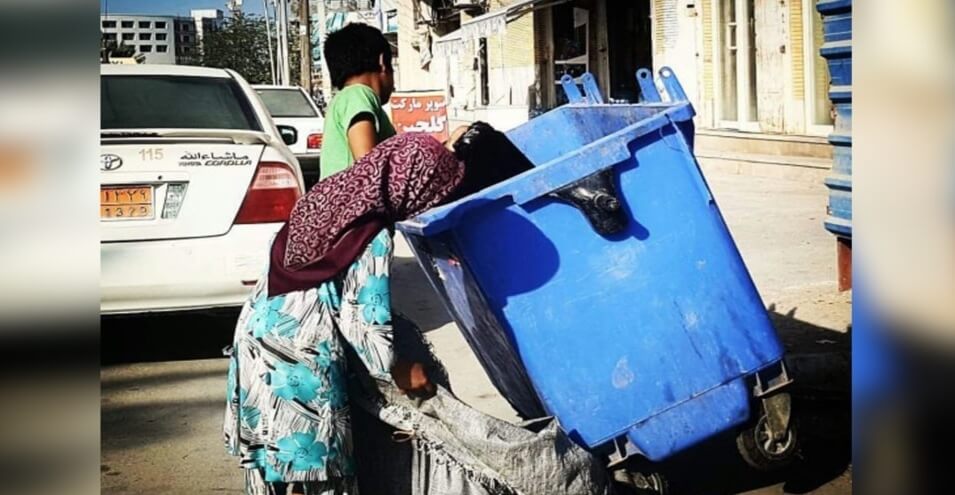
An Iranian judiciary official says "organized exploitation" of children is taking place "in municipal contractors' waste recycling workshops."
Mohammad Fathi, Director General of the Judiciary's Office of Women and Family Affairs and Cultural and Social Prevention, said, "Only" organized child exploitation groups, as well as waste recycling workshops owned by municipal contractors or independent workshops, employ children for long hours in completely harmful, non-standard, and low-wage conditions.
This judicial official did not comment on how these groups would be legally dealt with.
Earlier, Mehdi Iqrarian, a member of the Tehran City Council, in a note regarding garbage collection in the capital, called on the municipality to end any type of employment of children and adolescents in this sector and to monitor the performance of contractors in this regard. A note that has been repeated many times over the past years, and no fundamental action has been taken to regulate child labor.
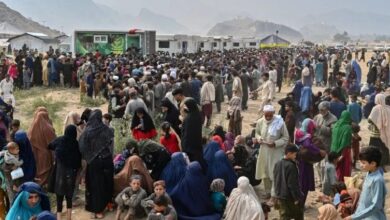
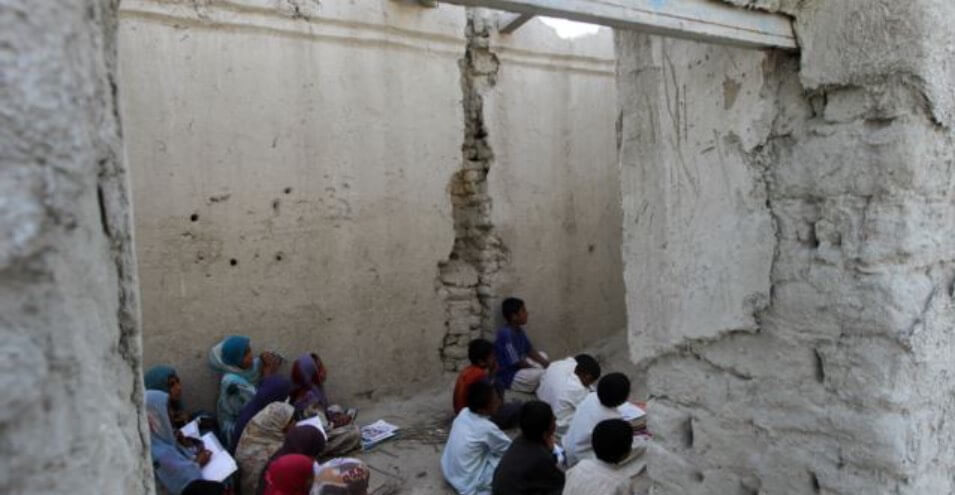
The shrinking of the population due to poor economic conditions, cultural poverty, and lack of facilities in small towns has led to forced migration, one of the results of which is an increase in the number of child laborers. According to reports, these children, who are in the age group of 10 to 17, are left on the streets for long periods of time, begging, or being assigned to gangs and mafias due to poverty, economic-cultural problems, or being assigned to waste sorting workshops or other workshops.
In Iran, according to Article 79 of the Labor Code, it is prohibited to employ children under the age of 15. According to this law, if an employer employs a child under the age of 15, he or she will be considered a violator and will be fined for the first time, fined and imprisoned for the second time, and in addition to these, the factory or workshop will be sealed and the violator's work permit will be revoked for the third time.
According to research, about 80 percent of child laborers suffer from stunting, weight loss, and oral and dental diseases. Many of these children also suffer from eye diseases and respiratory and heart diseases. Some statistics say that 82 percent of child laborers suffer from skin diseases and 60 percent suffer from digestive system diseases.
Amanollah Qaraei Moghadam, a sociologist, says that since a few years ago, due to participation in joint meetings between the municipality and the police, there has been an alarm about the increase in the number of child laborers, however, the practical measures taken in this regard have not been very effective.
Although many governmental and non-governmental organizations, including welfare and municipalities, are working to organize and eliminate child labor, perhaps the most familiar name is the "Imam Ali Society." A non-governmental organization that had been operating for more than two decades with the aim of "reducing social problems and providing relief to the needy, especially children and women," was recently convicted "on charges such as insulting the leader and founder of the Islamic Republic" and "acting against national security" and was arrested by the IRGC's Sarallah headquarters, and the founders of this organization were eventually dissolved by order of the Ministry of Interior of the second government of Hassan Rouhani.
There are no accurate statistics on the number of child laborers in Iran. The last census was conducted in 2016, when it was announced that there were about 721,000 child laborers in Iran, and the three provinces of Sistan and Baluchestan, Azerbaijan, and Kurdistan are more involved in this social phenomenon than other provinces. According to social experts, these statistics are beyond what has been announced.