Tremors in Tehran's pillars of power, with cracks in the army and the collapse of the Islamic Republic's foreign arm
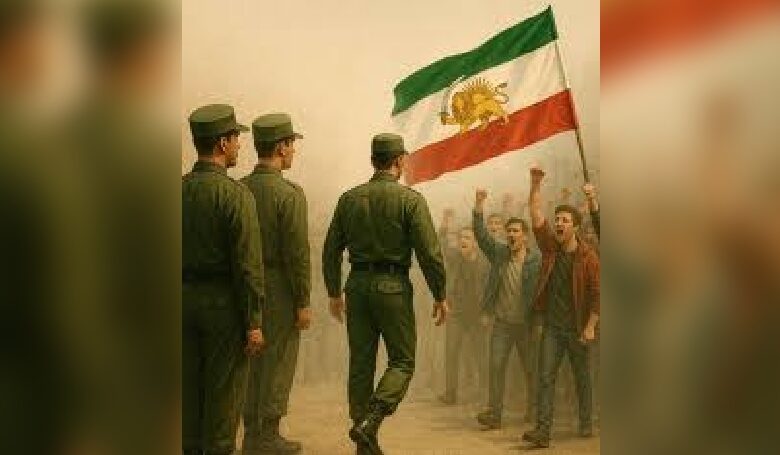
The increasing wave of disobedience in the army, the joining of thousands of people in the National Cooperation Campaign, and the weakening of the Islamic Republic's foreign arm are clear signs of a tremor in the pillars of power in Tehran.
In days when signs of turmoil have emerged from within Iran's military establishment, sources say the country is on the brink of a new crisis. Published reports indicate a massive wave of disobedience among the armed forces, a trend that, according to witnesses, is spreading rapidly and has exposed the internal divisions in the system more than ever.
According to published data, more than 50,000 members of the military and security forces have joined the so-called “National Cooperation” campaign, a move that has caused a wave of concern and confusion within the government. Some of the protesting officers have declared that their goal is to “restore Iran’s glory,” even if the price is imprisonment or repression.
According to observers, these developments are occurring at a time when unprecedented panic has developed within security levels close to the leadership and pressure to control the situation has reached its peak.
At the same time, the Islamic Republic's foreign arm has also been shaken. With Tehran's influence in Gaza waning and the decline of Iranian-backed groups, especially Hamas, analysts are talking about "cutting off one of the regime's most important foreign arms." Internationally, the Washington-Tel Aviv alliance seems more cohesive than ever.
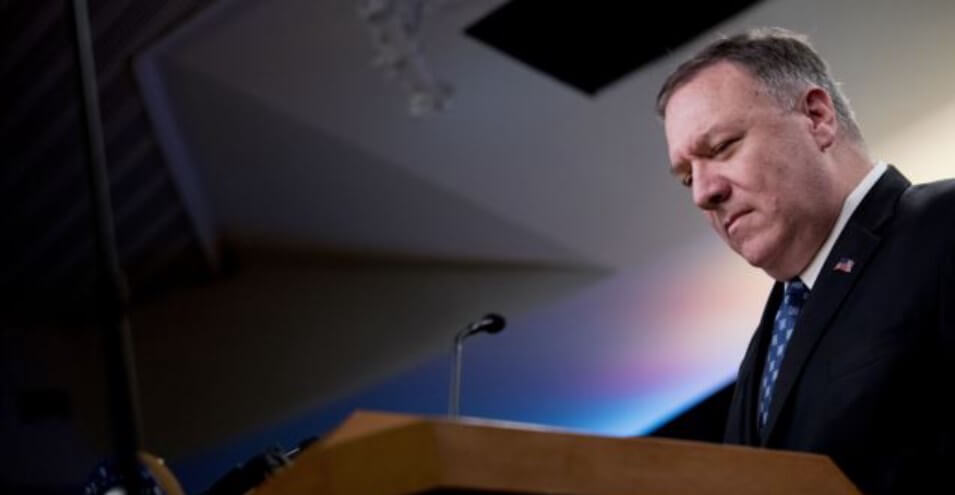
In this regard, the Israeli prime minister’s recent speech at the United Nations General Assembly was a defining moment. In front of world leaders, he described Iran’s nuclear program as a “global threat” and called for the full return of sanctions. Analysts say the message of the speech was designed for three audiences: the international community, Israeli public opinion, and the commanders of the Islamic Republic.
The combination of these two scenes (the collapse of Iran's military and the international consensus against Tehran) paints a bleak and inevitable outlook for the Islamic Republic. Observers believe that the government is faced not with an option, but with an inevitable path to collapse.
Published reports and recent developments show that the Islamic Republic is facing a multi-layered crisis; a crisis that is no longer simply political or economic, but has reached a stage of structural erosion in the loyalty of the armed forces and security apparatus.
In centralized systems of power, political stability quickly collapses when cohesion within the military is lost. If reports of tens of thousands of military personnel joining the protest movements are true, Iran is effectively on the brink of a command and control crisis.
On the other hand, the decline in regional influence and the successive defeats of the Islamic Republic’s proxy arms, especially in Gaza, Lebanon, and Iraq, mean the collapse of Tehran’s strategic depth doctrine. As a result, the Islamic Republic is caught in an unprecedented situation, facing internal disobedience and increasing isolation and direct military threat from the outside.
In the international arena, there are signs of the formation of a new axis against Tehran, an axis whose goal is not merely to contain, but to fundamentally change the behavior of the Iranian regime.
Experts believe that what is happening today is not a temporary crisis, but a turning point in Iran's political transformation. In this situation, the government's path forward is limited to two options: fundamental reform or gradual collapse. Also, signs from within and without indicate that the time for choice is running out.