Warning about people's food security following ban on rice imports to Iran
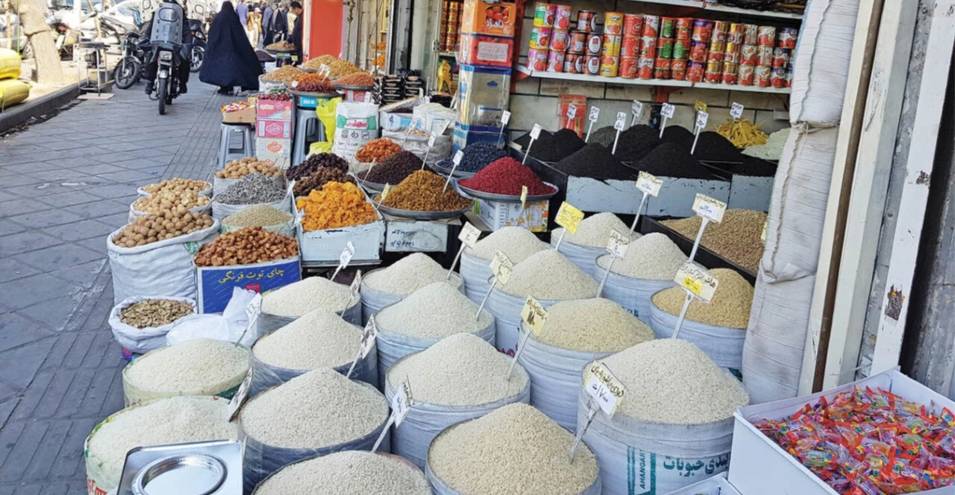
Both the head of the Iranian Rice Importers Association and the secretary of the country's Rice Suppliers Commission called the Ministry of Agricultural Jihad's decision to completely ban rice imports to Iran "sudden and unprofessional" on Tuesday, January 3, and said that this decision endangers people's food security.
Akhavan Akbari, head of the Rice Importers Association, said in an interview with ISNA news agency that this "sudden and unannounced" decision by the Ministry of Agricultural Jihad will harm the country's economy, the tables of vulnerable groups, and the country's food security; it will face a major shock to the market; it will lead to an increase in rice prices; it will damage Iran's reputation among rice sellers; and it will eliminate "special channels" for circumventing sanctions.
He continued that "the table of at least the first six tenths of the country, equivalent to half of rice consumers, depends on imported rice, which has a price far lower than domestic production," and that this decision will lead to "the emptying of the consumption basket of the poor and the shrinking of their table."
According to Akhavan Akbari, the reason for this decision by the Ministry of Agricultural Jihad in the Raisi administration was the imbalance in Iran's trade balance with rice-exporting countries, namely India and Pakistan.
On the same day, Masih Keshavarz, secretary of the country's Rice Suppliers Commission, also spoke to Hamshahri Online about the reason for the ban on foreign rice imports to Iran: "About a month ago, the trade balance between Iran and India collapsed, and apparently the items that had been sent from Iran to India were not accepted by India, and in return, Iran decided to ban rice imports from India."
The secretary of the Rice Importers Association criticized the statistics of Jihad Keshavarzi regarding rice imports, saying: "Apart from the disruption of the trade balance between Iran and India, another factor that played a role in the ban on rice imports from India was the provision of unrealistic information on rice imports by Jihad Keshavarzi. It is not at all clear where Jihad Keshavarzi gets these statistics from because their statistics are unrealistic."
Masih Keshavarz continued: "The private sector has not imported more than about one million tons of rice to date, while Jihad Keshavarz announced the total import figure at one million and 400 thousand tons and above, and in their opinion, enough rice has been imported this year. That is why they have stopped registering orders, but we have warned that at least about 300 thousand tons of rice must be imported by the end of the year to ensure market regulation this year and that year."
The Secretary of the Rice Importers Association stated that "unfortunately, the government does not listen to us at the right time," adding: "If the registration of orders is stopped, its adverse effects may be like last year, meaning we will face both a shortage and high prices of foreign rice, the target market of which is six-tenths of the country's vulnerable groups, and it will also fuel the price increase of Iranian rice on Eid, which are among the serious harms that we have predicted."
Mr. Keshavarz announced that the price of Indian rice has increased by 10% due to this new decision, while the increase in the inflation rate in Iran, which has always been reported to be around 40% for at least the past year, has placed great economic pressure on citizens.
According to reports, as economic pressures increase in Iran, people's tendency to exchange personal and household items for food, as well as to buy fruit "seeds," has increased.
Source: Radio Farda