The weight of inequality and injustice in Iran's health and insurance system
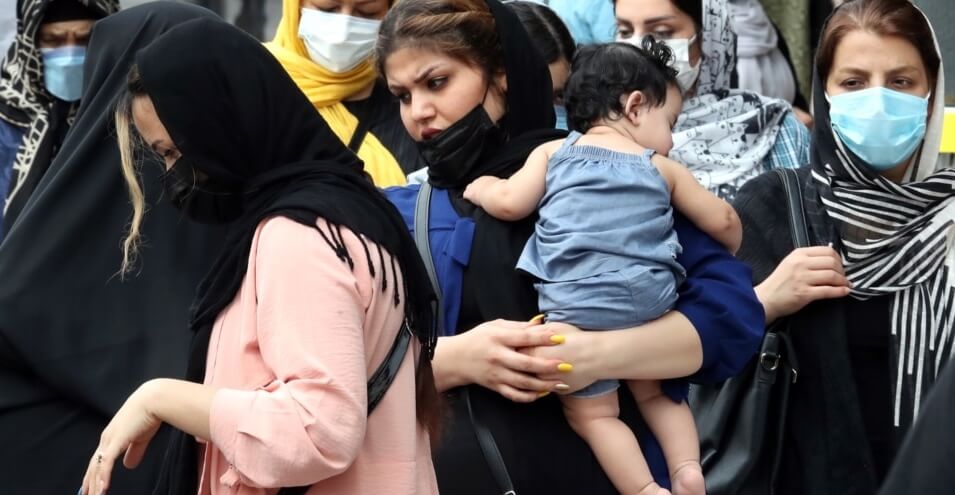
There are variables such as smoking, excessive alcohol consumption, unhealthy diet, a sedentary lifestyle and being overweight that can undermine our health – factors that can often be countered by our awareness of their impact. But there are also many factors that people can do little to counteract their impact on their health and quality of life.
One of these is air pollution or the pollution of the water we are forced to use; in fact, factors that affect our lives in connection with our environment and factors that have led this year's World Health Day to be named: "Our Health, the Health of the Planet."
There is also an indicator that indicates another dangerous and influential factor that has an inevitable impact on people's health and quality of life: our socioeconomic status. Poverty can also have a profound impact on people's health and quality of life. Not having access to adequate economic and social conditions can make us sick and even cause us to die sooner than expected.
The effects of these two factors on our health can be observed at all stages of life. The existence of systematic and potentially unequal differences allocated to citizens based on economic, social and geographical groups in access to medical and health services can be described by the term health inequity.
In other words, if things like place of residence, education, race, occupation, and gender determine your economic status and your level of access to medical services and medicine, even safe water and food, mental well-being, and receipt of assistance and treatment and prevention services at any level (general and specialized), then your society suffers from health inequity.
Poverty is a factor in increasing health injustice.
Poverty is actually an important factor that makes the issue of inequality and the increase in various variables affecting justice in access to public health and medical services an undeniable topic in examining the causes of death and the decline in the quality of life. On the other hand, if we consider diplomacy, economics, and politics as the three pillars of a country's decision-making in the field of health, discrimination, economic gaps, and discriminatory policies can affect the lifespan of individuals.
Given the existence of about forty million people below the poverty line, increasing unemployment and marginalization, and the allocation of about 80 percent of the household budget of half the population to food alone, it can be predicted that a large percentage of the population will not be able to afford care and medical expenses.
“Children born into poor families are more likely to suffer from disease. Mothers who are not properly nourished during pregnancy are more likely to give birth to children with lower intelligence and weaker bodies, who are more susceptible to disease. Many of these children, if they survive to the age of five, may suffer from weakness and hunger, do not perform well physically and mentally in school, and drop out of school early.”*
Maternal mortality during pregnancy, childbirth, and breastfeeding is also significantly higher in poor and marginalized areas that lack access to health care and treatment services than in cities.
This number also increases in provinces deprived of welfare facilities and plagued by discrimination; provinces such as Sistan and Baluchestan, Hormozgan, and South Khorasan.
The link between climate injustice and health injustice
The lack of effective programs to control the effects of environmental degradation on individual health can also be a factor in increasing health inequities.
Health is a multi-dimensional and multi-variable process. Equity in health services and treatment has also been raised as a key issue in the third to sixth development plans. If we know that the World Health Organization considers health as the complete physical, mental and social well-being of an individual, we will confirm that in this way, the health of individuals is directly linked to the variables that make up their daily living environment, from the air they breathe to the water they consume and the energy that is made available to them in a sustainable manner.
The increase in days with poor air quality, the spread of water stress in cities and villages, forced migrations linked to climate change that often lead to marginalization, the small role of governments in managing and eliminating waste, and the lack of supervision over the production and storage process of agricultural products are just a few of the environmental factors that affect people's health and are decided in the political and economic spheres of a country.
In this section, the provinces that have the most climatic problems have the least opportunity to adapt to the newly imposed situation on their geography. There are not even clear statistics about this series of silent deaths.
Insurance and health contribution in the 1401 budget
The Sixth Development Plan states: “The government is obligated to implement measures based on general health policies by the end of the first year of the program’s implementation in order to implement general health policies, provide sustainable financial resources for the health sector, develop the quantity and quality of health insurance, and manage health resources through the insurance system, centered on the Ministry of Health, Treatment and Medical Education.” (This article mentions at least 10 government responsibilities in this regard.)
Empowerment and self-reliance of disadvantaged groups and groups in programs related to welfare and social security, and increasing and improving the quality and safety of comprehensive and integrated health services and care in the form of a health and treatment network in accordance with the leveling and referral system are just examples of these programs and goals.
If we consider health as a public good, providing all services and care in a timely, appropriate and sufficient manner to all citizens can be considered a form of equitable distribution of health services. Some see this justice in the absence of systematic differences in social and economic institutions and balanced and homogeneous access to medical and health services.
The Deputy Minister of Health for Management and Resources Development has announced that a significant portion of the Ministry of Health budget will be spent on paying the salaries of the ministry’s employees. If (according to him) even up to 80 percent of the ministry’s budget is to be spent on current affairs and payments, what will happen to the health and medical services projects that have been postponed for years? Organizational tasks such as providing a family doctor in proportion to the population of citizens, building appropriate infrastructure for accessing electronic health records, setting tariffs for the services of health and medical staff, providing the necessary facilities for rural health and medical homes, and other matters.
The head of the Iranian Health Economics Association also believes that, given the rampant inflation in Iran, "the suboptimal and inflationary budget in the health and treatment sector will have additional negative effects, and the price of medicine and medical items will increase by 400 to 700 times with the elimination of the preferential currency. This price increase will lead to an increase in deductibles and out-of-pocket payments for the insured, and will bring backbreaking treatment costs for the uninsured."
The Iranian Health Insurance Organization had announced that the budget required by this organization was more than 20 trillion tomans different from what was approved in the 1401 budget. The Minister of Cooperatives, Labor, and Social Welfare also recently announced: “We are facing a severe budget deficit in social security. We ended last year with an average monthly deficit of 4 trillion tomans, which amounts to 48 trillion tomans annually.”
Following the Fourth Development Plan, the Social Insurance Fund for Farmers, Villagers, and Nomads covers only 1.4 million people after 11 years of establishment. According to 2016 statistics, at least 26 million of Iran's population are farmers and nomads.
According to a report by the World Health Organization, the percentage of out-of-pocket expenses in Iran in 2014 was 5.52 percent, in 2015 it was 1.25 percent, in 2016 and 2017 it was 8.47 percent, and in 2018 it reached 35 percent.*
For comparison, Qatar has an average out-of-pocket cost of 7% over the past five years, and households facing exorbitant medical costs are around 0.6%. These figures demonstrate the efficiency and effectiveness of insurance in providing equitable access to medical services.
With the lack of uniformity in the types of insurance, the lack of clarity on where it will be funded this year, and the elimination of the drug exchange rate, it is possible to predict how the gap in access and distribution of medical expenses will become deeper than in previous years.
Per capita doctor and hospital bed
Another important criterion and factor of justice in health is equal access to general and specialized medical services, as well as access to hospital beds. The importance of these factors has become even more clear after the COVID-19 pandemic and the increasing impact of disasters such as floods and droughts. From air pollution to diseases transmitted through water and soil contamination in cities and villages that do not have access to adequate medical facilities, it can even lead to humanitarian disasters.
Examples experienced in the province and Sistan and Baluchestan in the death and disability of water-drinking children, or the difficulty of transporting pregnant rural and nomadic women to health centers, or the lack of access for urban citizens like Ahvaz, with its high levels of pollution and frequent fine dust, to specialized hospitals for respiratory diseases, are clear examples of this injustice involving health and treatment services.
The number of general practitioners per capita in Iran is also lower than in many of our neighboring countries: 11.7 physicians per 10,000 people. In Sistan and Baluchestan province, there are fewer than seven physicians per 10,000 people. This figure is reduced by almost half in access to specialists. There are about six specialists per 10,000 people.
The hospital bed index is also one of the most important factors of justice in access to health and medical services in the world. Iran is among the first countries in the world in having the lowest number of hospital beds in relation to the population. According to the spokesperson for the Ministry of Health in 2018, this figure was announced as 1.7 beds per thousand people, which is also very unfairly distributed (Figure 2). The two provinces where the number of hospital beds per capita is less than one are Sistan and Baluchestan and Alborz Province.
Health inequality in Iran has social, economic, policy and governance factors. The level of education of individuals, their place of residence, the possibility of self-education and security in employment are important and effective social factors in this regard. However, the economic ability of families also determines what part of the household income can be spent on medical and health care and preventive care, and in addition, it is very effective in the lifestyle of individuals.
But for all cases, it is the set of political and managerial governance that is the guarantee. For this reason, equity in health and equal access to treatment and care services are considered one of the most important criteria for the welfare and development of a country.
* Source: Report on Poverty and Inequality in the Field of Health, prepared by the Ministry of Cooperatives, Labor and Social Welfare, Deputy for Social Welfare, Office of Social Welfare Studies, February 2020
Source: Radio Farda