Negligence, ignored warnings, and disaster at Shajra Tayyiba School
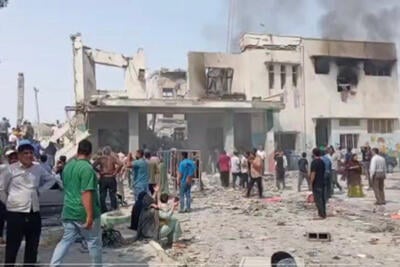
The hidden war and negligence led to the disaster at the Shajarah Tayyiba School, even though warnings had been issued about this war and its dangers in previous weeks.
On the morning of this Saturday, February 28, a deadly attack targeted the Shajre Tayyiba Girls' Elementary School in Minab County, one of the most brutal scenes of the recent war. According to official internal reports, the number of victims was rising in the early hours and the rubble-clearing operation was ongoing.
Explaining the scale of the incident, Mohammad Radmehr, the special commander of Minab city, said: "The number of victims of the Israeli attack on the girls' elementary school in this city is increasing and has so far reached 63 dead and 92 injured." He also added: "A number of other students are under the rubble and the removal of rubble is still ongoing."
Previously, the education spokesman had announced the death toll at 53; a figure that increased hours later, indicating that the depth of the disaster was greater than initial estimates.
What makes this tragedy even more poignant is the precedent set in recent weeks by warnings of the possibility of war and the targeting of urban infrastructure. Some foreign governments have publicly urged their citizens in Iran to avoid public gatherings and crowded places, including schools, and to take personal safety measures seriously in the event of an escalation of tensions.
In addition, some Western officials had also claimed that the Islamic Republic might design scenarios in which attacks or damage were inflicted on ordinary people but the responsibility was attributed to the United States or Israel. These claims were denied by Iranian officials, but were widely echoed in the media and diplomatic space.
In the same context, warnings were also issued that in the event of attacks, citizens should refrain from visiting certain declared shelters and stay in their homes. Even Donald Trump, in a public message, asked citizens not to leave their homes until the end of the military operation and especially to stay away from windows and exterior walls, as there is a possibility of scattered explosions.
Regardless of whether these warnings were true or exaggerated, the reality is that the pre-war atmosphere was full of danger signs. However, neither the country’s formal education structures were closed nor did families decide to keep their children at home on a large scale. The result of this neglect can be seen today in the rubble of a school in Minab.
Regardless of which side initiated the attack and what military objectives it pursued, one principle is clear: “Children must not be victims of political and military games.” However, in a country where school environments have been characterized for years by inspections, ideological pressures, and the suppression of student protests, an even more fundamental issue is now at stake: the right to life.
Critics say that if governments had considered protecting the lives of their citizens their primary duty, they would have quickly closed educational institutions and implemented emergency measures in the face of the possibility of a widespread attack. On the other hand, families are also responsible for the lives of their children. Distrust of external warnings or habituation to living in crisis cannot justify ignoring danger signs.
The Shajra Tayyiba school is no longer just a ruined building; it is a symbol of a generation caught in the middle of political and military conflicts. War, whatever its justification, leaves no legitimacy when it reaches the classroom.
The Minab disaster is not just news; it is a test for everyone, for governments, for the powers involved in the war, and even for a society that perhaps saw the danger but did not take it seriously.