The promises of the revolutionary leaders have not been fulfilled after 41 years; independence, freedom, and a republic that do not exist
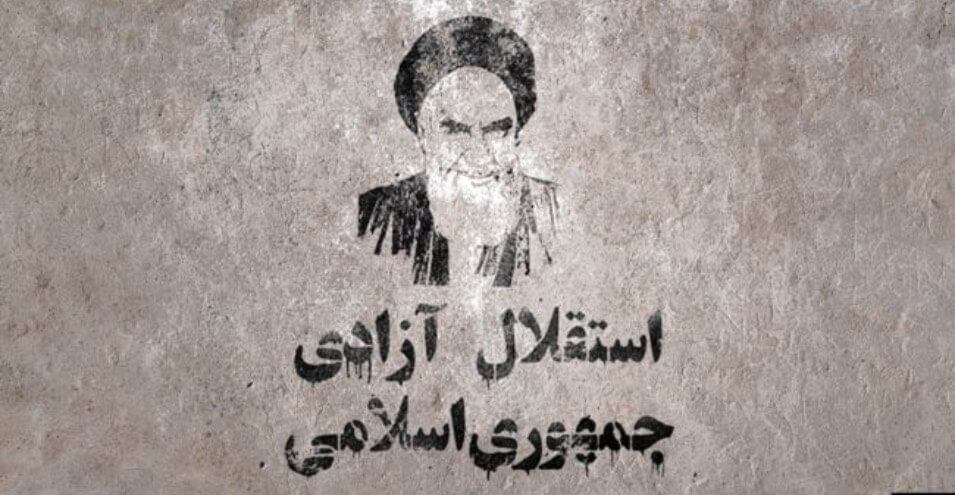
The leaders of the 1979 Islamic Revolution made numerous promises to the people during the victory of the revolution, but after 41 years and a generation, which of the fundamental promises of Ayatollah Khomeini and his followers have been fulfilled?
During the peak days of the revolution and Bahman 1988, the most important slogan of the revolutionaries was "Independence, Freedom, Islamic Republic," and alongside that, promises such as eliminating corruption from the government apparatus and restoring human dignity and economic prosperity to the lives of all segments of the people were made by leaders, including Ayatollah Khomeini.
- Independence
The leaders of the Islamic Republic and Ayatollah Khomeini accused the Iranian monarchy of being dependent on foreigners and taking orders from them. They considered this government to be following Western policies economically and politically and promised to establish a completely independent government after the victory of the revolution. However, after 41 years since the Islamic Revolution, the Islamic Republic government is heavily dependent on two other superpowers, Russia and China, to advance its foreign and even regional policy. Russia, of course, supports the Islamic Republic in the UN Security Council as long as its interests are not jeopardized. In regional policies, it also intervened to save the Bashar al-Assad government, which is strongly supported by Tehran, and sent its air force and military advisors to that country. The Islamic Republic is also silent in the face of Russia's hegemonic policies in Eastern Europe and Central Asia.
China is also considered a supporter of the Islamic Republic, and of course, whenever the Islamic Republic's trade relations with China are cut off, one should expect a financial and economic crisis in Iran; because Iran's major oil and petrochemical customer, even during times of sanctions, sometimes acts as a savior to prevent the Islamic Republic's income from being cut off. In exchange for this support, the leaders of the Islamic Republic, who introduce themselves as supporters of Muslims and the oppressed in the world, have remained silent in the face of the severe repression of China's Uyghur Muslims. In fact, the independence they were talking about did not even come to fruition to the extent of protesting the severe repression of China's Muslims.
- Freedom
The great promise of the revolutionaries of 1979 was freedom. In his interviews, the founder of the Islamic Revolution defended the political and individual freedoms of the people and famously said that communists are also free to express their opinions.
However, as the first months of the Islamic Revolution passed, the circle of people who had the freedom to express their opinions became smaller. Communist and socialist groups were declared illegal and their members were imprisoned, tortured, and executed. Members of national-religious groups and critical clerics were also severely restricted after serving time in prison. Censorship and detention were established in the field of press and cultural activities, and a special department was even established in the Ministry of Guidance to implement them. Many journalists and writers were either sentenced to long prison terms or even lost their lives in actions such as serial murders.
The Islamic Republic, which itself achieved victory through street protests, now does not recognize the freedom of public assembly. For example, the regime’s security forces have killed hundreds of people in recent years by attacking public gatherings, including during the November protests. Trade union gatherings have also been met with the arrest and imprisonment of activists, including labor activists and teachers.
Unprecedented restrictions were also imposed on the freedoms of religious minorities and the freedom of activity of ethnic minorities. A large number of Christian converts, Baha'is, and some Jews were sentenced to death and long prison terms. After four decades, Baha'is face even more severe restrictions, including the lack of the right to a university education and, at times, the lack of the right to do business. Sunni Muslims also face restrictions on the practice of their religious duties, and according to Mawlavi Abdul Hamid, the Imam of the Sunni community in Zahedan, Sunnis are not even allowed to have a prayer room in the Iranian capital.
The US State Department has repeatedly called the Islamic Republic a major violator of the rights of religious and ethnic minorities in its annual report. The US State Department has also protested the violation of women's civil rights in Iran and the imposition of compulsory hijab, and condemned the imprisonment of women who protest against compulsory hijab.
In fact, the Islamic Republic has violated citizens' freedoms not only in the social and political spheres, but also in the areas of individual and civic rights.
- Islamic Republic
The leaders of the Islamic Revolution described the pre-revolutionary monarchy as a dictatorship and tyranny and promised to establish a republic based on popular vote.
However, shortly after the revolution, the circle of people who were considered to be in the circle of power of the rulers themselves gradually became smaller. The Islamic Republic remains in the constitution, but the “absolute sovereignty of the jurist” and the filter of the Guardian Council, whose members were directly and indirectly elected by the Supreme Leader, determine the limits of this republic. Candidates for the Assembly of Experts, the Islamic Consultative Assembly, and the presidency must be approved by the Guardian Council, which in turn disqualifies many critics of the Islamic Republic, even those who were once in the decision-making circle of the regime. Even after approval, in some cases, elections are engineered by the extremely powerful security apparatus, such as the Revolutionary Guard Corps and the leadership’s close associates, and the results are subject to changes.
The disqualification of electoral candidates and the transformation of the elections into a field of competition between insider candidates prompted the US State Department's reaction on the eve of this year's parliamentary elections. US State Department spokesperson Morgan Ortagus wrote in a tweet: "The Guardian Council, whose members are appointed by Khamenei, has disqualified most of the candidates for the Iranian parliamentary elections. It is not without reason that all the remaining candidates are the same shape."
US Secretary of State Mike Pompeo also said in a message on Twitter: "Iran's parliamentary elections are two months away. But the regime is already engaged in fraud by disqualifying thousands of candidates."
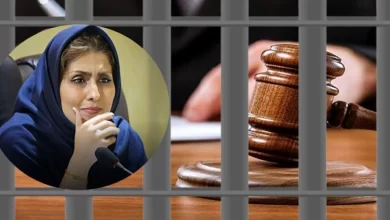
The revolutionary leaders’ promises of justice have not come close to being fulfilled. From the first days of its establishment, the Islamic Republic’s judiciary has sentenced its opponents to death and long prison terms in very short trials without access to a lawyer. The Ministry of Intelligence and the Revolutionary Guard Corps, as judicial officers, have used physical and psychological torture and threats to force the accused to confess and have compiled cases for them. Protests by labor activists such as Sepideh Qolyan and Esmaeil Bakhshi against torture and pressure to confess, and the revelation that innocent people were being accused and forced confessions in the case of those accused of assassinating nuclear scientists, have not stopped these actions.
- Fighting corruption and establishing economic prosperity
In addition to political slogans, the leaders of the Islamic Revolution made numerous revolutionary promises in their speeches, such as housing for all, fair distribution of economic benefits, greater prosperity, and the eradication of corruption under the guardianship and guidance of the clergy. But did the leaders of the Islamic Republic actually bring prosperity and economic equality to the people?
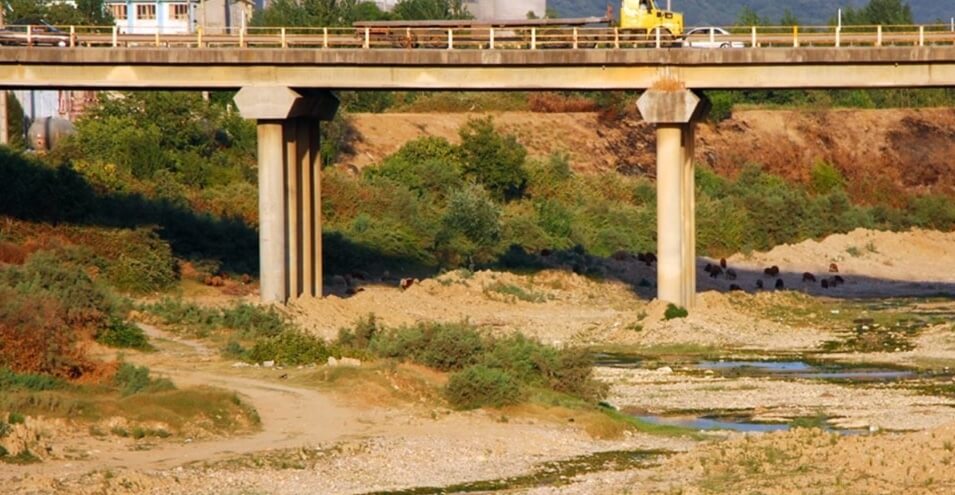
These slogans, of course, changed only a few years after the victory of the revolution, when the revolutionaries realized that they were not even capable of restoring economic prosperity to pre-revolutionary levels. The new rulers called their revolution a revolution of the oppressed, whose goal was to export the revolution, to win the world’s oppressed, and to fight the superpowers. After 41 years, Iran’s economy remains dependent on oil; most factories without government subsidies are either loss-making or have effectively closed down. Economic growth is negative, inflation is consistently above 20 percent, people’s purchasing power, especially for goods such as housing, has declined sharply, and the unemployment rate has exceeded 12 percent. Even the Islamic Republic’s development efforts, including dam and road construction, which were carried out with the help of rising oil prices, have in some cases damaged the environment and ultimately the country’s resources.
Brian Hook, the US special representative for Iran, accused Iran’s leaders of corruption in April of this year, saying that the Islamic Republic’s regime had destroyed the country’s water resources through mismanagement over the past 40 years. He pointed to the indiscriminate construction of dams, often built by companies affiliated with the Revolutionary Guard Corps and government-affiliated entities, and said that this had caused environmental disasters.
In the area of eliminating economic corruption, the leaders of the Islamic Republic not only failed to keep their promises, but gradually, and especially in the past decade, they left behind very serious cases of corruption of people related to them. From astronomical salaries of government officials to corruption of judicial officials, cases of corruption worth several thousand billion tomans that were achieved through connections with officials and bribery are raised in the media from time to time.
Even in the past year, two former heads of the judiciary, both now members of the Guardian Council, have accused each other of financial corruption. A member of parliament also reported that the Guardian Council took bribes to approve candidates.
In the latest report by Transparency International on the Administrative and Economic Corruption Index in 2019, Iran ranked 146th out of 180 countries.
Meanwhile, the Leader of the Islamic Republic, through the "Imam's Command Executive Headquarters" and his office, rules over a "95 billion dollar empire" that is not monitored except by his own office.
US Secretary of State Mike Pompeo had said in several tweets about the Islamic Republic's officials that instead of helping the people, they were involved in corruption.
In summary, the important slogans and promises of the leaders of the revolution 41 years ago not only failed to materialize, but their actions after four decades caused people to take to the streets in November of this year to protest economic and political pressures and demand that the rulers step down from power.
Source: Voice of America