Warning against in-person school activities in Iran: "We have eaten the wood and will eat it again"
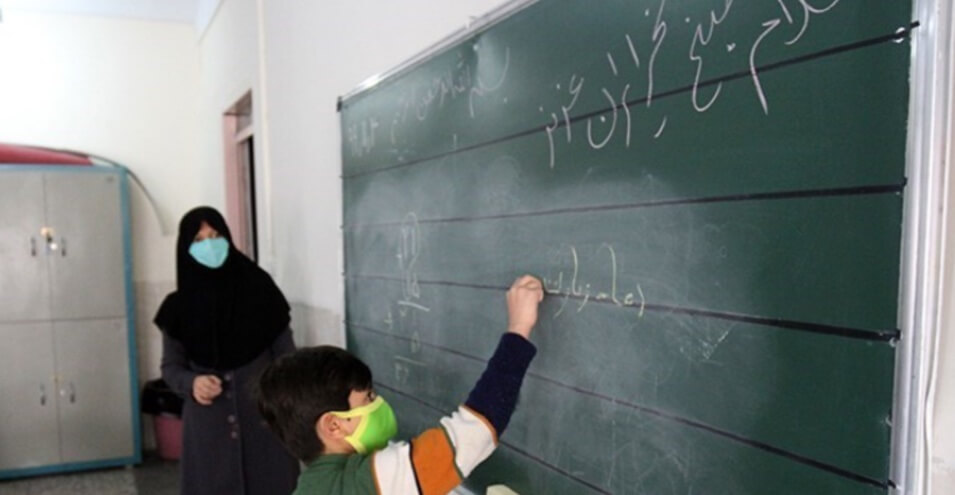
While the number of deaths from coronavirus in Iran is increasing and reports have been published of an increase in the number of deaths among children, education officials continue to insist on not closing schools and continuing their in-person activities.
A number of users on social media have reported that their family members have been infected with the coronavirus due to the reopening of schools.
The head of the infectious disease department at Tehran's Imam Khomeini Hospital has also called in-person schools and exams a mistake. Hamid Emadi said, "We have eaten the stick of this issue and will eat it again."
Earlier, a member of the National Scientific Committee for Combating Corona had said that not only going to school, but also traveling is not allowed in red cities. Masoud Mardani emphasized in an interview with ISNA that in-person school activities will lead to an "increase in mortality."
The head of the infectious disease department at Masih Daneshvari Hospital also says that an increase in the death rate from coronavirus in the next two to three weeks is "not far-fetched." Payam Tabarsi added that in previous outbreaks, the closure of schools and educational centers meant that children were not as affected by coronavirus as they are now.
The decision on whether schools will operate in person or virtually is up to provincial headquarters, but local officials say they are subject to the orders of the National Coronavirus Task Force.
This headquarters also avoids closing schools, despite the Iranian President's emphasis on in-person attendance, and emphasizes "smart" management.
This is despite the fact that vaccination of children under 12 years of age has not been carried out in Iran.
Although the Ministry of Health has begun using Sinopharm and Pasteurovac vaccines for the 9-12 age group, many parents are concerned about vaccinating their children with these vaccines.
The deputy health director of Arak University of Medical Sciences has said that parents have not welcomed the vaccination of their children. Ali Alimohammadi, speaking to ISNA, said that about 18 percent of children aged 9 to 12 have been vaccinated, which is in line with the national average.
Mehr News Agency reported that finding empty beds in pediatric wards in Kerman province has become “very difficult.” The agency described the situation in Kerman as critical, reporting that 20 percent of those hospitalized in Kerman are children under the age of 12.
The president of Kerman University of Medical Sciences has said, "If the number of children hospitalized increases in a short time, we will face a serious challenge."
A report by the Iranian Ministry of Health after inspecting 123,962 schools shows that the most important violations were the inappropriateness of classroom space for the number of students, failure to observe social distancing, failure to observe the distance between seats, failure to observe the use of masks among students and school staff, and lack of proper ventilation.
Source: Voice of America