Evin Prison Warden's Response to Political Prisoners' Civil Disobedience: No Visits, No Books, and Restrictions on Phone Calls
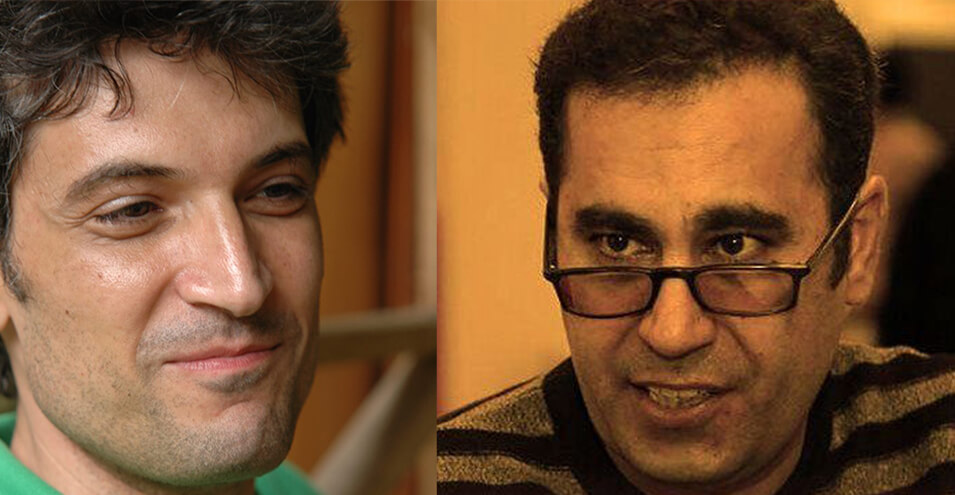
Farhad Meysami and Mohammad Habibi, political prisoners in Evin Prison who are engaged in civil disobedience since October 6, 2019, have been banned from visiting by order of Gholamreza Ziaei, the head of Evin Prison. These two political prisoners have engaged in civil disobedience in protest of numerous illegal restrictions imposed on prisoners, especially political prisoners, by Gholamreza Ziaei.
In a letter dated October 6, 2019, addressed to “policymakers of the judiciary and the prisons organization,” the two political prisoners announced that they would refuse to comply with prison regulations, including daily censuses and mandatory morning rituals, until the illegal restrictions on prisoners were stopped. Explaining the reason for this protest, they wrote: “Given the clear violation of numerous provisions of the executive regulations of the prisons organization and other current laws of the country regarding prisoners’ rights, and the prison director’s failure to respond to the prisoners’ repeated requests for discussion on this matter, we no longer consider ourselves obligated to comply with the arbitrary rules of your prisons.”
"Reducing in-person visits for all political prisoners and eliminating the special day for imprisoned mothers to visit their children, the illegal ban on receiving authorized books and publications, and limiting telephone calls" are examples of these new restrictions mentioned in the letter of the two political prisoners.
A source familiar with the Human Rights Campaign in Iran told the Iranian Human Rights Campaign that, one month after the start of the civil disobedience, “none of the Evin Prison officials or the judiciary have met or spoken with Farhad Meysami and Mohammad Habibi, and their only response has been to impose further restrictions and ban visits from these two prisoners in order to end the civil disobedience.”
According to this source, "Farhad Meysami was transferred from Ward 4 of Evin Prison to an unknown location on Saturday, November 8. After taking him, prison officers also collected his personal belongings from Ward 4 and took them away, and they did not give any explanation in response to his arrests."
The families of Meysami and Habibi have been visiting Evin Prison for the past two weeks, but prison officials have not allowed them to visit. Mohammadi Habibi's family has been told that he has been banned from visiting by the prison governor from October 19 to November 11.
The Committee to Defend Mohammad Habibi announced on its Telegram channel: "The prison administration believes that by imposing these restrictions, it can force resistant political prisoners to stop resisting in prison. Banning visits can never undermine the will of those who have launched such a protest movement and have declared their readiness to pay the price."
Hossein Sarlak, Amirhossein Mohammadifard, Morteza Nazari Sedehi, Ali Asghar Hassani Rad, Reza Aghaei, Mohsen Aminpour, Hamed Ainevand, Hamed Gholami, Mehdi Estrezaei, Milad Razmi, Vahid Ghadirzadeh, Mehdi Meskin Nawaz, Taher Haji Ghorbani, Barzan Mohammadi and Peyman Jamshidi are 16 political prisoners in Evin Prison who have supported the civil disobedience of Farhad Meysami and Mohammad Habibi. Barzan Mohammadi and Mehdi Meskin Nawaz have joined in this civil disobedience.
Mohammad Habibi is a member of the Teachers’ Union, which in recent years, in addition to addressing teachers’ rights and demands, has also worked to change discriminatory educational policies, monetization, and privatization of education. Most of the senior leaders of this union have faced dismissal, arrest, exile, and imprisonment many times over the past ten years. He was sentenced to 7.5 years in prison, 74 lashes, two years of deprivation of social rights, and a curfew on charges of “gathering and colluding to act against national security,” “propaganda for the regime,” and “disturbing order.” He is imprisoned in Ward 4, Hall 3 of Evin Prison.
Farhad Meysami, a physician and civil activist, was the director of the Andishe-Sazan Cultural and Publishing Institute in the 1970s and 1980s. He was arrested in his home library on August 29, 2018, and sentenced to 6 years in prison on charges of “gathering and colluding against national security,” “propaganda against the system,” and “spreading and promoting improper hijab in society.”
Barzan Mohammadi, a 41-year-old from Sarvabad, Kurdistan, who joined the civil disobedience movement, was sentenced to 6 years in prison by Branch 15 of the Tehran Revolutionary Court, headed by Judge Salavati, on charges of “propaganda activity against the regime.” This sentence was reduced to 3 and a half years by the Court of Appeal.
Mehdi Miskin Nawaz, who participated in civil disobedience, has been sentenced to 5 years in prison on charges of "gathering and colluding against national security" and "propaganda against the system."
One of the victims of the new arbitrary and illegal restrictions in Evin Prison is Narges Mohammadi and her family. Narges Mohammadi’s husband, Taghi Rahmani, told the Campaign for Human Rights in Iran that the imprisoned activist has been denied access to a telephone to talk to her children for the past two months, and her trips outside the prison for medical treatment have also been suspended. “They have cut off her phone calls to her children for two months. At the same time, they are not making her trips, and they are not taking orders for books, and they are delaying them,” said Taghi Rahmani. “All this is done under the pretext that the prosecutor and the prison director have changed, and these simple things are not being done. When she needs regular medical trips and needs to be able to talk to her children on the phone, this is the children’s right,” he said.
Hassan Jafari, the husband of Maryam Akbari-Manfarid, who has been in prison without leave since the day of Ashura in 2009, also spoke to the campaign about the new restrictions and the prevention of in-person visits with this political prisoner, saying that the new director of Evin Prison has made conditions more difficult for political prisoners and their families by imposing new restrictions.
Gholamreza Ziaei, who was appointed as the head of Evin Prison in early August of this year by the order of the Director General of Tehran Province Prisons, has played a significant role in increasing pressure and imposing illegal restrictions on prisoners in this prison. Ziaei previously headed Rajai Shahr Prison in Karaj, which is known for its poor conditions for prisoners. He was also the head of this detention center in 2009, at the time of the Kahrizak crimes that led to the murder of several protesters against the election results.
Sedighe Pakzamir, a member of the board of directors of the Tehran Teachers' Association, detailed the restrictions imposed on political prisoners in Evin Prison in a series of tweets: "Since Ziaei was appointed as the new head of Evin Prison, restrictions have been imposed on political prisoners. In this regard, Ziaei has ordered that in-person visits to these prisoners be canceled once and that political prisoners be given in-person visits once every two months. In another measure, sending books and magazines by the prisoners' families has been prohibited. Political prisoners are prohibited from participating in the internal administration of the prison, which is the responsibility of the prisoners, and they cannot be elected as ward lawyers, room managers, cultural managers, etc. In some cases, restrictions are imposed on all prisoners, beyond political prisoners, which is a clear violation. Among them is the charging of money for the treatment of prisoners, which has prevented low-income and poor prisoners from being sent to the hospital due to illness."
This is despite the fact that, according to Article 180 of the Prisons Organization’s regulations, “all convicts and defendants are under full supervision and are allowed to have contact with their relatives and acquaintances in accordance with the regulations.” In other words, visiting family members and children is the right of all prisoners, and in cases such as the case of Narges Mohammadi, whose children are unable to meet their mother in person due to their residence abroad, having continuous telephone contact with their children is an alternative to the right to visit.
According to the same regulations, depriving a prisoner of visits is only possible in two cases: first, when, in accordance with the note to Article 180, the judge hearing the case considers in writing that visiting or corresponding with the accused is contrary to the proper conduct of the case and declares it prohibited. In this case and during the period of prohibition, as the case may be, visiting or corresponding with the convict is only permitted with the written permission of the competent judicial authorities.
The second case is the deprivation of the right to visitation as a disciplinary punishment. According to Article 175 of the Prisons Organization Regulations, the prison disciplinary council can deprive a prisoner of visitation for a maximum of three times, but the deprivation of the right to make phone calls as a punishment is not foreseen in the regulations.
Interfering with the right of imprisoned parents to have regular contact with their children violates not only their rights but also the rights of their children. The imprisonment of both or one of the parents does not deprive them of the right to be parents and their children of the right to have parents.
Regarding the reason for the recent restrictions, Taghi Rahmani, Narges Mohammadi's husband, told the campaign: "Apparently, these restrictions have also increased for other prisoners. The excuse is that the prison director came and did not give any new orders, and the prosecutor, who just came, did not give any new orders. And they also oppose his leave. In all this time, he has only been granted leave once, a year and four or five months ago."
However, as the above-mentioned regulations indicate, a prisoner's visits and telephone calls with his relatives do not require the permission of the prison governor or judicial authorities. This right exists for all prisoners unless the said authorities, through an official written decision, deprive the prisoner of this right. Consequently, a change of authorities or new appointments in no way justifies the cessation of telephone calls with children or the cessation of medical measures.
Gholamreza Ziaei, who was appointed as the head of Evin Prison in early August of this year by the order of the Director General of Tehran Province Prisons, has played an important role in increasing pressure and imposing illegal restrictions on prisoners in this prison. Ziaei previously headed Rajai Shahr Prison in Karaj, which is known for its inadequate conditions for prisoners. He was also the head of this detention center in 2009, when the Kahrizak crimes occurred.
According to Article 10 of the Convention on the Rights of the Child, States Parties are obliged to facilitate the reunification and contact between parents living in different countries and their child, and to facilitate entry and exit for this purpose. In general, the best interests of the child must always be a primary consideration in all decisions concerning the child. According to Article 18 of the Convention, States Parties must cooperate with parents in the performance of their responsibilities towards their children and facilitate the upbringing of the child by both parents.
Source: Human Rights Campaign