Third round of teachers' sit-in ends in Iran; minister calls protests "limited"
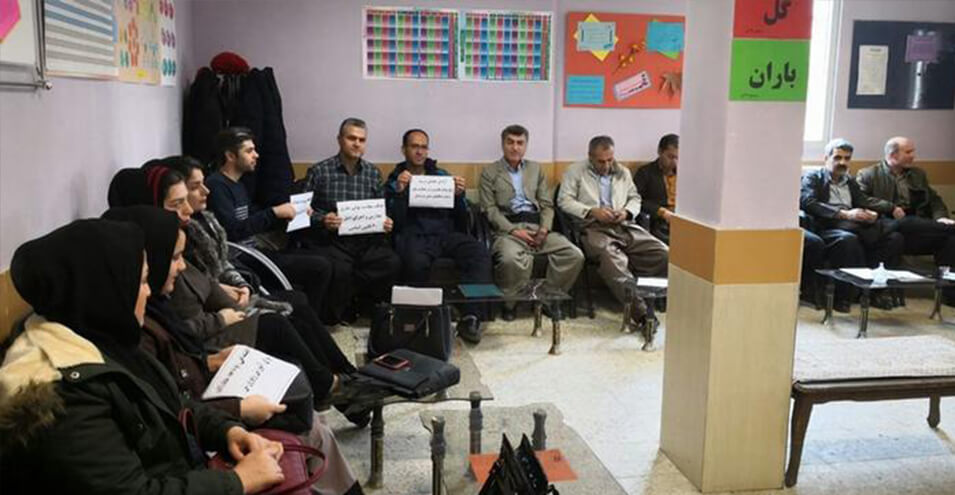
The third round of nationwide teacher sit-ins in Iran has ended. Education officials have called the protests “few.” However, teacher representatives, citing “documented statistics,” describe the latest sit-ins as “more grand” than previous ones.
The third round of nationwide sit-in by teachers in Iran in protest of union and livelihood problems ended yesterday, Tuesday, March 5. The Coordination Council of Iranian Teachers' Unions, which had called on teachers to join this protest movement, announced on its Telegram channel the end of the sit-in and the "ill-considered remarks" of the Minister of Education in a "late reaction" to it.
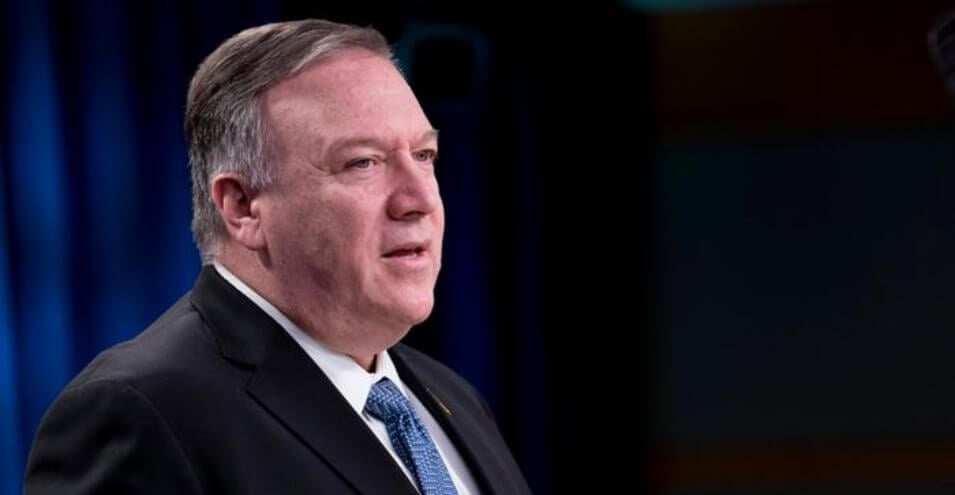
The previous day, Iranian Education Minister Mohammad Bathaei announced the protests of teachers "in a few schools" and said: "This type of protest method, even if carried out in a single school in the country, is an anti-educational measure. My complaint and dissatisfaction is not with the protest of my colleagues, but with the method of organizing the protest, because it is bad for the students to have the teacher sit in the school office and not be present in the classroom, and by doing this, we have actually acted unjustly."
According to the Coordination Council of Teachers' Unions, the Iranian Minister of Education has called the protests "few," while "in Kermanshah alone, teachers from more than a hundred schools staged a sit-in, and in Khomeinishahr, over seventy schools participated in the sit-in."
Other cities join the sit-in on the third day
The trade union also emphasized: "The council's statistics are documented and based on the photos received, while in many schools, colleagues did not take photos or did not send and publish their photos. On the third day, alongside the besieged cities of the previous days, we witnessed the active participation of teachers from Zanjan, Jolfa, Shahriar, Robat Karim, Bukan, and...."
Previously, reports and images of many teacher sit-ins in various provinces of Iran, including Kurdistan, Kermanshah, Alborz, Hamedan, Isfahan, Razavi and Southern Khorasan, Tehran, East and West Azerbaijan, Mazandaran, Khuzestan, Fars, Gilan, Sistan and Baluchestan, Yazd, Qazvin, and Chaharmahal and Bakhtiari, had been published on social networks.
The Coordination Council of Teachers' Unions had previously issued a call for a sit-in, announcing that teachers would inform students and their parents of their goals "in all possible ways" by refraining from going to classrooms and attending school offices from March 1 to 4.
The union's statement listed the release of cultural union activists and "removal of all legal obstacles to the free activity of union organizations" as one of the teachers' main demands. In their third round of protests in the 2018-19 academic year, the teachers on strike held signs reading "Free imprisoned teachers," "Quality education, fair budget," "Stop filing cases against union activists," "Independent organization of teachers' rights," "Eliminate discrimination," "Efficient and comprehensive insurance," "Establish educational justice," and "Equalize the rights of cultural pensioners."
The teachers' demands, which were summarized in six points in the March 26 statement of the Coordination Council of Teachers' Unions, are as follows: "1. The release of cultural union activists and the closure of all cases in this regard. 2. The removal of all legal obstacles to the official and free activity of teachers' union organizations throughout the country. 3. Allocating a sufficient and adequate share in the 2019 budget to education to the extent of resolving numerous problems in schools, fundamentally restoring teachers' rights and paying all their arrears, including teachers' demands for service purchases, tuition fees, etc. 4. Equating the rights of cultural pensioners with those of employees and raising it above the poverty line. 5. Canceling the contract with the current inefficient supplementary insurance and replacing it with an efficient and accountable insurance for working and retired teachers. 6. Stopping the policy of monetizing schools and implementing Article 30 of the Constitution."
Minister: We cannot lift the burden of livelihood in the short term
Officials have remained completely silent in response to teachers’ demands to release union activists and remove obstacles to official union activities. Regarding livelihood demands, Iran’s Minister of Education has said: “We cannot resolve livelihood concerns in the short term.” Bathaei added: “Unfortunately, we have faced the enemy’s onslaught, restrictions, and sanctions, which have caused our operational power to decrease compared to last year due to inflation. Of course, despite all these conditions, we have a duty not to harm the education process.”
Amir Ali Nematollahi, Iran's Deputy Minister of Education, also said yesterday, referring to the recent teachers' sit-in: "We are ashamed of the services, efforts, and dignity of our colleagues, but our educated colleagues should also know that all their servants at the headquarters, provincial, and national levels of the Ministry of Education followed up on everything possible."
The Deputy Minister of Education also claimed that “of course, this sit-in is not very widespread and is very limited.” According to the ILNA news agency, Nematollahi, in response to the question, “By the way, it is said that the sit-ins are nationwide and not limited, why do you consider it limited?”, said: “No, that is not the case. In fact, the number is limited and there have only been sit-ins in some schools and colleges in some provinces.”
Deputy Minister: Sit-ins are not a cause for concern
The Deputy Minister of Education of Iran, claiming that “we have the statistics of these sit-ins and rest assured that they are not worrisome,” added: “If the situation were worrisome, at least I, as the Deputy Minister of Education, should not be in my room. I am stating clearly that in some provinces we have not had a single sit-in, this is according to the statistics that I have since 10 am. Of course, it is not clear whether the photos that are being published are for the same province or not, and perhaps it is the mischief of some people.”
However, the Coordination Council of Teachers' Unions announced in its report yesterday about the third round of teachers' sit-ins: "Our surveys show that the March sit-in was more well-received by colleagues than the Mehr and Aban sit-ins, and the third day's sit-in was more grandiose than the first and second days. This is while the security pressures had reached their peak on the third day, but in return, the protesting teachers acted in unity."
In recent months, Iranian cities have witnessed widespread protests by teachers against their working conditions and livelihoods. On February 15, they gathered in front of the education building in at least the cities of Sanandaj, Urmia, Marivan, Ardabil, Mashhad, and Kermanshah. On January 26, teachers in Isfahan also held a protest rally in front of the provincial education department. However, security forces dispersed the protesters by firing tear gas and arrested a number of them. On December 19, the cities of Isfahan, Rasht, Yazd, and Abhar witnessed protest rallies by teachers and cultural retirees demanding improved living conditions and the release of imprisoned teachers.
In the second round of Iranian teachers’ sit-in on October 12 and 13, a large number of them joined the strike in many small and large cities in Iran. This two-day sit-in was accompanied by slogans against “oppression and injustice.” Although the demands of Iranian teachers in this sit-in were accompanied by promises of consideration from government officials, they also resulted in clashes with union gatherings and the arrest of their activists.
The arrest and subsequent release of Mohammad Reza Ramezanzadeh, head of the Coordination Council of Iranian Teachers' Unions in Bojnourd, and Hashem Khastar, a member of the board of directors of the Mashhad Teachers' Union, by Revolutionary Guard intelligence officers were among the consequences of the second round of teachers' protest movement in the current academic year.
Protest movements by teachers in Iran have increased significantly in recent months and years. In addition to the demand for improved legal status and the release of imprisoned teachers, demands such as efficient and comprehensive insurance, making schools safer, eliminating discrimination in the educational structure, stopping the privatization and monetization of education, and providing public access to free education are among the demands of Iranian teachers.
A number of cultural activists and prominent figures among teachers, such as Mohammad Habibi, Mahmoud Beheshti Langroodi, Ismail Abdi, Abdolreza Ghanbari, Mohammad Thani, Ruhollah Mardani, and Bakhtiar Arefi, have faced prison sentences and are serving prison sentences in Iranian prisons due to their union activities.
Source: DW