Basic wage increases in Iran; still below poverty line
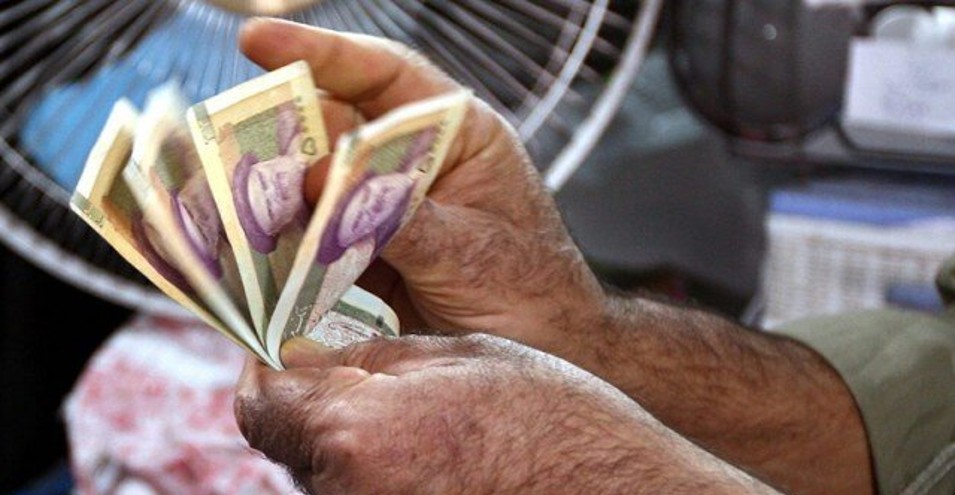
According to the resolution of the Supreme Labor Council of Iran, which was announced on Thursday, March 9, the minimum wage for workers increased by about 57 percent, to about one million and five hundred thousand tomans.
According to the ILNA news agency, based on this resolution, employers are required to pay a minimum wage of five million and 679 thousand tomans to a worker with no experience and no children, taking into account the bond and housing allowance.
The minimum wage for a worker with one child is 6,307,000 Tomans, and for a worker with two children, it is 6,725,000 Tomans.
Accordingly, while the poverty line, meaning the minimum cost of living for a household, was previously announced to be an average of about 9 million Tomans per month in 1400, in 1401 no worker subject to the labor law should receive less than five million and 679 thousand Tomans.
The rising cost of living for households in Iran is a direct result of the severe inflation that has dominated the country's economy in recent years. Accordingly, some labor activists say that the government should control the inflation rate in addition to increasing salaries, otherwise increasing salaries will also lead to more inflation.
Currently, in addition to high inflation that has affected people's daily livelihoods, the unemployment rate in the country is also fluctuating at around 25 percent, according to the "Parliamentary Research Center," and for this reason, a large number of workers are forced to work with wages much lower than what the Supreme Labor Council approves.
In this regard, Ali Aslani, a member of the Supreme Center of Islamic Labor Councils, said in January: "We have nearly 10 million underground workers in the country; workers whose wages are not monitored by anyone, and all of them earn less than the minimum wage. Some earn 700 or 800 thousand taels per month."
This is despite the fact that, according to a report by the Statistical Center of Iran, the annual inflation rate in November was at least 44.4 percent, and based on official statistics from the Ministry of Labor, the average price of more than 83 percent of food items in Iran has exceeded the crisis level.
In the latest economic developments, the parliament agreed to remove the so-called preferential currency of 4,200 tomans per dollar from next year's budget, which, according to a member of the parliament's Planning and Budget Commission, will result in another increase in the prices of some food items next year, including chicken and eggs, by 50 to 70 percent.
According to Mohsen Zanganeh, a member of the Planning and Budget Commission, the parliament "has allowed the government to continue selling $9 billion at the preferential exchange rate, but it has not made this issue a duty for the government."
The livelihood difficulties of workers, teachers, and employees, along with social and political pressures, have consistently led to protests and strikes across the country in recent years, and the government's response to them has often been repression.
Source: Radio Farda