Legal cases of 100 human rights violators in Iran in the first volume of "The Face of Crime"
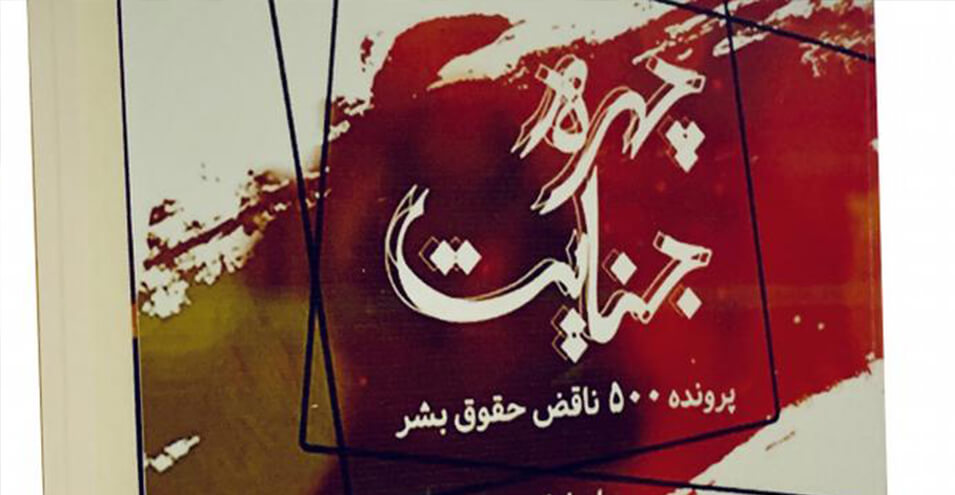
The first volume of the “Face of Crime” book series was published by the “Justice for Iran” organization. This book compiles the legal cases of 100 human rights violators in Iran. The next four volumes will address more than 400 other human rights violators.
Coinciding with the 40th anniversary of the founding of the Islamic Republic, the Justice for Iran organization published the first volume of a five-volume set of printed books under the title "The Face of Crime."
The human rights organization wrote on its website yesterday, Monday, April 1, that this five-volume collection has compiled the legal cases of 500 human rights violators in Iran "for legal follow-up and holding these individuals accountable now and in the future."
According to Justice for Iran: “These files include personal information, a list of responsibilities, and some of the most important human rights violations in which each of these officials was involved. The files have been collected over the past nine years, mainly based on the testimonies of victims of human rights violations, and in all these years, only parts of them have been available online.”
The London-based human rights organization states that the aim of this five-volume book series is to “provide a tool for advocacy activists to pursue legal actions now and in the future,” which is why, according to the organization, “it only includes living officials.”
According to Justice for Iran: "The Face of Crime demonstrates how the highest officials of the Islamic Republic have consistently been involved in serious and severe human rights violations, either directly or through their responsibility for the perpetrators and commanders of their subordinates. The book also shows that human rights violators in Iran have not only not been held accountable for their actions, but the vast majority of them have been promoted."
In the first volume of the "Face of Crime" series, the case of "100 human rights violators" in Iran has been compiled, from the highest-ranking officials of the Islamic Republic, such as Supreme Leader Ali Khamenei and Hassan Rouhani, Ebrahim Raisi, and Sadegh Amoli Larijani, respectively the President, Head of the Judiciary, and former Head of the Iranian Judiciary, to lesser-known individuals.
According to Justice for Iran, of these 100 people, 41 have so far been subject to international sanctions due to their involvement in serious human rights violations, including a ban on entering European or American countries and the freezing of their potential assets in these countries.
According to this human rights organization, these individuals have been involved in, among other things, the suppression of popular protests, mass executions, murder and torture of political prisoners, "especially sexual torture," the suppression of dissidents, political murders, the assassination of opponents outside Iran, the issuance and execution of stoning sentences, the amputation of body parts, and the execution of children and adolescents, widespread violations of women's rights, the suppression of ethnic protests, the violation of the rights of religious minorities, the arrest of civil, trade union, political activists, and journalists, the violation of the privacy of Internet users, and the widespread confiscation of the property of opponents of the Islamic Republic.
The online version of the "Face of Crime" collection, which has been collected over the past nine years, has previously been available to the public in a summarized form, but now, for the first time, a printed version of its first volume has been published.
The non-profit organization Justice for Iran, founded in 2010, says it focuses “on the issue of impunity for perpetrators and authorities of human rights violations.” The organization describes itself as “the only Iranian human rights organization” that “in addition to collecting information and documents about victims of gross human rights violations, it also collects information about perpetrators and authorities, that is, individuals or entities that have committed these crimes, and regularly publishes it online in the “Databank of Human Rights Violators.”
Iranian lawyer Shadi Sadr and human rights activist Shadi Amin are among the founders of this non-governmental organization.
Source: DW