Doctors: We are ready to hear the people's voices, but after the massacre?
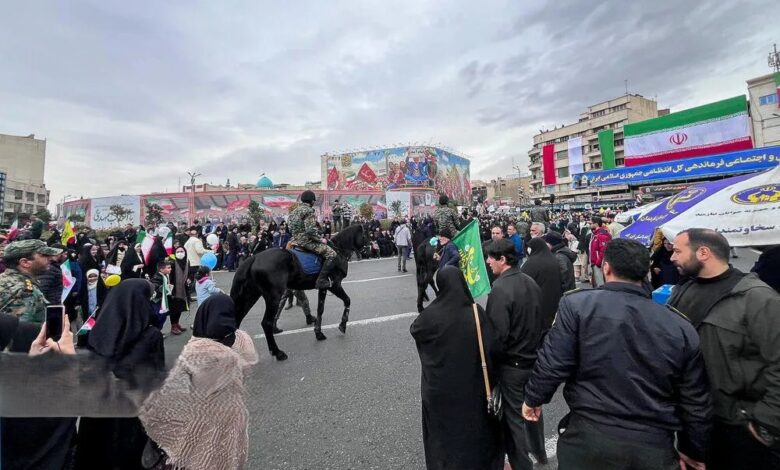
The Bahman 12 march was held in the shadow of bloody repression and threats against the families of the detainees, and at the event, Masoud Pezzekian spoke of the readiness to hear the people's voices, but hearing the people's voices came after a massive massacre.
Today, February 12, 1404, the Islamic Republic government once again celebrated the anniversary of the 1979 revolution with government marches; a ceremony that this year was not held in an atmosphere of celebration, but in the shadow of the bloody suppression of popular protests and a deep wound in the body of Iranian society. Only a month has passed since the mass killings and arrests of protesters; events for which no clear answer has yet been provided.
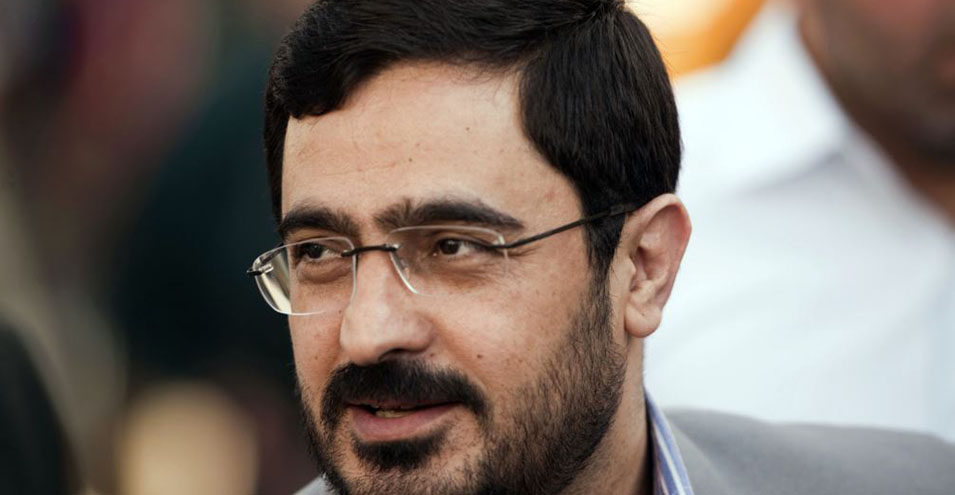
At the ceremony, Masoud Pezzekian tried to present a conciliatory image of the government in his speech, declaring that we should “hear the voice of the people” and not confront them. He emphasized: “We are the servants of the people and we are ready to hear the voice of the people.” He also said that the government has a duty to address those who have been affected by the recent events.
But for many grieving families and detainees, these words come as the aftermath of a brutal street crackdown, the deaths of protesters, and security clashes continues. Critics ask how a government that responded to protests with widespread violence just weeks ago can now talk about listening to the people, within the framework of red lines repeatedly drawn by Ali Khamenei.
Reports from inside the country also indicate that some families of detainees have been pressured and threatened to participate in the 12th Bahman march and even to document their presence. For families whose loved ones are still in prison, this compulsion to attend government ceremonies is not seen as a choice, but rather as an effort to protect the lives and safety of their children and loved ones. Many see this as another form of psychological pressure and punishment against families.
This year's march was held amid a security atmosphere in various cities, with a large police and security presence reported. Official media attempted to highlight images of the crowd and government slogans, but social media reflected another narrative of concern, coercion, and enforced silence.
In such circumstances, talk of “hearing the voice of the people” has a double meaning for many citizens. A voice that was met with gunfire and arrests in the streets is now being recognized on the official platform, but with no clear sign of policy change or accountability for those killed and imprisoned.
Critics believe that if the people's voices are to be heard, this must be accompanied by the release of political prisoners, an end to threats against families, transparency about the killing of protesters, and practical respect for the fundamental rights of citizens, not just occasional speeches.
The Bahman 12, 1404 (February 12, 2021) march, rather than being a demonstration of national unity, is for many a reminder of the deep divide between the government and the people who are still waiting for justice and accountability.