Coronavirus in Iran; Ministry of Foreign Affairs forms vaccine import headquarters
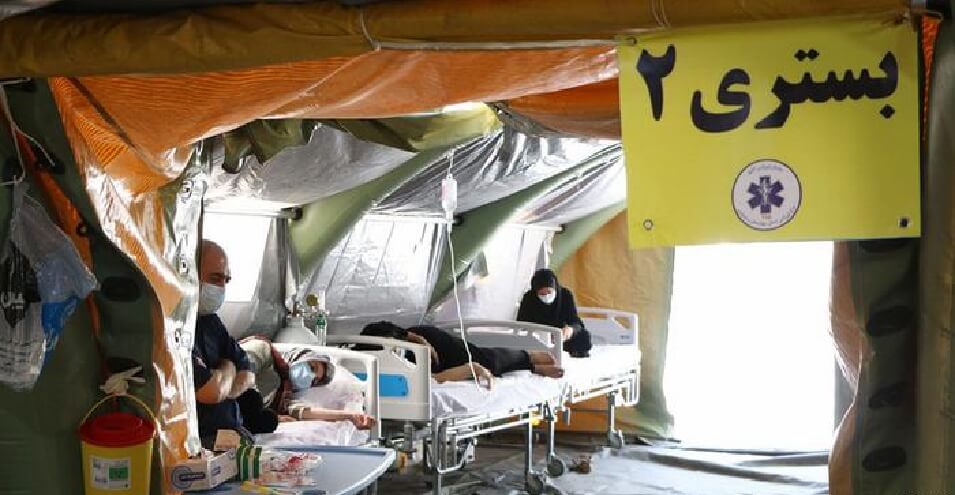
Another 694 people have been added to the number of coronavirus victims in Iran, and six provinces are struggling with the outbreak of black fungus amid a shortage of medicine. Ebrahim Raisi began the first day of work of the 13th government by visiting Behesht-e-Zahra and meeting with the laundry staff.
359 cities in Iran are in red, 59 cities are in orange, and 30 cities are in yellow. The Ministry of Health's public relations department announced these statistics, reporting 694 deaths and 36,758 new cases of coronavirus in a single day. Of these, 4,940 people have been hospitalized.
The official death toll from the coronavirus has reached 104,716 as of September 24, a day that coincided with the 13th Prime Minister's visit to Behesht-e-Zahra and a meeting with the cemetery's latrines. Ebrahim Raisi visited the tomb of Ruhollah Khomeini on the occasion of "Government Week" and emphasized in his speech that the Islamic Republic's officials are seeking "service to God" and not "service out of altruism and humanity."
In the first meeting of the government, Ebrahim Raisi ordered his first deputy, Mohammad Mokhbar, and Foreign Minister Hossein Amir-Abdollahian to seriously pursue the issue of vaccine production and import. Such a mission was taboo in Rouhani's cabinet, and issues related to medicines and vaccines were assigned to the Ministry of Health.
After the Leader of the Islamic Republic called the coronavirus the country's main issue in a late speech, other officials opened their mouths, each accusing the other of failing to provide a vaccine or mismanaging the coronavirus crisis.
The president, who had not said anything about the coronavirus crisis in debates, election slogans, or inauguration ceremonies, stated during the introduction of cabinet members in parliament that the 13th government's priority was to contain the coronavirus and speed up vaccination.
Hossein Amir-Abdollahian, the new Foreign Minister, said on his first day of work: "Our first plan is to address the main priority that our people are facing. We have formed a headquarters in the Ministry of Foreign Affairs to accelerate the import of vaccines from different countries, and the goal is for all embassies, the government sector, and the private sector to participate in this process."
Amir Abdollahian added that any country will be used to transport vaccines to Iran and there will be no restrictions on approved vaccines.
Rising coronavirus death toll figures in Iran are being announced while the "Javan" newspaper, close to the Revolutionary Guards, has warned that the emergence of a sixth wave of coronavirus could be dangerous for the "country and system."
The publication quoted Kourosh Holakoui Naini, a professor of epidemiology at Tehran University of Medical Sciences, as writing: "The data is engineered in the Ministry of Health in such a way that if you ask me for a document, I don't have it because I don't have access to the data, but you can increase the death statistics sevenfold."
Multiple positions of the Minister of Health
The formation of a special task force for importing the coronavirus vaccine at the Foreign Ministry comes at a time when the Ministry of Health has been entrusted to a person who was opposed to importing British and American vaccines and signed a letter to Hassan Rouhani to this effect in January 2020.
Bahram Einollahi, who attended the parliament's vote of confidence session without a mask among the representatives, in a clear reversal from his position of a few months ago, considered the import of vaccines essential and said: "We have a population of 60 million people over the age of 18, and each person must be injected with two doses of the vaccine, so we need 120 million vaccines. So far, about 22 million vaccines have been injected. Naturally, the domestic production of vaccines does not reach 98 million doses, so we are forced to import vaccines and we seek help from everyone who can do this and even use the non-governmental sector. However, the Ministry of Health must supervise because the vaccine has a cold cycle and the vaccines that are administered must also be registered."
Einollahi, who is also an advocate of traditional medicine, has promised that a general vaccination will be carried out by the end of February this year.
On his first day as Health Minister, he went to Masih Daneshvari Hospital and complained about the excessive use of medication. Einollahi said, “Prescribing medication to some coronavirus patients is not necessary at some stages. In fact, if it is given at the right time, it is good, but if the required time has passed, it has no effect.”
On the sidelines of a visit to Masih Daneshvari Hospital, Einollahi emphasized that we need scientific protocols to manage the coronavirus, saying: "Unfortunately, there are many contradictions between the treatment methods for the coronavirus, and each person considers a topic as their own treatment. We must strengthen the headquarters' scientific committees in the future and make more use of scientists, of whom there are many in the country."
Black fungus outbreak
The 13th government's belated and contradictory efforts to contain the coronavirus pandemic and provide a vaccine come as the number of citizens infected with the black fungus disease continues to rise. News that 10 people have been hospitalized at Imam Khomeini Hospital in Tehran, 20 people in two hospitals in Mashhad, and several cases have been identified in Gilan, Ardabil, Khuzestan, and Mazandaran has been officially confirmed.
At the same time, the Director General of the Food and Drug Administration in Iran has admitted that the stock of medicine to treat black fungus in the country has reached zero. It has been stated that the use of corona drugs, including corticosteroids, increases the risk of contracting black fungus.
Black fungus is an aggressive infectious disease that must be treated quickly. Normally, people's immune systems fight off the fungal infection, but those who are weakened by underlying diseases, diabetes, cancer, or organ transplants are more susceptible to this disease, and if they get it, it can be life-threatening.
Black fungus is not contagious and is named for the black spot that covers the nose of patients.
Source: DW