Water shortage in Iran: From the authorities' "security" perspective to the increase in farmers' protests
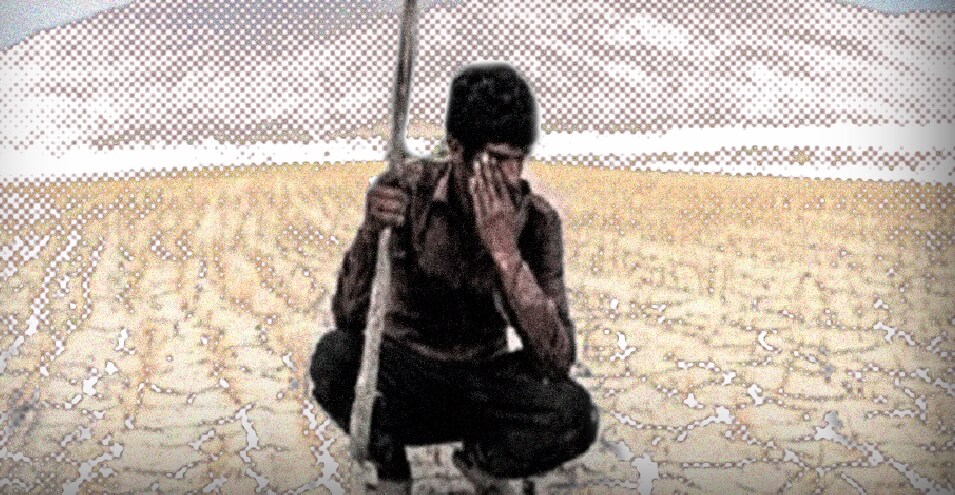
The critical water situation in Iran and the widespread consequences of this crisis in the country have prompted executive and decision-making authorities in this field to repeatedly warn about the risk of the water crisis turning from an "environmental" problem into a "security" crisis. The intensification of farmers' protests in the shadow of the authorities' inefficient management of the water sector is an example of the consequences of this crisis. The direct link between the livelihoods of the large farming community and the policies adopted regarding water distribution and use of water resources and addressing the problems of this large community has made protests and gatherings by farmers their only way to make their voices heard by the authorities. Many of these protests have been suppressed by law enforcement and security forces, and some policies regarding water distribution and monitoring of its process have also been adopted with the aim of preventing further protests by farmers.
Inefficient management by executive authorities and decisions by legislators in the water sector have not only failed to solve the water crisis in Iran, but have also led the country to a “bankruptcy of water resources management.” Continuing this trend will undoubtedly lead to protests by farmers and, of course, increased conflict and conflict among residents of different regions of the country over water. A problem that has drawn much attention to the risk of a “water war” in Iran.
"Water crisis" or "bankruptcy of water resources management"?
Frequent droughts, the depletion of many of the country's water resources, and unstable and inefficient water management have left Iran facing "water scarcity" more than ever before. Statistics show that the country's rainfall has decreased by 50 percent compared to last year, many of the country's wetlands have been destroyed, and other groundwater resources have also been severely depleted.
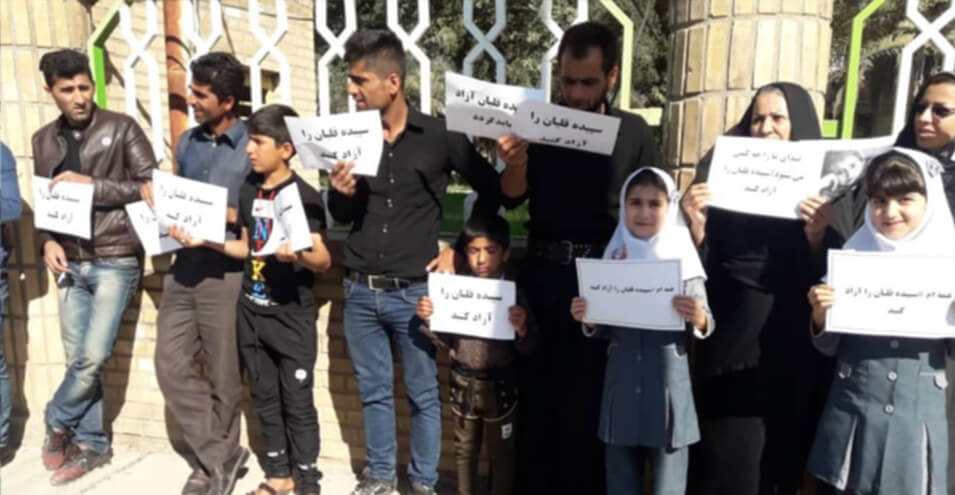
Water scarcity has affected the livelihoods of farmers more than any other group in society; a large portion of the water consumed in Iran is used in agriculture, and the livelihoods and lives of a large group of Iranian residents are directly dependent on "water". Severe water shortages in the agricultural sector and inefficient management of water resources in the country are the main reasons for farmers' protests. According to statistics, there were 91 protests in the last solar year alone, and given the current situation, there is a high probability that these protests will increase in the coming months.
Kaveh Madani, a researcher at Yale University and environmental activist, referring to the government's economic policies, the rulers' concern about jeopardizing the country's food security, and the impact of these policies on the water issue, told the Campaign for Human Rights in Iran: "Concerns about food security, as well as the possibility of creating jobs for a large part of society through agricultural development and the provision of water and land, have led to the fact that today the livelihoods of a large group of people are directly related to water. In a situation where there is no alternative solution to ensure the livelihoods of these people in the current water shortage conditions and the government cannot provide water and land to farmers, it is obvious that we will witness an increase in unemployment, dissatisfaction, marginalization, and more tension and conflict."
Kaveh Madani uses the phrase “water bankruptcy” to describe the current water situation in Iran. According to him, “this bankruptcy in the water sector actually forces decision-makers to adopt bad and worse policies.”
Kaveh Madani believes that the authorities in Iran prefer to use the word “crisis” instead of “bankruptcy” to describe the country’s water situation. Referring to the effective and decision-making institutions in the field of water and the formation of the “Supreme Water Council” in the early 1980s, he told the Campaign for Human Rights in Iran: “The formation of such institutions and organizations shows that the authorities in Iran are aware of the necessity and very serious dimensions of the water issue in Iran, and perhaps these institutions will make a decision and it will be enforceable, but there is a very large gap between the decision and action in the system, which ultimately leads to the accumulation of numerous problems and the adoption of immediate decisions that only act temporarily and like a Band-Aid.”
Last year, the Ministry of Energy, in one of the last major decisions by policymakers in the water sector, published the first edition of a document called the "Water Law." Although the law is not yet "reliable," some experts say that if approved by the Islamic Consultative Assembly, it will pave the way for further preventing protests by residents of the Zagros mountain range provinces in western and southwestern Iran.
Mehdi Pahoezh, a faculty member at Shahrekord University and a member of the Chaharmahal and Bakhtiari Water Protection Committee, said that the water law was prepared "to prevent protests in the water sector and to cut off the hands of the Zagros provinces from water."
According to this university professor, "the growth of industry in the desert provinces has disrupted the balance between water resources and consumption."
The development of water-intensive industries in desert provinces such as Isfahan, Yazd, and Kerman is one of the issues that many critics of water policies have always addressed. An issue that has, of course, also caused some protests from farmers.
Security perspective on the water issue and the spread of farmers' protests
The recent remarks by the head of Iran's Environmental Organization about the dire water situation in the country and the prediction of the spread of tensions and conflicts, or in other words, a "water war" in the country, once again drew attention to the transformation of the "water shortage" issue from an "environmental" problem to a "security" problem. Issa Kalantari had said, "The water war between the provinces of Isfahan, Chaharmahal-Bakhtiari, Yazd, Khuzestan, and Lorestan has begun, and this war is spreading from province to province, from village to village."
In early May of this year, after farmers' protests in Isfahan became more widespread, the city's Revolutionary Prosecutor's Office announced that "any gathering under the guise of demands from the agricultural sector and Zayandeh Rud without permission from the Provincial Supply Council" was prohibited.
The judicial body's announcement claimed that farmers' demands in recent years have been "misused by hostile forces, and influential elements have sought to direct the protests in order to achieve their own political and subversive goals."
During these protests, some farmers from east and west of Isfahan were supposed to move towards the Zayandeh Rud Dam with the aim of “preventing illegal harvesting” of the Zayandeh Rud River. In response to this campaign, the Isfahan Revolutionary Prosecutor threatened the protesting farmers that “elements that disrupt public order” would be dealt with.
In previous years, farmers in Isfahan and Chaharmahal and Bakhtiari provinces had gathered several times to protest plans to transfer water from the Zayandeh River.
In the final months of 2017, the demonstrations by farmers in the "Warzaneh" region of Isfahan extended to Friday prayers in Isfahan; at that time, a number of farmers turned their backs on the Friday prayer leader's position and chanted: "Back to the enemy - facing the homeland."
In 2016, during clashes in the city of Baldaji in Chaharmahal and Bakhtiari province, a number of farmers were arrested for protesting a water transfer project. In September of last year, a court in Chaharmahal and Bakhtiari province sentenced 76 farmers protesting the water transfer project to four months in prison and 30 lashes each.
After the emergence of numerous crises related to water issues, in March 2018, Ardeshir Noorian, a representative of Shahrekord in the 10th Parliament, announced that the “Supreme Water Council” and the “Supreme National Security Council” had ordered “to refrain from media coverage of water issues.” This is despite the fact that such orders, which often lack legal status and are not based on any specific law, are in conflict with Article 27 of the Constitution regarding the freedom of gatherings and marches without carrying weapons, and have no relation to the legal obligation of Article 50 of the Constitution regarding environmental protection. However, this principle considers “environmental protection” a public duty and does not assign a specific or separate duty to the government, and is limited to a general ban on activities that “constitute environmental pollution or irreparable destruction.”
Source: Iran Human Rights Campaign