The Lut Desert became global.
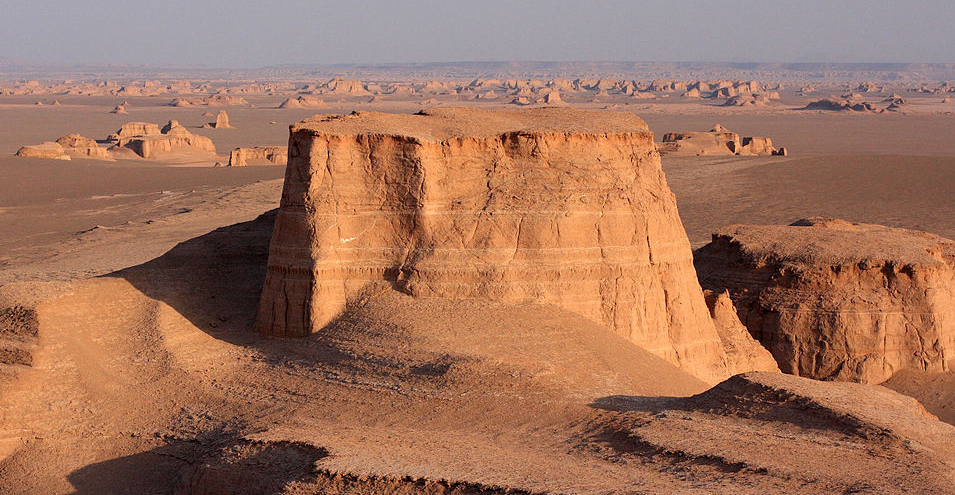
On July 17 of this year, Queyrut was selected as Iran's first natural monument by the UNESCO World Committee.
With an area of about 175,000 km, Queyrut is a vast sandy and gravelly desert located between the three provinces of South Khorasan, Sistan and Baluchestan, and Kerman, covering 10 percent of the country's area.
The Rig Yelan region in eastern Quirlut was recognized as the hottest spot on Earth from 2004 to 2009, and in 2005, it recorded the hottest temperature record on Earth at 70 degrees Celsius.
The Lut Desert is an amazing plain that includes desert features such as the Kalutha, also known as the world's largest Kalutha city, the tallest sand pyramids in the world, volcanic cones, plains of pitted basalt lava, rido, sand dunes covered with a plant called Nika, and the Camel Foot Desert.
The Lut Desert is divided into three geographical areas: Northern Lut, Central Lut, and Southern Lut, with Southern Lut being the richest part of the desert in terms of vegetation.
One of its most important cities is Shahdad, which is several thousand years old, and the five-thousand-year-old flag of Shahdad is one of thousands of historical monuments discovered in the Lut Desert region.