Commemorating the name of "Saint Nicholas of Myra," the charitable bishop who inspired Santa Claus
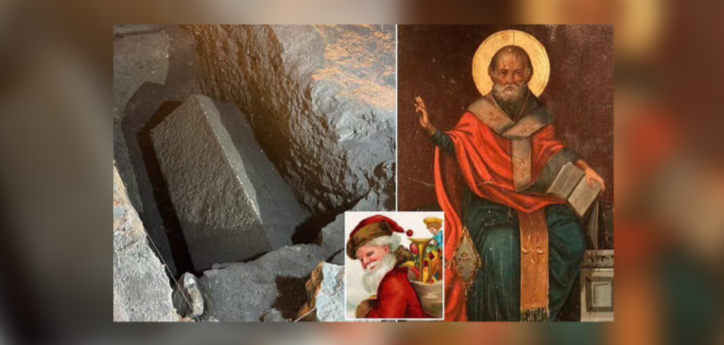
A ceremony commemorating "Saint Nicholas of Myra," a generous bishop who, through his acts of kindness, inspired the character of Santa Claus and left a lasting legacy for the Christian world, was held today.
We all know Santa Claus with his red robe, bag of gifts, and white beard, but behind this beloved Christmas figure stands a real man who lived in Asia Minor more than 17 centuries ago. Saint Nicholas of Myra, a bishop whose life was filled with generosity, courage, and love for those in need, was the main inspiration for the figure who today symbolizes joy around the world.
Every year on December 6, Christians around the world commemorate the anniversary of the death of this beloved bishop. Although contemporary sources are scarce, Christian tradition has narrated accounts that provide a clear picture of his influence on early Christian society.
Saint Nicholas lived in the late third and early fourth centuries AD, when Christianity was taking a step toward religious freedom under the Emperor Constantine and fledgling Christian communities were revitalized throughout the Roman Empire.
The province of Lycia in modern-day southern Türkiye was Nicholas' birthplace and place of service; a bustling port area where trade, culture, and faith intersected.
Nicholas was born into a wealthy Christian family in the port city of Patara. But when his parents died in a plague, he inherited a considerable fortune. His decision at this critical moment was one of the first signs of his character:
He distributed his wealth among the needy and made serving God and people his profession. After years of prayer and service, he rose to the position of priest and then bishop of the city of Myra.
Nicholas was imprisoned for defending his faith during the Diocletianic persecutions (one of the darkest periods in Christian history). As a bishop, he was not only a spiritual guide to the people, but also a defender of the poor, children, sailors, and the homeless.
In church narratives, he was even present at the "Council of Nicaea" (325 AD) and is considered a staunch defender of the teachings of the Christian faith.
The most famous story about him is the story of a poor father with three daughters. Nicholas, concerned about the future of the girls, secretly threw bags of gold through their windows at night so that they could marry without shame. This act of "secret charity" later became the basis for the tradition of giving gifts at Christmas. Other stories, such as saving sailors from a storm or helping the innocent, also earned him the nickname "Nicholas the Miracle Worker."
Saint Nicholas died around 343 AD on December 6. Centuries later, his remains were transferred to the city of Bari in Italy, and his tomb became one of the most important Christian shrines. In the Middle Ages, he became one of the most beloved saints in Europe, with thousands of churches built in his name across the continent.
Nicholas' fame continued for centuries. The Dutch created the holiday of "Sinterklaas" in his memory, and it was this tradition that eventually reached America and gave birth to the character of "Santa Claus" in Western culture. Although today's Santa Claus is more of a cultural and folk figure, his roots still go back to a bishop who anonymously brought gifts to the needy and made children happy.
In church tradition, a special prayer is recited for this saint: "O eternal God, who in your infinite love bestowed upon your servant Nicholas the everlasting name of kindness, grant your Church the strength to continue to strive for the joy of children, the protection of sailors, and the assistance of the poor."