2017 Budget: Increase in Oil Revenue Share and Military Expenditure
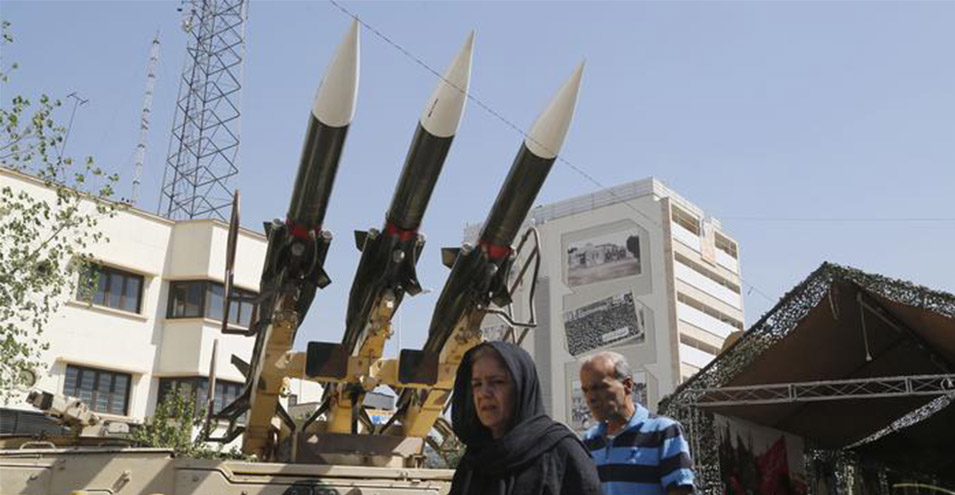
According to parliamentary representatives, the share of oil revenues in next year’s budget has increased by 10 percent, with the most significant changes occurring in the oil and gas revenue sector. In the general framework of next year’s budget bill, the defense budget share has increased by 21 percent.
The general framework of the 2017 budget bill has both opponents and supporters in parliament. Opponents question why the oil share has seen a significant increase compared to the 2016 budget. On Monday (February 20/March 2), Hosseinali Haji Deligani, representative of Shahin Shahr, opposed next year’s budget, stating: “In the 2016 budget, the oil share was 25 percent; however, in the 2017 budget, this share has increased to nearly 35 percent, which contradicts the policies of resistance economy.”
One of the most important reasons for the increase in the share of oil revenues next year is the increase in Iran’s oil exports following the JCPOA and the occasional rise in oil prices compared to previous years. Despite the fact that the resistance economy policy is among the slogans that Ayatollah Khamenei emphasizes, it is unclear which mechanisms should be used to implement this slogan and what consequences it would have for Iran’s economy.
The Shahin Shahr representative criticized the method of financing the 2017 budget in today’s parliamentary session, stating: “Borrowing in the 2017 budget is very concerning.” He described this process in recent years as “very dangerous” and said the government intends to borrow approximately 45 trillion tomans.
He also referred to tax evasion and said: “Tax growth is 9 percent, but it appears our economic growth is half of this figure, therefore we will witness continued recession; in the 2017 budget, there is no apparent willingness to collect taxes from those who have evaded taxes, and instead, pressure is placed on those who are already paying taxes.” According to him, a group that, under the guise of production, are importers in the name of production, “evade paying taxes.”
Government Tax Policy and Its Constraints
The government prepared and submitted the budget framework to parliament while, according to Iran’s economics minister, government and state company debts are estimated at around 600 to 700 trillion tomans. Ali Tayyeb Nia, in remarks at the Iran Chamber of Commerce in the final days of the current December, said that the government’s situation in the past three years has been very difficult.
Economics Minister Hassan Rouhani, in remarks made in December this year, while referring to the government’s financial constraints, said: “We all believe that one of the problems of our economy is its dependence on oil, and our inflation is also due to the economy’s dependence on oil. If we want this situation to be remedied, we must definitely cut our dependence, and this is achieved through increasing tax revenue.”
However, it does not appear that the government is able to collect taxes from institutions that have taken control of a large portion of Iran’s economy; institutions affiliated with the main centers of power such as the Office of the Supreme Leader, the Astan Quds Razavi, and the Islamic Revolutionary Guards Corps. Many companies owned by these institutions are either exempt from paying taxes like the Astan Quds Razavi or evade tax payment under various pretexts.
For this reason, the economics minister has acknowledged that the government’s tax revenues are not well organized: “Unfortunately, taxes are not collected fairly, and the share of different sectors in taxes is disproportionate, and there are many irrational tax exemptions in the country, and all these pressures fall on industry and transparent sectors of the economy.”
With this description, it is unclear which resources the government should rely on to implement the “resistance economy policy” and on whose shoulders to place this burden other than on the people.
Increase in Defense Budget
The general framework of the budget bill, however, has supporters. Among them is the representative of Garmsar, who defended the budget bill in this session and referred to “special attention” in next year’s budget to cities and provinces, which, according to him, “their appropriations for development and regional balance have increased by 40 percent compared to this year.” But this is not all the budget allocated to military issues.
Following the submission of the budget bill by the government to parliament in December this year, the Mehr news agency, by comparing the budgets of military institutions in next year’s bill and the first year of Rouhani government’s administration, reported an 86 percent growth in the budget of these institutions.
The largest budget growth belongs to the Revolutionary Guards budget. The combined Revolutionary Guards budget in the 2017 budget bill is estimated at approximately 22 trillion 245 billion tomans, which compared to 1993, the first year of the Prudent and Hope government administration, represents 100 percent growth.
The Joint Chiefs of Staff budget has experienced 40 percent growth and reached 7,772 billion tomans in next year’s bill. The budget of the Commander-in-Chief of the Armed Forces and also the budget of the Basij Organization have doubled in this time period.
Other Sectors
Gholamreza Kateb mentioned predicting 6.7 percent economic growth, 12.3 percent investment growth, 7.3 percent inflation rate, and 20 percent money supply growth in next year’s budget. He estimated the increase in the share of tax revenues in next year’s budget at 14 percent and said:
“Fortunately, tax revenues have increased from 86 trillion tomans to 99 trillion tomans, which represents a 14 percent increase compared to the 2016 budget, although this increase in oil revenues is for state companies and less tax is deducted from the people.”
According to him, in next year’s budget, the defense budget has increased by 21 percent compared to 2016. This parliament representative added: “Currently, we are also in a situation of recession and crisis, and the performance of the National Development Fund is also in a crisis and recession situation; from this fund, 1,300 billion dollars have been allocated to the section of strengthening the defense base.”
Other budget sectors, according to this parliament representative, show a 33 percent increase for the environment, allocating 1,440 billion tomans from value-added budgets to the sports and youth sector. He also said: “For the first time, 1,000 billion tomans have been allocated for investment in the employment sector, and we believe that no matter how much we help this sector, it is still insufficient.”
Source: DW