56th Session of Hamid Nouri’s Trial: Witness Testifies They Asked Him to Pray Despite Being Armenian
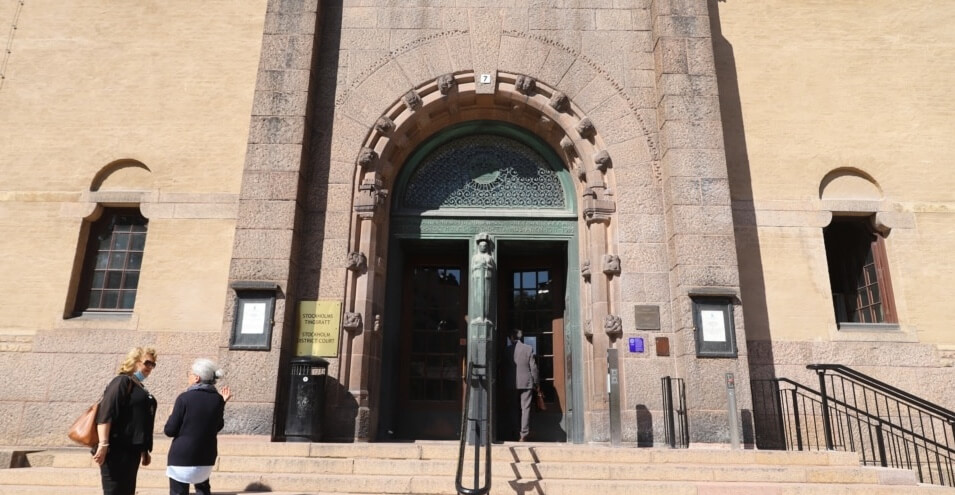
The 56th session of the trial of Hamid Nouri, accused of participating in the executions of summer 1988, took place on Wednesday, December 22, 2021, with testimony from Mehrdad Neshat Malekians in Stockholm, Sweden.
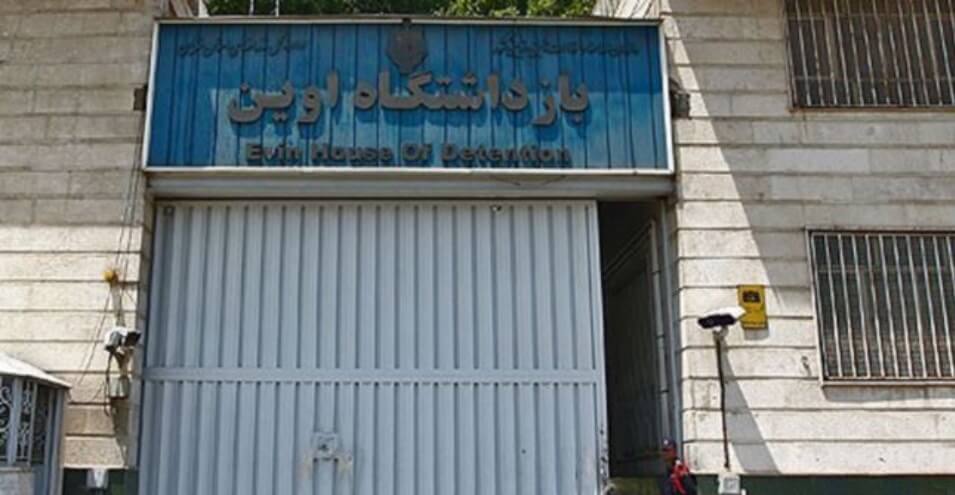
Mehrdad Neshat Malekians was arrested in September 1982 at age 22 along with his wife, both supporters of the organizational faction of the People’s Fedayeen Organization – Minority, and their 15-day-old son. They were transferred to Evin Prison. The witness, born to an Armenian father named Hamlet and a Muslim mother, faced a year of detention with severe interrogations and torture.
The witness’s trial was held one year later in Evin Prison. Ali Razini, the presiding judge at the time, told him that as an Armenian, he had no right to marry a Muslim woman and that their child was illegitimate. One month later, the witness received a five-year prison sentence – without accounting for his days in detention. He was later transferred to Qarchak Prison and in late autumn 1986 to Gohardasht Prison.
The witness noticed that from spring 1988, the prison separated members of the People’s Mujahedin Organization. The movement of prison officials and clergymen in religious attire inside the prison was visible. Prisoners’ families were not allowed to visit, and the last visits took place in “glass-walled rooms” before the executions began.
During the executions, the witness was held in Ward 8 with a group of left-wing prisoners. The witness identified September 5, 1988, as the day executions of leftists began at Gohardasht. He said that day, a number of prisoners from Ward 7 and four from Ward 8 were taken out. Of the four, only one returned to Ward 8 and reported the presence of a committee in the prison. On the sixth of September, the witness heard sentences from Ward 7 above him – such as “write your will” and “this is the end.”
On that same day, the witness was led by guards along with a group of 6-7 left-wing prisoners to the ward corridor. Jahanbakhsh Sarkhosh, one of the Fedayeen Minority supporters, was led before him to the death committee room. Sarkhosh insisted on his positions and was later executed. After Sarkhosh, the witness faced Ashraqi and Niri. Niri told him that as an Armenian raised in his Muslim mother’s family, he should pray. The witness ultimately signed a paper – without knowing its details – and was led out of the room. Minutes later, Ashraqi came out of the room. Niri asked him where Haj Agha was going. Ashraqi replied: “Let’s go hit them and come back.” The witness said he did not realize at that moment that Ashraqi meant execution by the word “hitting.” The witness then explained to the court how, after enduring severe cable beatings on the seventh of September, he agreed to pray.
On the eighth of September, the witness faced Hamid Nouri in the judicial office with several left-wing prisoners, who was introduced to them as “Brother Abbasi.” That day, for the second time, the witness signed papers related to the judicial process, the end of his sentence, the condemnation of his organization, and acceptance of an interview. The witness claimed in today’s session that he answered “no” to all questions there.
Neshat Malekians also testified that the executions ended with the executions of children from Evin and “execution-row prisoners” on the eleventh of September.
The witness confirmed the identity and execution of prisoners such as Mohammad Ali Behkish, Hossein Hajj Mohsen, Adel Talebi, Bijan Bazargan, Mahmoud Qazi, Keyvan Mostafavi, Abbas Raisi, Mostafa Farhadi, Homayoun Azadi, Majid Walid, and Behzad Omrani. He referred to them as “real persons” whom prisoners knew and had contact with and who were no longer present after the executions.
Mehrdad Neshat Malekians was transferred to Evin Prison in October or late September 1988 and spent a month in solitary confinement in the prison clinic. After recovering from the effects of beatings on his legs and enduring six years in prison, the witness was released in February.
At the end of the session, Judge Thomas Sander addressed the request of some experts, specifically Kaveh Mousavi, to participate remotely in the trial. It was ultimately decided that based on the request and preference of the prosecutors, the plaintiffs’ attorneys, and Hamid Nouri’s attorneys, the person in question and other experts would all participate in person at the trial.
The next session of Hamid Nouri’s trial will resume after Christmas and New Year, on January 10, 2022.
Source: Voice of America