730 Million Children Worldwide Don’t Know What Childhood Is
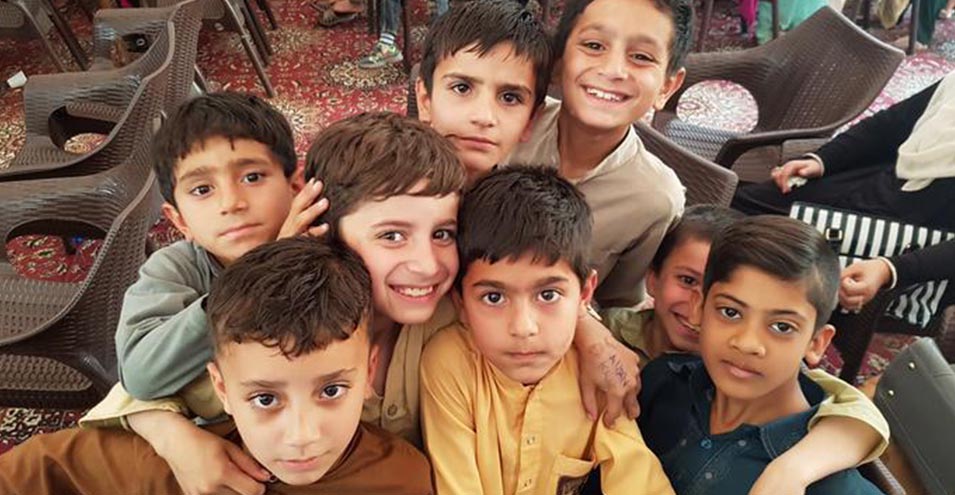
The charity organization “Save the Children” has released an unprecedented report. According to this organization, childhood has been stolen from 730 million children worldwide. Iran ranks 80th on the list of stolen childhoods.
Many people in their adult years recall fond memories of childhood and long for a repeat of those carefree days filled with laughter and play.
It is said that everything that happens from birth to adolescence will shape a person’s character in the future, and feelings of security, anxiety, joy, self-confidence, or personality complexes all have their roots in a person’s childhood.
But for five-year-old Sanya from India, thirteen-year-old Maria from Rio de Janeiro, or twelve-year-old Omar from Syria, childhood has no meaning. Sanya collects garbage in the landfills of New Delhi, Maria was killed in the crossfire of police shootouts and drug gangs, and Omar became the sole breadwinner of his family after his father was killed in the Syrian war and his brother went to war.
These are just three examples of the 730 million children whose childhood has been stolen, according to the charity organization “Save the Children.” In a report released on May 31st (June 10th), the organization cited war and violence, early marriage and pregnancy, forced labor, poor health, and lack of educational opportunities as the main reasons for this situation, stating that one-quarter of the world’s children have had their childhood stolen.
This report was released on the eve of celebrations for International Children’s Day in some countries (June 1st / June 11th).
The Situation of Iranian Children
To prepare this report, the organization’s workers examined the living conditions of children in 172 countries. The results of their research showed that children living in West and Central Africa face the greatest threats.
Niger, Angola, Mali, the Central African Republic, and Somalia are countries that have been placed at the end of the list.
Norwegian, Slovenian, Finnish, Dutch, and Swedish children experience the most peaceful childhoods. German children rank 10th on the list, and Iranian children stand at 80th place.
Countries such as Cuba, Turkey, Sri Lanka, Mongolia, Trinidad and Tobago are ranked higher than Iran.
The situation of children in Arab countries such as Qatar, Kuwait, Oman, Lebanon, Tunisia, Saudi Arabia, and Jordan has also been reported as better than Iran.
Among Arab countries, Qatar, standing at position 34, ranks higher than other Arab countries on this list.
Statistics at a Glance
Significant statistics mentioned by “Save the Children” organization in its report titled “Stolen Childhood”:
• Approximately 16,000 children under five years old die every day.
• More than 260 million children are deprived of education.
• Approximately 170 million children are forced to work, of which 80 million work in dangerous conditions.
• 26 percent of children under five die due to sepsis at birth, meningitis/brain inflammation, HIV/AIDS, measles, whooping cough, and tetanus. These are the leading causes of infant mortality in this age group.
• Approximately 156 million children worldwide face developmental disorders both physically and mentally due to malnutrition.
• Nearly one out of every 80 children has been displaced due to war and violence.
• Every 7 seconds, one out of every 15 girls is subjected to forced marriage.
• Every 2 seconds, one girl becomes a mother.
Stolen Childhoods, Infants of Child Victims
According to Bijan Neshaat, head of this organization’s branch in Germany, as you read this sentence to the end, several girls around the world are giving birth to babies; babies from whom “everything that makes up a person’s childhood will be stolen.”
This is the first time such a report has been published in the world. “Save the Children” organization intends to update this report annually.
In preparing this report, information from the World Health Organization, the World Bank, government data, and multiple relief programs of the United Nations were used.
Bijan Neshaat considers the reality that in 2017 one-quarter of the world’s children still do not have the right to learn, security, or play unacceptable. According to him, through targeted planning and investment in children’s health and welfare, there is hope that the situation can change.
The top ten ranking positions in order:
Norway and Slovenia (with similar scores), Finland, Netherlands and Sweden (similar scores), Portugal, Ireland, Iceland / Italy / Belgium / Cyprus / Germany and South Korea (similar scores)
The ten final positions from the end:
Niger, Angola, Mali, Central African Republic, Somalia, Chad, South Sudan, Burkina Faso, Sierra Leone, and Guinea (similar scores)
Source: DW