Albania Cuts Diplomatic Relations with Iran
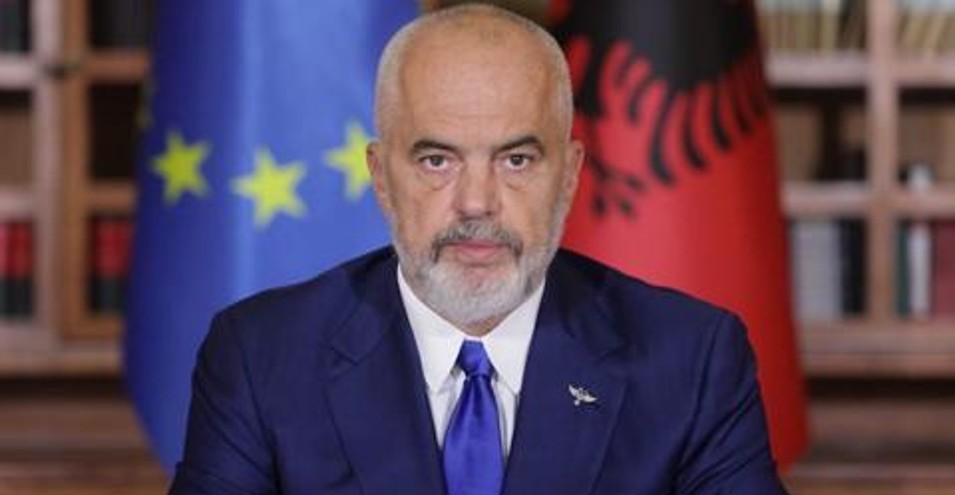
Albania’s Prime Minister announced on Wednesday, September 7, that his country has severed diplomatic relations with Iran and ordered Iranian diplomats to leave Albania.
According to Reuters news agency, Edi Rama said this decision was made in connection with the findings of an investigation into a cyberattack that occurred in the country in July.
In a video statement sent to media outlets, Albania’s Prime Minister said: “The government has decided to end its diplomatic relations with the Islamic Republic of Iran” and ordered Iranian embassy diplomats and staff to leave the country within 24 hours.
Rama said: “This severe reaction… is completely proportionate to the severity and danger of the cyberattack that threatened to paralyze public services, wipe out digital systems and hack government records, steal internal government electronic communications and create chaos and insecurity in the country.”
Rama said: “The Council of Ministers has made a decision to cut diplomatic relations with the Islamic Republic of Iran.”
Edi Rama accused the Islamic Republic of Iran of carrying out a cyberattack on Albanian institutions on July 15 with the aim of “paralyzing public services and hacking data and electronic communications of government systems.”
Rama added: “The mentioned attack failed and the damage caused compared to the goals of the attackers is minimal. All systems have been fully operational and no irreversible data deletion occurred.”
An American cybersecurity firm said on August 4 that the cyberattacks in late July that temporarily disrupted the online services of several Albanian government institutions were most likely carried out by hackers affiliated with the Iranian government, aimed at disrupting the holding of a Mujahedin-e Khalq assembly in the country.
In its report, Mandiant said with “moderate confidence”: “Due to the timing of this attack, the content posted on social media channels that claimed responsibility for the attack, and the use of code and software similar to malware previously used for cyberattacks against Persian and Arabic-speaking targets, it can be said that the perpetrators are part of a network affiliated with the Iranian government that typically targets political opponents of the government.”
The Mujahedin-e Khalq organization’s assembly, which was scheduled to be held in early August in Albania, was cancelled due to the Albanian government’s warning about possible terrorist attacks. About three thousand members and supporters of this group live in a camp called “Ashraf 3” located 30 kilometers west of Tirana, Albania’s capital.
The Mujahedin-e Khalq assembly, titled “Free Iran Global Summit,” was to be held at this camp and was to be attended by several foreign politicians, including several members of the U.S. Congress.
A group called “Homeland Justice” claimed responsibility for the cyberattacks, in which ransomware was used to steal information.
Albania-Iran relations have been strained for years due to Tirana’s hosting of the Mujahedin-e Khalq organization.
The Mujahedin-e Khalq organization, founded in the late 1960s with a mix of Islamic and radical leftist ideology, was one of the groups that fought politically and militarily against the Pahlavi regime.
In subsequent years, many members and supporters of this group went to Iraqi territory and remained there until a few years after the fall of Saddam Hussein’s regime.
Pursuant to an agreement between the United States and the Iraqi government, the forces of this organization were transferred to Albania.
US: We Strongly Condemn Iran’s Cyberattack on Albania
In this regard, Adrienne Watson, spokeswoman for the U.S. National Security Council, said on Wednesday in a statement that “the United States strongly condemns Iran’s cyberattack on our NATO ally, Albania.”
The statement added: “We join Prime Minister Rama in the process of holding Iran accountable for this unprecedented cyber incident. The United States will take further action to hold Iran accountable for actions that threaten the security of U.S. allies and problematic actions.”
The U.S. National Security Council spokesperson further stated in the statement, referring to the July 15 cyberattack in Albania: “We have concluded that the Iranian government carried out this reckless and irresponsible cyberattack and is responsible for the information breach and the leaking of this information.”
Source: Radio Farda