Amnesty International Warns About Wall Construction Around Khavaran Cemetery: International Investigation Must Be Conducted Immediately
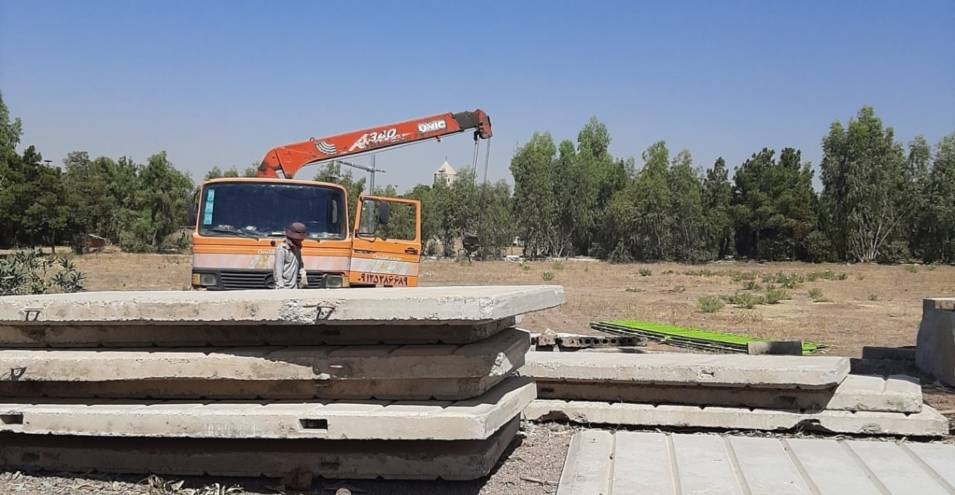
Amnesty International warned about wall construction by Islamic Republic security forces around Khavaran Cemetery, the burial site of executed political prisoners in 1988, and called on active countries in the United Nations Human Rights Council to immediately create conditions for international investigation into these mass executions.
Amnesty International stated on Tuesday, September 13, in a statement that these countries should “establish an international investigative mechanism regarding extrajudicial executions and forced disappearances of thousands of political opponents and dissidents during this massacre, which constitutes ongoing crimes against humanity.”
Amnesty International also called on members of the UN Human Rights Council to demand that Islamic Republic officials end the “concealment of mass graves of the 1988 massacre victims.”
In recent years, families of victims of the widespread executions in 1988, in which thousands of political prisoners died, have repeatedly warned about the destruction of Khavaran Cemetery by security forces.
This cemetery, located outside Tehran, is based on evidence a mass burial site for hundreds of political opponents who were secretly executed in the summer of 1988 and is considered the most famous burial site of these executed prisoners in Iran.
In 2018, two organizations, Amnesty International and Justice for Iran, reported in a document that Islamic Republic officials “deliberately” destroyed the mass graves of victims of the 1988 political prisoner massacre in at least seven Iranian cities.
However, the process of destruction and efforts to erase the remnants of this massacre have intensified over the past year.
Last year, some family members of those executed in the 1960s issued a statement regarding the digging of new graves in Khavaran Cemetery, describing this action as a new attempt by the Iranian government to erase “the remnants of its crimes in the 1960s and the summer 1988 massacre.”
Also in August of this year, hundreds of family members of victims from various periods of the Islamic Republic of Iran’s rule asked the United Nations High Commissioner for Human Rights to prevent “destruction and tampering with Khavaran Cemetery” by the Islamic Republic.
Amnesty International in its recent statement wrote that in recent months, Islamic Republic officials have built a concrete wall two meters high around the Khavaran cemetery.
The organization expressed concern: “This construction has fueled serious concern that, given the lack of visibility from outside into Khavaran cemetery and the fact that security officials stationed at the cemetery entrance only allow close relatives of the executed access at specific times, officials can more easily destroy or tamper with the cemetery going forward.”
Diana Al-Tahtawy, Deputy Director of the Middle East and North Africa Office at Amnesty International, said on this matter: “Iranian officials cannot simply build a wall around the crime scene and think that all their crimes will be erased and forgotten.”
She added: “Officials have systematically and deliberately hidden or destroyed key evidence for 34 years that could be used to clarify the facts related to the scope of extrajudicial executions carried out in 1988, to pursue justice, and to take reparative measures for victims and their families.”
According to Amnesty International’s report, five security cameras have been installed both at the Khavaran mass graves site and on the street outside the cemetery to “intimidate bereaved families and deter people from coming to this place to pay their respects.”
Also, according to this human rights organization’s statement, Iranian officials have repeatedly razed and destroyed locations that have been confirmed or suspected to be mass graves related to the 1988 massacre with bulldozers, removed markers placed and trees planted by families to keep hidden the traces and evidence of the 1988 prison executions.
The statement adds that Islamic Republic officials have even turned some mass graves into “garbage dumps.”
Previously, reports were published about forcing Bahai families to bury followers of this faith in Khavaran Cemetery to change its nature.
According to families of the complainants, the changes made to Khavaran Cemetery were made with the aim of “identifying and controlling families and the Bahai community.”
Due to the concealment by Islamic Republic officials, there are no exact statistics on the number of those executed, but based on some estimates, it is said that approximately five thousand political prisoners, supporters of the Mujahedin-e Khalq Organization and leftist groups such as the Fadaiyan-e Khalq and the Tudeh Party, were executed in Iranian prisons in the summer of 1988.
In 2016, an audio file dated August 15, 1988 was released in which Ayatollah Montazeri, during a meeting with members of the decision-making committee regarding these prisoners, refers to these executions as “the greatest crime of the Islamic Republic.”
Source: Radio Farda