Arrest of Arab Volunteer Aid Workers in Goriah Village, Khuzestan by Revolutionary Guards Intelligence Officers
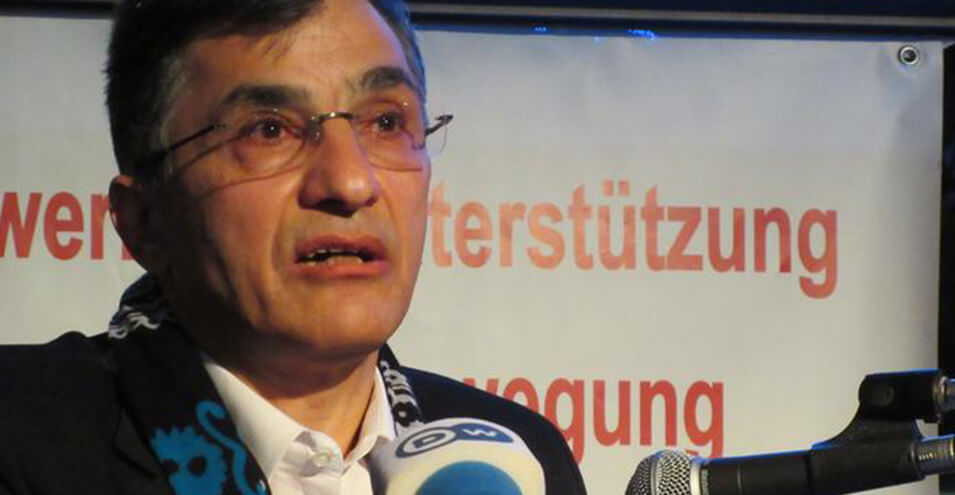
Karim Dahimi, a human rights activist from the Arab community of Khuzestan, told the Human Rights Campaign in Iran that two relief workers from Khuzestan named Ahmad Kaebi and Yaqoub Kaebi were arrested on Friday morning, the 16th of Farvardin, while they were providing assistance to flood victims in Goriah village by officers of the Revolutionary Guards’ intelligence service. According to Dahimi, on Sunday evening, the 18th of Farvardin, nine volunteer aid workers who had gone from Mahshahr to Goriah village were also arrested. In recent days, residents of Khuzestan have voluntarily gone to assist flood victims in the province.
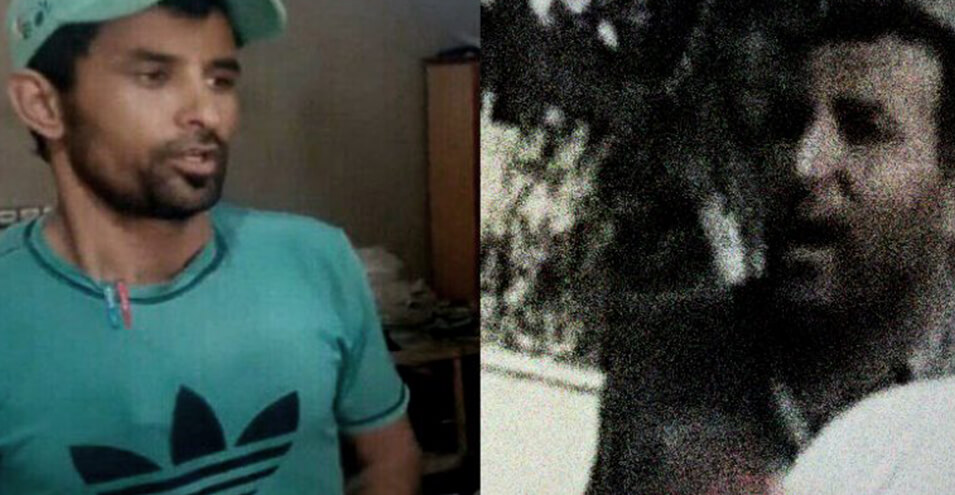
Karim Dahimi, who lives in London, referring to internal sources in Goriah village, said: “Ahmad and Yaqoub Kaebi, who were engaged in relief work at the camp, were arrested by officers of the Revolutionary Guards’ intelligence service for unclear reasons, and we still have no information about where they are being held.” According to this human rights activist, Ahmad Kaebi is 36 years old and holds a master’s degree in law, is married with two children, and is a cultural activist in the city of Shushtar. According to Karim Dahimi, Yaqoub Kaebi is also an artistic and cultural activist from Shushtar.
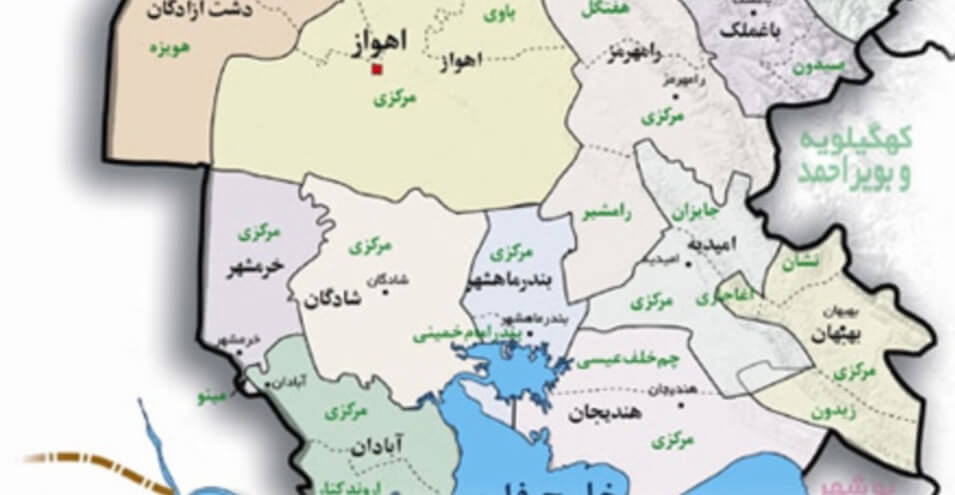
Goriah village is one of the villages of Shoeibiyeh city in Shushtar county in Khuzestan province. In recent days, many people from surrounding cities have voluntarily gone to Goriah village and other villages in Shushtar to provide assistance.
Karim Dahimi told the campaign about the reason for the arrest of these volunteer aid workers: “We still don’t have precise information about their arrest. But according to information from friends in this village, these Arab youth wanted to distribute food and aid they had collected among the people, and were arrested due to a disagreement with the officers and their argument with them. Some also say that the Revolutionary Guards arrested them ahead of time because they were known activists, and some of them had previous arrests.”
Karim Dahimi, speaking about the reason for the disagreement between Arab youth and the Revolutionary Guards over the distribution of goods and food among people, said: “Today I heard from inside the country that some youth from the city of Hamidiyeh who wanted to bring food and blankets to flood victims were stopped by security forces. The officers said ‘get down, we will take you and your belongings because the road is dangerous.’ But on the way, they transferred part of the belongings to another vehicle in the face of their objections. They only transferred a small portion of the belongings with them to Goriah. In recent days, there have been many clashes between Basij and Revolutionary Guards forces with Arab relief workers living in Khuzestan over the distribution of relief supplies.”
On the other hand, Gholamhossein Gheibparvar, head of the Basij Organization of the Oppressed, claimed on the 19th of Farvardin that “counter-revolutionary” media during the floods want to set people against the Revolutionary Guards and Basij. In his visit to flood-affected areas of Khuzestan province, he said: “Counter-revolutionary media with dishonorable propaganda want to set people against the Revolutionary Guards and Basij, and they will take this vain desire to the grave.”
The head of Basij stating that “there is no reason for any concern,” said: “Basij and the Revolutionary Guards have been beside people in the difficult conditions of the flood and have used all their capabilities to help people and relieve the suffering of flood victims.” However, contrary to what Gheibparvar believes, many people in flood-affected areas of Khuzestan have protested in published videos about lack of resources, non-arrival of food and clothing materials, and negligence by Revolutionary Guards officers.
A video was widely distributed on social networks on the same day, the 19th of Farvardin, containing a protest by a flood-affected Khuzestan citizen with the governor of Khuzestan. This citizen told Gholamreza Shariati, the governor of Khuzestan, who went to inspect their situation: “You don’t help us because we are Arabs. We have nothing left. Why do you send aid to Syria but don’t help us.” The governor of Khuzestan responded insultingly to him: “Don’t talk nonsense. You are a system opponent, ill-mannered, get out. Go. What is this talk.” And his bodyguards pushed away the protesting flood victim without giving him an answer.
Social media users, civil and political activists, and journalists expressed strong protest against the behavior of the governor of Khuzestan. Mehdi Qadimi, a journalist living in Iran, wrote in his tweet: “Seeing a disrespectful governor who tells a flood victim and protester ‘ill-mannered, system opponent,’ was the bitterest scene for me in these past few weeks. When there are whispers in Khuzestan that water is being directed toward Arab residential villages so they drown first, every official’s duty is to build trust, not to create enemies from tired and angry people.”
Abdullah Momeni, a former political prisoner, wrote in his tweet: “The response of Shariati, the governor of Khuzestan, to an old man suffering from poverty and misery shows dwarfed management and lack of culture, and demonstrates the decline of moral standards of some government officials who harm the spirit of the nation in this way. Managers of this kind are so enamored and intimidated by power that morality is dead to them.”
Majid Deri, a former student activist and ideological prisoner, wrote in his tweet: “#Shariati, the governor of Khuzestan, in response to the protest of an Arab citizen, calls him an ill-mannered system opponent. Really, Mr. Governor! Servant of the system! What about the constructions in the Karun basin? What about the tower that was being built in the middle of Karun? How much budget was wasted there? Why were these permits issued? Who issued the permits?”
Journalist Nelly Mahjoub also wrote: “#Shariati_Governor_Khuzestan, what kind of crisis manager are you? How do you allow yourself to silence people trapped in #floods by labeling them? Be ashamed of people who work with heart and soul and those who came to help their people. Because these are all people, people. Understand.”
Journalist Saba Azarpeik also wrote in a tweet: “Security and intelligence agencies, teach #Shariati_Governor_Khuzestan how to deal with disaster-struck and homeless people! This governor incites people! If Ali Larijani were the Minister of Intelligence or Aziz Jafari were from the Revolutionary Guards, they would certainly speak calmly and warmly with this Arab compatriot in this scene #Khuzestan_Flood”
Another user, Shahin Milani, also criticized in a tweet the silence of parliament representatives regarding the floods: “That Arab citizen who asks the governor of the Islamic Republic about spending in Syria is actually exposing the spineless parliament representatives who have never spoken about the costs of intervention in Syria.”
Journalist Shahram Rafiee-zadeh also wrote: “#Gholamreza_Shariati, governor of #Khuzestan, doesn’t allow a middle-aged flood victim and protester to speak who asks him ‘Do you do anything for us Arabs (of Iran) or only for Syria?’ and angrily tells him: Don’t talk nonsense, you system opponent, ill-mannered, go, I said go #Khuzestan_Flood”
Another user named Agha Bahman also wrote sarcastically: “Contact the governor of Khuzestan from Syria and tell him: Now you be a little restraint.”
Another user named Ilia wrote in his tweet: “You don’t have the right to tell people what to think or not to think, Mr. Governor! People want to ask why their money is being spent elsewhere. You are ill-mannered because you don’t know how to talk to people. #Shariati_Governor_Khuzestan”
In more than two weeks since the floods began in various parts of Iran, numerous reports and protest videos about the presence of Revolutionary Guards and Basij personnel in flood-affected areas have been published. There have been propaganda videos showing Revolutionary Guards standing in the middle of floods smiling at the camera and using slogans or reciting prayers to promise that the situation will improve.
Source: Human Rights Campaign