Arrest of Iranian-Belgian Professor in Iran Due to ‘Security Issues’
Leuven University in Belgium has ended its cooperation with Tehran University due to the arrest of an “Iranian-Belgian professor” in Iran. The rector of Tehran University, in announcing this news, expressed regret over the impact of “political issues” in Iran on bilateral scientific relations.
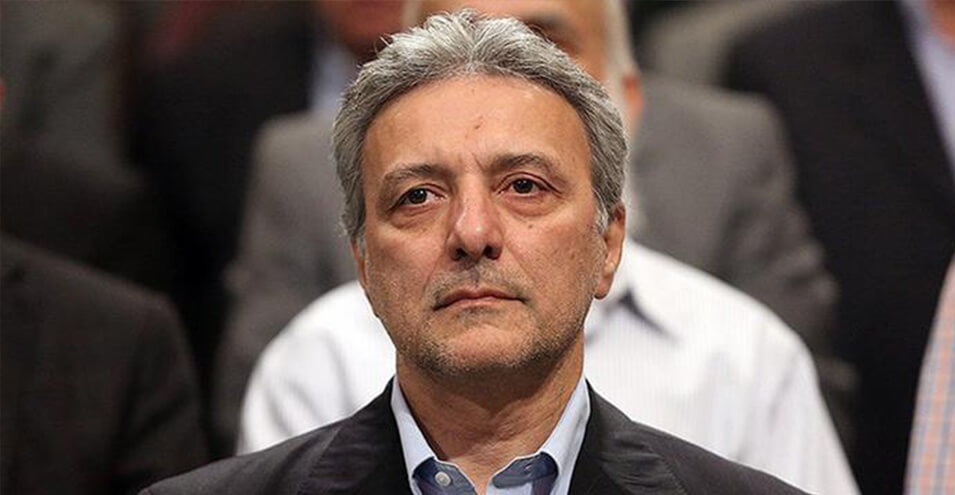
Mahmoud Nili Ahmadabadi, rector of Tehran University, cited the arrest of an “Iranian-Belgian professor” at the university in Iran as the reason for Leuven University of Belgium’s termination of cooperation with Tehran University.
The rector of Tehran University on Monday, March 4, announced the “termination of joint cooperation between Leuven University of Belgium and Tehran University due to the arrest of the Iranian-Belgian professor at this university in Iran,” informing of the “limitation of cooperation communications between Belgian universities and Iranian universities.”
Nili Ahmadabadi told ISNA news agency: “Tehran University had joint collaborations with one of Belgium’s universities called Leuven University, and joint educational programs were held between the two universities, but this cooperation was canceled by Leuven University due to political issues.”
Impact of “Political Issues” on Scientific Relations
The rector of Tehran University further emphasized: “Unfortunately, political issues always have an impact on bilateral scientific cooperation relations. Just as the reason for canceling bilateral cooperation between Leuven University of Belgium and Tehran University was announced as the arrest of a Belgian professor in Iran.”
Mahmoud Nili Ahmadabadi also, while emphasizing the pursuit of continued cooperation between Iranian and Belgian universities by the Minister of Science, said: “In a recent trip to Europe, the Minister of Science followed up on this matter in his meetings with Belgian university officials, and this matter is also being pursued through the embassy and the Foreign Ministry. The arrested person taught at Leuven University, and for this reason, during a recent trip to universities in that country, they protested this arrest, and this matter is very important to their university community.”
The rector of Tehran University added: “Currently, we still have limited communications with some Belgian universities, but this interaction has not been realized at the level we expected due to political issues (arrest of a Belgian professor in Iran).”
Arrest “Due to Security Issues”
The rector of Tehran University did not provide further explanation regarding the reason for the arrest of this “Iranian-Belgian professor,” his identity, charges against him, or the organization that arrested this academic figure.
However, according to Mehr news agency, Hossein Salar Ameli, Deputy Minister of Science of Iran for International Affairs, reported the “security” charges against this dual-nationality professor and said: “Apparently, one of the individuals arrested in Iran due to security issues had been active at Leuven University of Belgium.”
This Iranian government official, referring to Leuven University of Belgium’s termination of scientific cooperation with Tehran University, added: “We have no problem with the rest of Belgium’s universities and joint research work is being carried out. Nevertheless, the Islamic Republic of Iran usually intervenes in the relevant matters regarding pardon and reduction of prison sentences for these individuals.”
Iran’s Deputy Minister of Science for International Affairs also said: “Tehran University has also submitted its request in this regard, and colleagues in the judiciary are pursuing this matter, and if deserving, will be granted a reduction so that Tehran University’s scientific connection with that university is not harmed.”
Hossein Salar Ameli, meanwhile, emphasized: “This is not very concerning. I hope the circumstances of this person are such that they lead to his release and Tehran University’s scientific relationship with the mentioned university is not damaged through this.”
Allegations of “Hostage-Taking” Against the Islamic Republic
Previously, many dual-nationality citizens had been arrested by the Islamic Republic’s security agencies after traveling to Iran to participate in scientific conferences. Javaid Rehman, UN Special Rapporteur on Human Rights in Iran, in his latest report on the human rights situation in Iran, referred to the violation of the rights of dual-nationality prisoners in the country and cited examples including their deprivation of fair trial.
Ahmadreza Jalali, Kamran Qaderi, Robert Levinson, Nazanin Zaghari, Saeed Malekpour, Siamak and Baquer Namazi, Xiao Yang, and Nizar Zakka are among the dual-nationality or foreign prisoners in Iran who were mentioned in Javaid Rehman’s recent report, and it was stated that some of them require urgent medical attention.
The news of the arrest of an “Iranian-Belgian professor” in Iran comes at a time when Assadollah Assadi, an employee of the Islamic Republic’s embassy in Austria, after being arrested in Germany, was transferred to Belgium and has been in detention in that country for several months.
This Iranian diplomat is accused of planning a bombing at a gathering of the Mujahedin-e Khalq Organization on July 30 in Paris. It is said that Assadollah Assadi acted as an Iranian intelligence officer and provided 500 grams of explosives to a young Iranian couple living in Belgium who intended to carry out the bombing at the MEK gathering in Paris.
The United States and some European countries accuse the Islamic Republic of using dual-nationality prisoners as “hostages” to achieve their political objectives. Jeremy Hunt, British Foreign Secretary, on December 28 accused the Iranian government of taking Nazanin Zaghari-Ratcliffe, an Iranian-British citizen, as a “hostage” to use her as diplomatic pressure on London.
Jeremy Hunt had said: “We disagree with many countries around the world, but none of them imprisons innocent people for the purpose of diplomatic pressure.” Bahram Qassemi, spokesman for Iran’s Foreign Ministry, called the British Foreign Secretary’s remarks “interventionist” and “objectionable” and rejected them.
Source: DW