Arrest of Kurdish Civil Activists; Uncertainty Continues
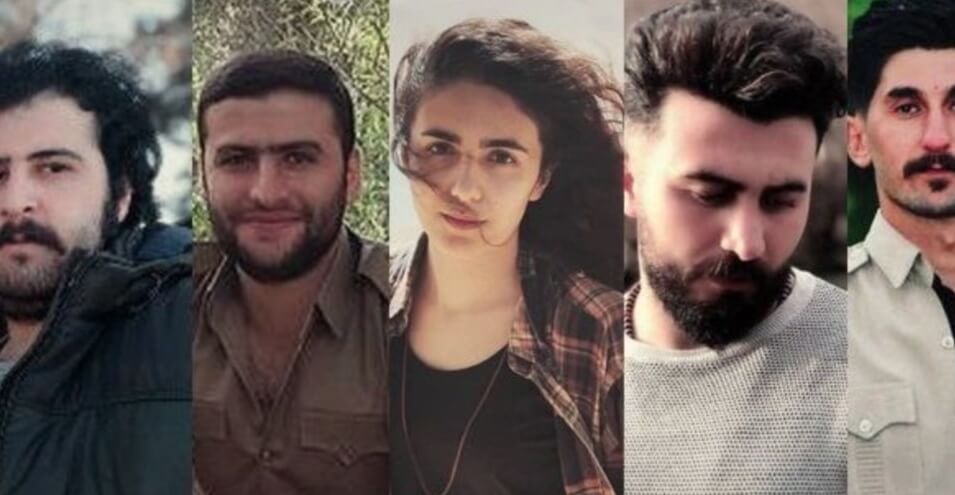
“With an assault by approximately twenty to thirty plainclothes forces and in cooperation with Kharazmi University security in Karaj, my brother was arrested without explanation, legal justification, or presentation of a court order, along with physical violence and abuse, together with Sahib Badrouj, another student at this university.”
This is part of Farouq Samani’s account, brother of Farzad Samani, regarding the moment of arrest of this Kurdish civil activist from Mahabad on the 20th of Dey.
Farzad Samani is a graduate student of sociology at Kharazmi University in Karaj. He had previously been arrested in early Esfand 1391 along with other civil activists due to cultural activities in the field of mother tongue education and was transferred to Mahabad Central Prison.
Farzad Samani, who has been active for years in cultural and environmental fields in Mahabad, is one of dozens of Kurdish civil activists who, during this period, has not only been denied access to a lawyer but until this moment the official charges and reasons for his arrest and other recent detainees have not been specified, and he has been placed in a situation of “enforced disappearance.”
Since the 20th of Dey, a new wave of arrests of citizens and Kurdish civil and environmental activists has begun by the Intelligence Organization of the Islamic Revolutionary Guard Corps and the Ministry of Intelligence and continues. These arrests, which include civil society activists, workers’ rights activists, environmental defenders, writers, students, former political prisoners, and ordinary citizens, have taken place in at least 19 cities and 5 provinces of Iran.
According to human rights organizations, during these arrests, which have mostly been mass arrests, more than one hundred people have been arrested so far and transferred to detention facilities of security agencies in Urmia, Sanandaj, and Marivan.
Following that, on the 15th of Bahman, 37 human rights organizations and civil institutions, including Amnesty International and Human Rights Watch, by signing a joint statement requested international bodies to hold the authorities of the Islamic Republic of Iran accountable for the suppression and “arbitrary” arrest of more than one hundred Kurdish citizens and civil activists.
Human rights organizations in this statement called for the release of detainees who are in a situation of “enforced disappearance.”
The signing organizations of this statement also expressed concern, noting the arrest of more than 500 members of the Kurdish minority for political reasons in 2020 and the conviction of 159 of them to prison sentences ranging from one month to 17 years and the issuance of death sentences for four people, that “detainees are at risk of torture and other cruel, inhuman, and degrading treatment to give forced confessions; confessions that may later be used by courts in unfair trials for fabricated crimes related to national security.”
Among the recently detained, more than 50 people remain in a state of “enforced disappearance” and authorities refrain from disclosing any information about their fate and detention location to their families.
In recent years in Kurdish-inhabited provinces, due to the significant growth and increase in peaceful activities of campaigns and grassroots organizations, as well as recruitment among young and educated men and women, repeated summons, arrests, issuance of harsh sentences, and increased security pressure on civil activists have also increased.
Civil activists and grassroots organizations, through informal circles, with coherent and comprehensive organizing and planning aimed at providing assistance, empowering civil society, and addressing economic and social needs of vulnerable groups in society, have always enjoyed a special position and popularity among the people.
Wave of Arrests of Kurdish Citizens and Civil Activists
Kurdistan Human Rights Network on the 21st of Dey reported the beginning of a new wave of repression and widespread arrest of Kurdish citizens and civil and environmental activists in various Iranian cities, noting that security forces “without presenting court orders and resorting to verbal and physical violence, and in an arbitrary and unlawful manner” carried out the arrest of these individuals.
Plainclothes forces at the time of arrest searched the residences and workplaces of many of these individuals and confiscated personal items such as mobile phones, books, university notes, laptops, and so on.
The arrest of Farzad Samani and Sahib Badrouj, two Kurdish students at Kharazmi University in Karaj, coinciding with the beginning of the recent wave of arrests in cities in Kurdish-inhabited areas, demonstrated that security agencies had previously planned such actions.
Messrs. Samani and Badrouj were among the first to be arrested in the morning of the 20th of Dey at the Kharazmi University dormitory in Karaj by security forces (plainclothes), and two days later were transferred to security facilities under the supervision of the Islamic Revolutionary Guard Corps in Urmia and Sanandaj.
Farouq Samani, an artist and former political prisoner, regarding the condition of his brother says: “My brother Farzad, two days after his arrest, in a brief telephone contact for only a few seconds with the family, a conversation that was in Persian, informed about his transfer to the city of Urmia and detention in the Haft-e Tir detention facility located in (Al-Mahdi Headquarters) in that city. Since then, this has been the last contact my brother has had with the family.”
This is at a time when on the 24th of Dey, a number of families of detainees went to the Intelligence Organization of the Islamic Revolutionary Guard Corps (Al-Mahdi Headquarters) in Urmia to seek information about the condition of their children, but received no clear answer and were told: “We have no information and these names are not here.”
Officers of the Islamic Revolutionary Guard Corps and the Ministry of Intelligence insulted and threatened these families when they attempted to obtain information about the condition of the detainees and warned them not to give interviews to media outlets and human rights organizations.
Farouq Samani, based on his personal experience from his detention period, says that intelligence organizations in Kurdistan show no signs of humane and lawful treatment of the detainee and adds: “Currently, being in such conditions for us families, who have no information about the fate of our loved ones, is very concerning. We do not know in whose hands our loved ones are and in which one of the security detention facilities they are being held.”
According to Farouq Samani, who is in contact with several other members of families of detainees, despite continuous efforts by the families, from judicial and security authorities no organization has officially assumed responsibility for the detainees so far.
He adds: “Initially we asked for help from the representative of the people of Mahabad, Mr. Jalal Mahmoodzadeh, and he, as our representative in parliament, was obliged to take action to clarify the condition and detention location of my brother and other detainees, but unfortunately after one or two phone calls, he did not even answer our calls and completely withdrew and made no minimal intervention or assistance based on his duties.”
To this point, none of the officials and representatives of the provinces in Kurdish-inhabited areas have shown any reaction to the recent arrests of Kurdish citizens and civil activists.
Also, in recent days, Twitter users for the second time in a short period protested the latest wave of suppression and arrest of civil activists in Kurdistan, and the hashtags used in the Twitter storm also became the first trend on Twitter in Iran.
Under these circumstances, with the continuation of uncertainty about the health status and non-disclosure of the reasons for the arrest of these individuals, families have suffered considerable psychological and mental pressures.
Aziz Edwaei, a former political prisoner and brother of Mohammad (Akram Edwaei), regarding the manner of arrest of his brother says: “Plainclothes forces entered my brother’s house at four in the morning on the 23rd of Dey and while my brother was asleep, they handcuff him with beating in front of his wife and take him away.”
He says that his brother during this period had only one one-minute phone call with the family, and the family’s efforts by going to court and the intelligence agency of Marivan have remained unsuccessful and effectively no organization is accountable.
Mr. Edwaei adds: “My brother Akram was arrested for one day in 1389 and again in 1396 was detained for one and a half months in the central intelligence detention of Marivan. His charge was ‘cooperation with Kurdish opposition parties,’ which ultimately he was acquitted of in this case.”
According to Aziz Edwaei, security officers over the past few years have come to their home seven times to arrest himself and his other brothers, and currently another one of his brothers named Aram Edwaei is awaiting an appeal trial for his six-month prison sentence.
In this regard, on the 25th of Bahman, a group of civil activists from Marivan, while severely criticizing the recent arrests of Kurdish civil activists, issued a statement.
In this statement, government and state institutions were asked to release the arrested activists and create conditions for the peace of families and society.
Part of this statement reads: “It is evident that organizations and civil activists play an important role in the development and advancement of democracy and rationalization of the basis for people’s actions. Moreover, their activities, far from violence and to play a role in various social, cultural, and environmental fields, have always been encouraging of enthusiasm and accountability in the face of collective and public interests of society.”
According to the Kurdistan Human Rights Network report, during this period 29 of the arrested activists have been released on bail.
Also, during this period, 10 arrested activists named Azimeh Naseri, Hossein Gardshi, Soran Hoseinzadeh, Sirvan Nouri, Iman Abdi, Afshin Mamahammadi, Farhad Mousapour, Freidon Mousapour, Bahman Yousuefzadeh, and Shapol Khidri have been transferred from the detention facility of the Intelligence Organization of the Revolutionary Guard to Urmia Central Prison.
The families of these detained activists announced that the charge against these individuals is “membership in one of the Kurdish opposition parties” and the Urmia court has objected to their release on bail.
Source: Radio Farda