Australia Designates Islamic Revolutionary Guard Corps as State Sponsor of Terrorism
Australia’s decision to place the Islamic Revolutionary Guard Corps on the list of state sponsors of terrorism, following reports of attacks against the Jewish community, marks the beginning of a new phase in tensions between Canberra and Tehran.
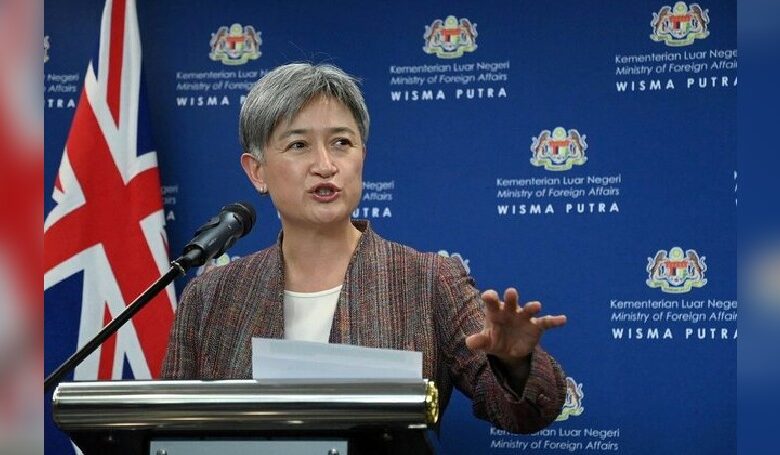
The Australian government announced on Thursday, November 27, that it has officially placed the Islamic Revolutionary Guard Corps on the list of state sponsors of terrorism, a decision that Foreign Minister Penny Wong characterized as the result of a “credible and substantiated” intelligence assessment.
Based on this assessment, Australia’s security agencies concluded that the Islamic Revolutionary Guard Corps coordinated attacks against Australia’s Jewish community, attacks that raised serious alarm about interference by a foreign state in the country’s domestic security.
Tensions between the two countries intensified in August when Australian Prime Minister Anthony Albanese accused Iran of orchestrating two antisemitic attacks and the burning of Jewish-owned premises in Sydney and Melbourne. At the same time, he announced that his country would expel Iran’s ambassador.
In an unprecedented response, the Australian government declared Iranian Ambassador Ahmad Sadeghi an “undesirable person” and gave him and three other officials from the Islamic Republic just seven days to leave Australian soil. Albanese also confirmed that the Australian embassy in Tehran had been suspended and all Australian diplomats had been relocated to a third country for security purposes.
The Australian Prime Minister announced at that time that his government was proceeding with the formal designation of the Islamic Revolutionary Guard Corps as a terrorist organization, an action that has now been implemented.
Ismail Baghaei, spokesman for Iran’s Foreign Ministry, while rejecting these accusations, emphasized: “Antisemitism has no place in our policy.” He claimed that the accusation was “fabricated by Mossad” and called on the Australian government not to allow its relations to be affected by narratives and conspiracies from Israeli intelligence agencies. Baghaei also described a Mossad report about the role of a Quds Force unit in an attack on Jewish targets as “storytelling.”
In response, Australian Interior Minister Tony Burke emphasized last month that the government’s decisions are based entirely on domestic and independent intelligence and not on foreign reports.
This position was reinforced by statements from Michael Burgess, the head of Australia’s intelligence and security organization (ASIO). He said that “thorough” investigations by his organization have shown that the Islamic Revolutionary Guard Corps has directed at least two attacks, and possibly more, against Jewish interests in Australia. Burgess added that the Iranian embassy and its diplomats had no role in these attacks.
The Israeli embassy in Australia welcomed the expulsion of Iran’s ambassador and Canberra’s decision to designate the Islamic Revolutionary Guard Corps as a terrorist organization, describing it as an important step to counter “Iran’s cross-border threats.”
No reports of deaths or injuries in these two attacks have been published, but their political and diplomatic consequences are described as severe and enduring. The designation of the Revolutionary Guard Corps on the state sponsors of terrorism list places Australia alongside countries that have adopted stricter policies toward Tehran; a move that could have profound implications for regional relations, security cooperation, and diplomatic interactions in the coming years.