Bahai Community Statement in Response to Masoud Pezeshkian’s Presence at the United Nations
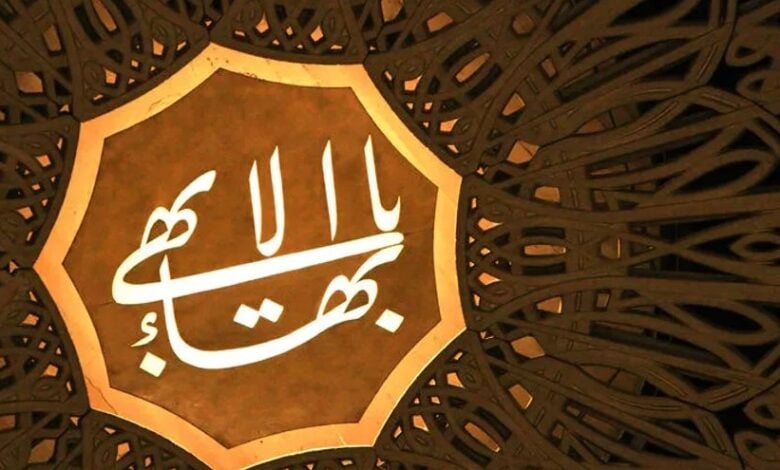
The global Bahai community issued a statement in response to the presence and speech of “Masoud Pezeshkian” at the United Nations.
The global Bahai community, yesterday on the 2nd of Mehr, in response to the presence of “Masoud Pezeshkian,” President of Iran, at the General Assembly of the United Nations, while referring to the intensification of harassment and persecution of Bahais in Iran, issued a statement.
By issuing this statement, the global Bahai community emphasized that Pezeshkian traveled to the United Nations after making promises to the Iranian people in recent months, in one of which he announced that his government would respect the rights of all ethnic and religious minorities.
In the aforementioned statement, it was written that Mr. Pezeshkian considered “respect for each other’s beliefs” as one of the principles of development and at the same time made many other promises, while there is a vast gap between words and actions, particularly regarding the harassment and persecution of Bahais.
“Simin Fahndezh,” representative of the global Bahai community at the United Nations in Geneva, while referring to the fact that “we should view the statements of President Pezeshkian with optimism,” said: “However, based on past and current experiences, we should pay more attention to their performance than to their words. Because these promises have not yet led to any change in the reality of Bahais’ lives, and the evidence of their continued harassment and persecution is too significant to be ignored.”
Ms. Fahndezh, while also referring to previous heads of the Islamic Republic’s government, added: “They made similar promises to create an Iran where everyone is equal, but regardless of who sits in the seat of power, Iran’s Bahais have continued to face and do face the same continuous harassment and persecution from cradle to grave.”
She, while referring to the fact that “the elimination of the global Bahai community as a living and vibrant community in the country” is one of the goals of Iran’s government, added: “The Islamic government discriminates against Bahais in its constitution and all its major laws and policies and has issued specific official state directives regarding the Bahai issue.”
The full text of the global Bahai community’s statement is as follows:
Do Promises Affect Bitter Reality: Masoud Pezeshkian’s Speech at the United Nations Coinciding with Intensified Harassment and Persecution of Bahais in Iran
New York, 2 Mehr 1403 (September 23, 2024) – Masoud Pezeshkian, Iran’s new president, travels to the United Nations following a wave of promises he has made to the Iranian people over the past few months.
In his presidential election campaign this summer, he said that Iranian civilization is a “valuable heritage” but faces “great challenges and problems” and “untying these knots and resolving the country’s problems is only possible with the participation and cooperation of every citizen of Iran.”
Dr. Pezeshkian specifically promised that his government would respect the rights of all ethnic and religious minorities. For example, he said last week, on the 26th of Shahrivar 1403 (September 16, 2024), in a press conference in Tehran: “Everyone who lives in this country deserves, based on their capabilities, to be placed in a position that is their right. You cannot insult what I worship. You cannot ignore that belief. Mutual respect and mutual dialogue is one of the principles of development.”
The president also said there is no difference between people: “People are like the teeth of a comb, equal.” Nevertheless, in the Islamic Republic of Iran, there remains a vast gap between words and deeds, particularly regarding the harassment and persecution of Bahais.”
Masoud Pezeshkian’s statements, especially with recent attacks against Bahais in various parts of Iran in recent weeks, are in stark contradiction. He had stated that relations between Iranians of different ethnicities and faiths should be strengthened through cultural and artistic dialogues.
Simin Fahndezh, in response to these issues, added: “The Iranian government must respect human rights and treat everyone equally before the law. For President Pezeshkian’s actions to be consistent with this desire of the people and with his own statements, he and his colleagues must respect the rights of Bahais, other religious and ethnic minorities, women, and everyone under the protection of his government.”