Blinken: Path Iran has taken will lead to greater economic and political isolation of Iran
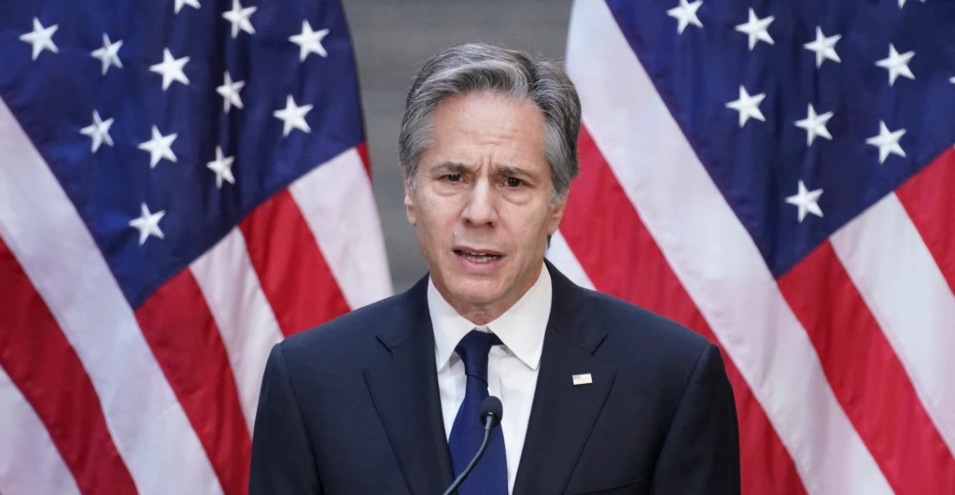
The US Secretary of State, less than 24 hours after the adoption of a critical resolution against Iran by the Board of Governors of the International Atomic Energy Agency, once again emphasized that Iran must cooperate with the Agency and provide authentic and verified technical information in response to the outstanding questions of this body.
Antony Blinken on Thursday, June 9, stated in a statement that negotiations on reviving the nuclear agreement with Iran will only succeed if Tehran abandons its demands beyond the JCPOA.
The US Secretary of State was likely referring to the Islamic Republic’s request to remove the Islamic Revolutionary Guard Corps from the list of terrorist organizations of the United States and to provide guarantees that Washington will not withdraw from the agreement in the future.
In his statement, he also emphasized that Iran’s actions threaten the possibility of reviving the 2015 nuclear agreement known as the JCPOA.
Blinken warned that the only outcome of the path the Islamic Republic has taken would be “deepening the nuclear crisis and greater economic and political isolation of Iran.”
The remarks of the US Secretary of State come as Iran, on Thursday, in a retaliatory response to the adoption of the resolution by the Board of Governors, began removing 27 surveillance cameras of the Agency in Tehran, Natanz, and other nuclear facilities.
The Board of Governors of the Agency on the evening of June 8 adopted a resolution against Iran by majority vote, in which it criticized Tehran’s lack of cooperation with this body.
In Blinken’s statement it said: “Yesterday we joined the overwhelming majority of the Board of Governors of the International Atomic Energy Agency to express our support for this agency’s special mission in carrying out safeguards activities aimed at preventing the spread of nuclear weapons.”
The US Secretary of State stated: “Iran must cooperate with the Agency and, in response to the Agency’s questions, provide authentic technical information.”
According to Blinken’s statement, resolving safeguards issues on the Board of Governors’ agenda will only be possible in this way.
The statement adds that the recent resolution is essentially related to the Agency’s mandate and Iran’s fundamental obligations under the Non-Proliferation Treaty (NPT) and has no connection to the Joint Comprehensive Plan of Action (JCPOA).
The Islamic Republic of Iran committed last year to answer the Agency’s questions within a three-month period about the origin of uranium in three undeclared locations clearly. However, the Agency’s latest report shows that Iran has not fulfilled its commitment and negotiations on reviving the JCPOA have also remained stalled since then.
Blinken meanwhile emphasized that the United States remains committed to a mutual return to full implementation of the JCPOA.
He said: “We are ready to finalize an agreement with Iran based on understandings reached with our European allies after months of negotiations in Vienna.”
The US Secretary of State recalled that such an agreement has been ready since March (late February 2022), but Washington can only bring negotiations to a conclusion and implement the agreement if Iran abandons its expanded demands that go beyond the framework of the JCPOA.
He also said, referring to the Islamic Republic’s initial reaction after the adoption of the resolution, that unfortunately Iran, instead of addressing the issue of “non-cooperation and lack of transparency” that led to the presentation of a negative report by the Director General of the Agency and caused deep concern among Board members, has resorted to provocative nuclear actions and reduced transparency.
Iran’s Atomic Energy Organization announced on June 8 that it intentionally disabled two “beyond safeguards” cameras of the International Atomic Energy Agency at an Iranian nuclear facility in a statement.
According to the US State Department statement, “such steps (by Iran) will have a counterproductive effect and will complicate efforts to return to full implementation of the JCPOA.”
Blinken concluded by emphasizing: “We continue to pressure Iran to choose diplomacy and de-escalation instead of these actions.”
The Director General of the Agency on Thursday, in a press conference, called Iran’s recent action a “fatal blow” to the process of reviving the JCPOA.
Rafael Grossi on June 6, on the eve of the meeting of the Board of Governors of the International Atomic Energy Agency, warned that Iran continues to enrich uranium and its access to significant amounts that exceed the red line “is very close and is not more than a few weeks away.”
When asked by Radio Farda about this timeframe of a few weeks, he referred to “three to four weeks” and emphasized that the Agency will no longer be able to monitor Iran’s activities beyond that time.
Senior nuclear and human rights officials of the Islamic Republic have accused Rafael Grossi, Director General of the Agency, of “politicization.”
Source: Radio Farda