Brian Hook: ‘Good things happen’ with return of Iran sanctions
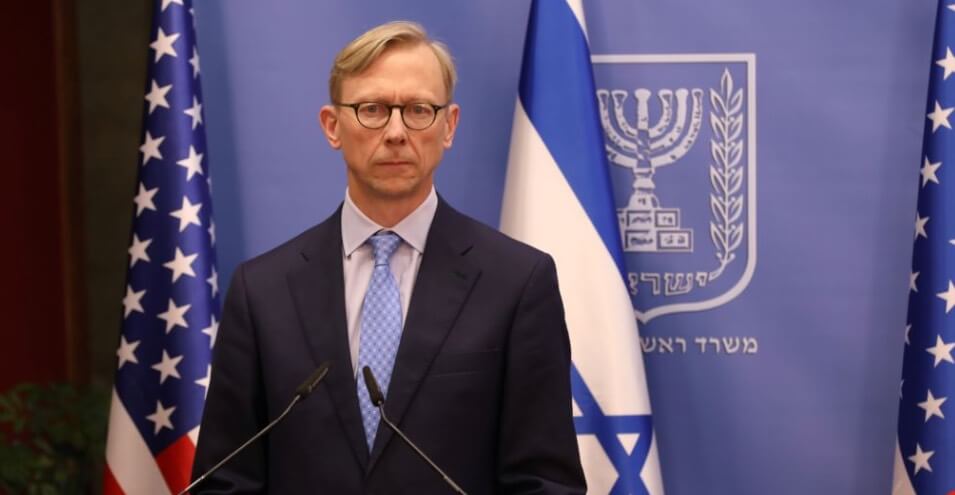
The US Special Representative for Iran Affairs says the US government hopes all United Nations sanctions against the Islamic Republic of Iran that were lifted during Barack Obama’s presidency will be restored within the next 29 days.
Brian Hook, in an exclusive interview with Samira Qaraee of Radio Farda, while emphasizing that Iran’s non-compliance with nuclear commitments gives the US the ability to activate the snapback mechanism and restore sanctions, said that with the return of sanctions, “good things happen. Iran’s weapons embargo will be extended and Iran will not be allowed to enrich uranium”.
The snapback mechanism is a procedure stipulated in UN Security Council Resolution 2231 that allows parties to the JCPOA to request the automatic restoration of all international sanctions in case of Iran’s violation of its commitments.
The US government on August 20 formally notified the Security Council of its request to restore international sanctions against Iran, citing “significant non-compliance” with the nuclear agreement by the Islamic Republic.
The Iranian government says that since the US has withdrawn from the JCPOA, it cannot use this mechanism.
Additionally, Reuters reported on September 1 that it had seen letters in which 13 of the 15 permanent and non-permanent members of the UN Security Council have objected to the US’s use of the snapback mechanism.
However, Mr. Hook rejects the argument put forward by Iranian government officials and says: “The UN Security Council resolution that resulted in the lifting of all UN sanctions clearly explains the necessary procedures”.
Emphasizing that both the Republican and Democratic factions of the US Congress support the extension of Iran’s weapons sanctions, he said: “We tried to do this in simple and easy ways, but the Security Council did not pass our resolution. As a result, we were forced to resort to the snapback mechanism on Thursday and restore all UN sanctions against the Islamic Republic of Iran”.
The United States’ proposed resolution to extend Iran’s weapons embargo failed to gain the necessary votes in the UN Security Council on August 14 and was rejected.
Brian Hook, emphasizing that the aim of the US government in these measures is not “gaining popularity”, said: “America has always taken the right and courageous action to advance security and peace”.
The US Special Representative for Iran Affairs, expressing surprise that the JCPOA has become something “like a religious belief” for the Iranian government, said that this agreement was a political commitment that was not even signed and was legally and juridically not binding.
He said the Trump administration’s preference is for the remaining governments in the JCPOA to join American diplomacy against the Islamic Republic, because, according to Mr. Hook, this diplomacy has been very successful in weakening Iran’s government and the paramilitary groups that act on behalf of Iran’s government in the region.
He described the Trump administration’s goal as achieving a comprehensive agreement that covers all threats posed by the Islamic Republic, including nuclear, missile, and aggressive behavior in the Middle East.
Mr. Hook criticized the behavior of European countries regarding Iran’s weapons sanctions and said that in recent decades, Iran’s government has “carried out dozens of terrorist plans and programs” in Europe and recently intended to carry out bombings at a political gathering in Paris.
Raising the issue that Iran’s government has plotted assassinations on European soil and planned bombings at a Jewish synagogue, he said: “Iran’s government is a threat to European security. I don’t know who could think that giving weapons to this regime is the right decision”.
The US Special Representative for Iran Affairs, emphasizing that the Trump administration’s policy of pressure on Iran’s government will continue, said: The President of Iran admits that the pressure from sanctions has cost them 200 billion dollars, Iran’s central bank has faced a financial crisis, and these issues have occurred regarding a government that is “anti-Semitic” and “the world’s number one supporter of terrorism”.
He attributed the current situation to the choice of the Islamic Republic’s leader and said that the US Secretary of State had previously told Ayatollah Khamenei that either you must negotiate or prepare yourself to manage an economic collapse.
This senior American diplomat, emphasizing that the Islamic Republic has lost its legitimacy with its people, said: “Only the economic situation of Libya and Venezuela is worse than Iran’s”.
The US Special Representative for Iran Affairs, emphasizing that the Trump administration is ready to negotiate to reach a good agreement, said that regarding the restoration of UN sanctions, after some time “countries will side with us”.
He also said that one of the consequences of the US withdrawal from the JCPOA was the agreement between the UAE and Israel.
According to Mr. Hook, the JCPOA was, from the perspective of the UAE and Israel, a betrayal of the security of these countries, and if the US government has a wrong strategy regarding the Islamic Republic of Iran, “reaching understanding between Persian Gulf countries and Israel will be impossible”.
The normalization of relations between the UAE and Israel has met with negative and harsh reactions from Iranian government officials.
In the latest position, Saeed Khatibzadeh, spokesman for Iran’s Foreign Ministry, said on Monday, September 21, that the UAE government “made a big mistake” and “what happened in this regard is a wound for the Islamic world”.
Source: Radio Farda