Cardinal Dominic’s Prayer at the Heart of Rome for Peace in the Middle East
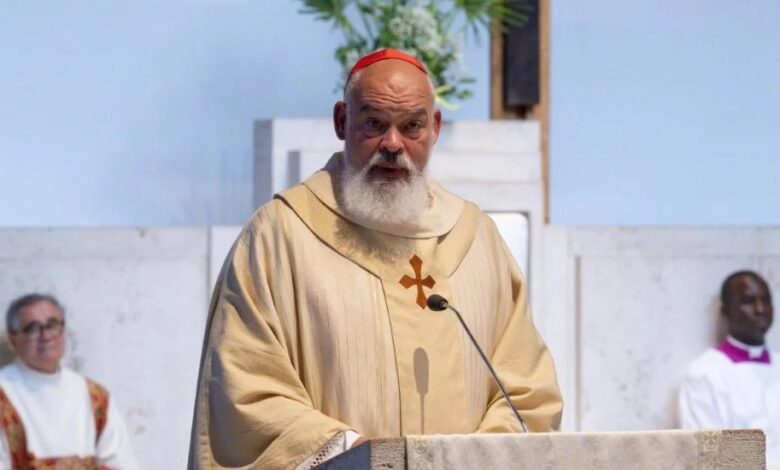
Cardinal Dominic at the heart of Rome, while emphasizing the abandonment of violence and moving toward days of peace, prayed for an end to war and peace in the Middle East.
In one of Rome’s historic churches, a spiritual ceremony centered on peace and tranquility in the Middle East was held, in which one of the prominent figures of the Catholic Church associated with Iran played a significant role. This ceremony, which took place at the beginning of the Christian Holy Week, became a platform for expressing concerns about the escalation of conflicts in the region and calling for an end to violence.
At this gathering, Cardinal “Dominic Matteo” emphasized the necessity of returning to peace by referring to the critical conditions in the region. In his remarks, he described God as “great and merciful” and stressed divine intent for peace and the rejection of all war. He characterized war as a “whirlwind” and “one-sided adventure” and warned that continuing on this path would only lead to increased human suffering.
This religious figure also called for an immediate halt to hostilities, particularly in the Persian Gulf region, and urged political leaders to distance themselves from the cycle of revenge and retaliatory measures. He asked God to influence the hearts and minds of decision-makers so that dialogue, patience, and hope replace violence and create the conditions for reaching days of peace.
This prayer ceremony was conducted under the guidance of one of the senior officials of the Roman Diocese and was part of a broader spiritual program designed to promote peace and solidarity among nations. This initiative is being pursued with the participation of religious and social institutions in Italy and seeks to draw public attention to the consequences of war through spiritual activities.
Cardinal Matteo’s presence at this ceremony was noteworthy from another perspective as well. Recently, following increased tensions and the outbreak of military conflicts in the region, he left Iran and moved to Rome. His direct experience of the turbulent atmosphere in Tehran has given his remarks greater weight and importance, transforming his perspective from that of an outside observer to a witness close to field realities.
In recent years, religious leaders at various points around the world have repeatedly warned about the human consequences of wars. The Vatican has also consistently emphasized the role of diplomacy, dialogue, and peaceful solutions, and Pope Francis has repeatedly called for an end to hostilities in the Middle East and other crisis-stricken parts of the world. Such ceremonies can be seen as part of the continuous efforts of religious institutions to influence public opinion and even policymakers.
In sum, this ceremony was not only a reflection of deep concerns about the situation in the Middle East, but once again highlighted the role of religion and spirituality as a tool for calling for peace, compassion, and reducing tensions.