Clear Response to Rajavi by Prince; ‘Eternal Iran’ Against Appropriation of Student Slogans
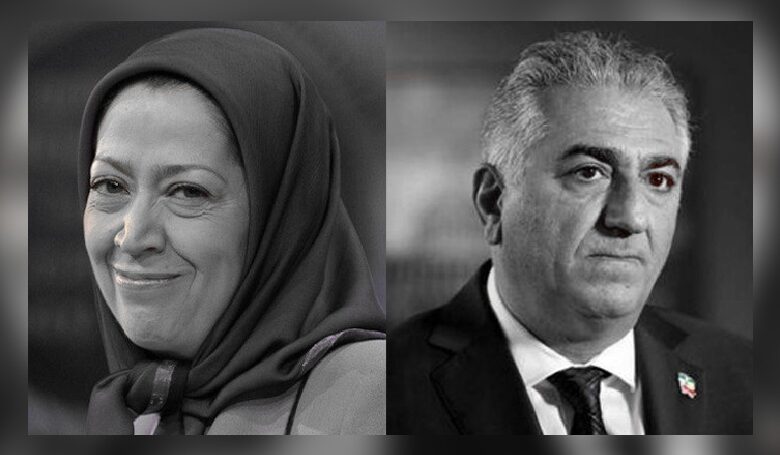
Following Maryam Rajavi’s claim about university support for the Mujahedin-e Khalq, Prince Reza Pahlavi issued a clear and decisive statement with a message regarding Iran’s territorial integrity and national unity.
While recent weeks have witnessed slogans centered around the Pahlavi name and emphasis on “United Iran” in Iranian universities, Maryam Rajavi claimed in a message that students in universities are demanding the Mujahedin-e Khalq organization—a claim that faced widespread reactions on social media.
Field reports and videos published from student gatherings show that a significant portion of slogans have centered around Reza Pahlavi’s name and return to national identity. Critics argue that attempting to attribute these slogans to the People’s Mujahedin Organization of Iran represents a form of political appropriation of students’ demands.
The People’s Mujahedin Organization, which formed in the 1960s with an Islamist-Marxist approach, entered into armed confrontation with the Islamic Republic following the 1979 Revolution. This organization carries responsibility or accusations of involvement in a series of assassinations and bombings in the 1980s, including the explosion of the Islamic Republic Party headquarters.
This group’s cooperation with Saddam Hussein’s regime during the Iran-Iraq War is one of the most controversial points in its history—a collaboration that in the collective memory of much of the Iranian population is considered a violation of national interests. The long-term establishment of this organization’s forces in Camp Ashraf in Iraq has further cast a shadow on this image.
Although this organization was on the United States and European Union terrorist group lists for years, its name was later removed from these lists. However, within Iranian public opinion, it still faces serious distrust.
In her recent message, Maryam Rajavi attempted to present the university environment as aligned with the Mujahedin-e Khalq. However, many users and student activists, through posting videos and images of gatherings, emphasized that the main slogans had nationalist characteristics and Pahlavi’s name was prominent in them.
Critics argue that such claims could deepen the split in the ranks of opponents of the Islamic Republic, especially in circumstances where convergence around principles such as national integrity and democratic transition has become a shared demand.
Following this narrative creation, Reza Pahlavi released a message to the Iranian people in which, without directly naming Rajavi, he emphasized the principle of territorial integrity and national unity. The full text of Prince Pahlavi’s message is as follows:
“Dear Compatriots,
In recent days, a few separatist groups whose records in some cases show cooperation with both Khomeini and Saddam, have put forward false and absurd claims about Iran’s territorial integrity and national unity. As I have repeatedly emphasized, the preservation and defense of Iran’s territorial integrity is an inviolable principle. On the unity and territorial integrity of Iran, we neither negotiate with anyone nor fall short by an iota.
Such claims only provide the Islamic Republic, the greatest enemy of the Iranian nation and the country’s territorial integrity, with an excuse to falsely present itself as a defender of this principle; whereas this regime has been the main cause of all kinds of discrimination and division in Iran since its very first day in power.
Iran’s territorial integrity is the red line of our great and united nation. Any person or group that crosses this red line, or cooperates with those who cross it, will face the decisive response of Iran’s aware people.
In the days and weeks ahead, simultaneously with the complete destruction of the Islamic Republic and driving this regime out of the country, we will be more vigilant, firmer, and more diligent than ever in defending national unity and Iran’s territorial integrity. By adhering to this fundamental principle, we can expect that Iran’s military will also fulfill its national and patriotic duty, stand alongside the people, and defend Iran against the Islamic Republic and separatists.
Only in a united and democratic Iran, in the shadow of the rule of law, can individual freedoms and equal rights of all citizens, regardless of belief, religion, language, or ethnicity, be guaranteed.
Eternal Iran”
Reza Pahlavi’s message represents an attempt to draw a clear boundary with groups that have a history of cooperation with controversial historical actors. The indirect reference to “cooperation with Khomeini and Saddam” is widely interpreted by many as an obvious allusion to the record of the Mujahedin-e Khalq.
In the current climate where social protests are centered on national identity, territorial integrity, and peaceful transition, any attempt to appropriate public slogans could face sharp public reaction.
What is clear indicates the entry of discursive competition among different currents opposing the Islamic Republic into a new phase—a phase in which the historical legitimacy and social base of each group is increasingly under scrutiny.