Confiscation of “Hundreds of Thousands of Dishes” and Arrest of “193 Satellite Installers” in First Seven Months of 2016
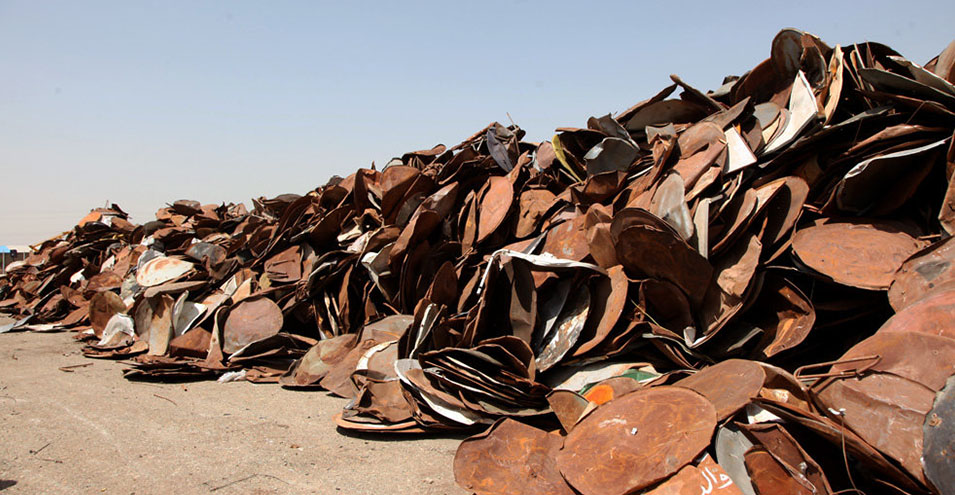
The head of Tehran’s Metropolitan Property Police announced that in the first seven months of this year, 713,546 satellite dishes, 923,299 LNBs, and 10,766 satellite receiver devices were confiscated, and 193 people who were installing satellites were arrested.
According to ISNA news agency, Alireza Lotfi said on Saturday, November 22, at a meeting between law enforcement officials and Tehran’s prosecutor that law enforcement is “focused on targeting installers and gangs related to this matter.”
Tehran’s prosecutor also said at the meeting that some officials, by presenting statistics such as that 60 percent of people use satellite dishes, “are attempting to deny police and prosecutorial measures against satellite dishes and the collection of their equipment.”
Abbas Jafari Dolatabadi emphasized that officials should not “hinder the law enforcement personnel’s duty” in combating the collection of satellite equipment.
The “Plan to Prohibit the Use of Satellite Equipment” was approved by the Iranian parliament on February 13, 1995, and according to it, the import, distribution, and use of satellite receiving equipment is prohibited except in cases specified by law.
Previously, the Parliament Research Center announced that the law prohibiting satellite use has lost its effectiveness and impact, and efforts made to pass a new law have also failed due to the lack of a unified policy.
Meanwhile, Ali Jannati, the then Minister of Culture and Islamic Guidance, on Tuesday, July 13, called for reform of the law prohibiting the broadcast of movie trailers on satellite networks and stated that at least 70 percent of Iranians have satellite dishes.
Nevertheless, Tehran’s prosecutor threatened that if the Ministry of Culture and other organizations do not carry out their duties regarding satellite networks in a way he described as “antagonistic” and those cooperating with these networks, “appropriate follow-up and action will be taken.”
He emphasized that advertising films and Iranian goods on satellite networks, according to him, “is antagonistic” and is prohibited, and the country’s cultural officials must “execute the prosecutor’s judicial orders” in this regard.
In recent months, the issue of broadcasting advertisements for some films showing in theaters on the satellite network GEM has been accompanied by legal action, and in June, the producers of three films “Nameless Alley,” “Forever and a Day,” and “50 Kilos of Sour Cherry” were summoned to the Culture and Media Prosecutor’s Office in connection with this matter.
At Saturday’s meeting, law enforcement and prosecution officials, Mr. Mansouri, the prosecutor’s deputy and special investigator on the GEM satellite network case, also said that “currently, the GEM satellite network operates with 23 networks and eight bases.”
According to this report, a representative of the law enforcement security police, whose name was not mentioned, also announced that some phone lines belonging to advertisers on satellite networks were blocked and 58 “brand advertising operators” were also referred to court.
GEM television network started operations in 2006, and GEM Online was also launched by this group in 2010.
A number of Iranian actors who were previously working inside Iran have joined this television network.
Source: Radio Farda