Continued hunger strike of Soheil Arabi, political prisoner in Iran
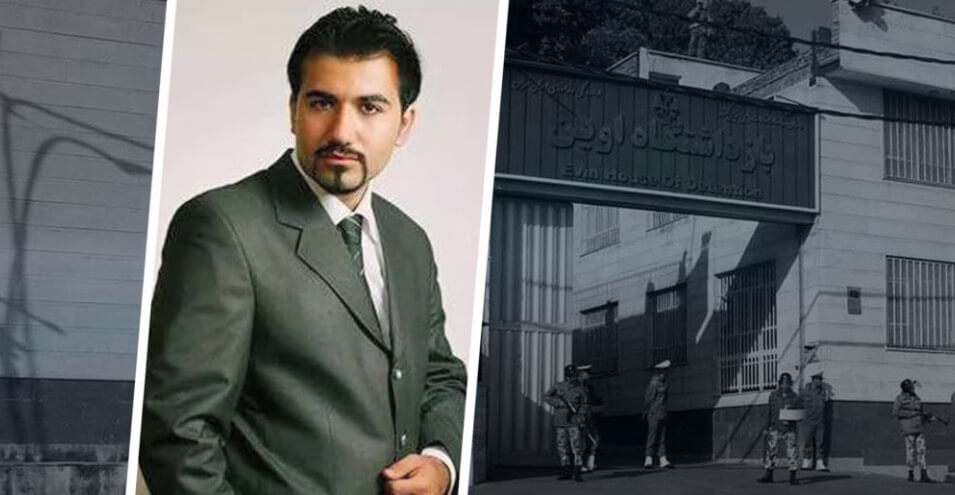
Soheil Arabi, a political prisoner held in Tehran’s large prison, has announced on the eighth day of his hunger strike in protest of being denied the right to medical treatment and the right to furlough or approval of his conditional release request. Following a visit to the welfare unit of Tehran’s large prison, a request for case reconsideration has been submitted to judicial authorities regarding this political prisoner’s file.
The Iran Human Rights website announced on Thursday, April 10, that in an open letter, the political prisoner stated that as long as a fair and impartial judge reviews his case, he will convert his dry hunger strike to a wet one. He cited his mother Frangis Mozloom’s concerns and his paternal responsibility as another reason for this change in the hunger strike.
In his open letter, Soheil Arabi stated that after approximately seven days of complete hunger strike and being summoned to the welfare unit of Tehran’s large prison, his request for case reconsideration and appeals for review, conditioned on drinking a few sips of water, have been submitted to judicial authorities.
The political prisoner said: “I have no doubt that if a fair and impartial judge reviews and examines this case, he will certainly issue an acquittal verdict.”
Soheil Arabi, a civil activist imprisoned in Iran, had previously gone on a hunger strike on March 16 in protest of being denied the right to medical treatment, unfavorable prison conditions, and the continuation of his detention. He ended his hunger strike on Thursday, March 28, after prison officials promised to transfer him to a hospital outside the prison.
Frangis Mozloom, the mother of this political prisoner, recently called for the release of her son Soheil Arabi and other prisoners “who pose no danger to society” in a video released by Voice of America.
Soheil Arabi, a photographer, blogger, and civil activist, was arrested by the Islamic Revolutionary Guards Corps in December 2013, initially sentenced to death on charges of “insulting the Prophet and desecrating sacred values.” After some time, this sentence was overturned by one of the branches of the Supreme Court in July 2015. Following case reconsideration and sentence reversal, he was sentenced to seven and a half years in prison. However, in September 2019, in addition to his previous conviction, he was sentenced by Branch 26 of the Revolutionary Court, presided over by Judge Ahmadzadeh, to three additional years of imprisonment and exile to Borazjan.
U.S. Secretary of State Mike Pompeo said on Wednesday, March 25, at a press conference: “We have asked not only Syria, but also the Islamic Republic of Iran to, under these circumstances, not only release American citizens, but all those who have been unjustly imprisoned. This is a humanitarian action, and apart from the fact that these individuals were illegally imprisoned, in these circumstances, humanitarian principles dictate that they should be released from prison.”
Source: Voice of America