Continued Pressure on Journalists and Media Activists Ahead of Elections
Mehdi Mahmodiyan, a journalist and political activist, has reported the summons of two social media users for writing tweets against Ibrahim Raisi, the head of the judiciary and a candidate in Iran’s presidential election.
Mr. Mahmodiyan wrote on Twitter: “They say they oppose restricting virtual networks, but their agents in the judicial system contact media outlets and activists every day to remove their posts criticizing Mr. Raisi.”
This tweet, without mentioning anyone by name, added that on Saturday two people were summoned solely for tweeting against Mr. Raisi.
On Wednesday, the 29th of Ordibehesht, Radio Farda reported on security and judicial pressures against journalists and media activists, writing that the head of the Cultural and Media Prosecutor’s Office and its 12th branch, along with IRGC Intelligence, security police, and cyber police, have contacted several journalists and media activists, asking them not to publish any material criticizing or opposing Ibrahim Raisi in media outlets and social networks.
Sajad Abedi, a journalist who was summoned to Isfahan’s intelligence office, said on Thursday in Party News Room on Clubhouse that he was “reminded” about election protocols.
He also wrote on Twitter: “They called me and politely invited me, and I even announced the time of my attendance myself. In that meeting, I was only reminded about election protocols and media ethics regarding not attacking candidates and encouraging people to participate maximally in the elections.”
Ehsan Badaghi is another journalist who reported in Party News Room on Clubhouse about being contacted by the head of the Cultural and Media Prosecutor’s Office, writing on Twitter: “Mr. Delfani, the head of the Cultural and Media Prosecutor’s Office, called me. First, their behavior was very polite. Second, there was no summons, just a reminder to comply with the law in election writings. Third, they said this contact was made with media activists from all political factions.”
Meanwhile, Seyedpoyan Hosseinpour, a principlist media activist, tweeted about pressure on media activists critical of Ali Larijani: “It’s neither here nor there yet, pressure on media activists critical of Ali Aqa has begun! So far our share was calls from the Cultural and Media Prosecutor’s Office and security police, what comes next! By the way, who was it yesterday talking about interference in people’s lives?!”
Ali Larijani and Ibrahim Raisi are candidates in this round of presidential elections, scheduled to be held on June 18.
Previously, Hossein Razaq, a media activist, wrote on his Twitter page: “Corruption means an employee of one candidate in the current administration calls to say that if you speak against them on the way to obtaining the next administration, we will deal with you with all forces.”
In another tweet, he wrote: “What a predicament we’re in! If we say something about him, we’re summoned. If we speak about the summons, we’re threatened. If we write about these things, we’re accused of attacking a candidate! If he becomes president tomorrow, he’ll twist our ears. If he returns to his previous position, he’ll take revenge! You’ve trapped us, Mr. Judge.”
Raisi’s failure to resign from his position as head of the judiciary has reinforced the assumption that he is using the judicial system to deal with his electoral opponents. Critics accuse him of using the judicial system as part of his election campaign to prevent any criticism against himself.
Ibrahim Raisi was appointed as head of the judiciary in May 2019 by order of Ayatollah Ali Khamenei, and his supporters attempted to present a new image of him in terms of “fighting corruption.”
Some critics of Mr. Raisi say he should continue the fight against corruption in the judiciary and should not have become a candidate in the presidential election. His critics also point to the issuance of heavy sentences against workers, students, and political activists during Mr. Raisi’s tenure as head of the judiciary.
Before heading the judiciary, Ibrahim Raisi was the custodian of the Astan Quds Razavi. However, one of his most important roles in the Islamic Republic was his membership in a four-person body called the “Death Panel,” which ordered the widespread killing of political prisoners in 1988.
On August 10, 2016, the Telegram channel of Ayatollah Hossein Ali Montazeri, the former deputy founder of the Islamic Republic, released an audio file relating to his meeting on August 15, 1988, with four judicial officials including Hossein Ali Niri, Morteza Eshraqi, Mostafa Pourmohammadi, and Ibrahim Raisi.
Ibrahim Raisi was one of the addressees of Ayatollah Hossein Ali Montazeri’s objections in this audio file, where Ayatollah Montazeri called him a “criminal.”
Hassan Rouhani, the president of Iran, also at the height of the 2017 election competition, without naming this electoral rival, said that “the Iranian people declare that they do not accept those who in 38 years only knew execution and imprisonment.”
Ibrahim Raisi is the most prominent figure of the principlist faction, who lost to Hassan Rouhani in the 2017 election.
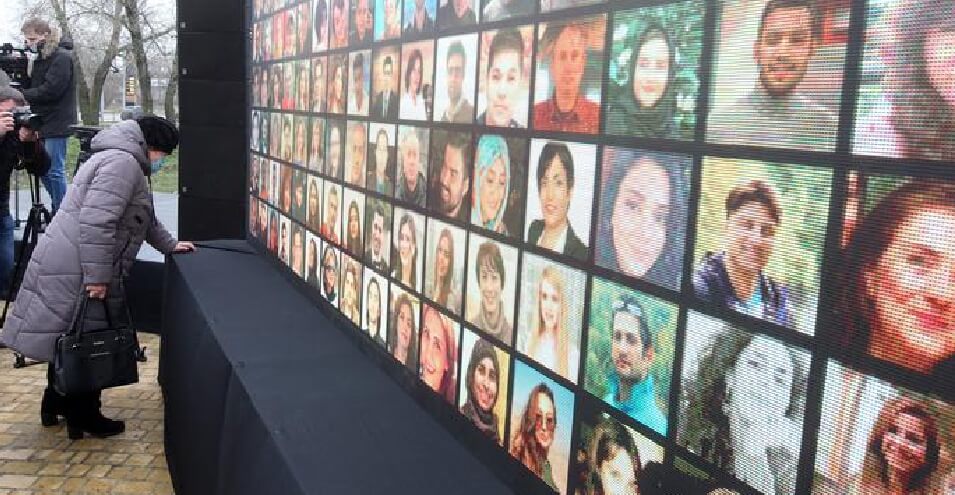
The expansion of poverty, the continuation of security crackdowns on political, civil activists and journalists, widespread and bloody suppression of popular protests, the downing of a Ukrainian plane by the Islamic Revolutionary Guard Corps and its cover-up, along with mismanagement of the coronavirus pandemic have fueled public dissatisfaction in recent years.
This election is being held in a cold atmosphere and under conditions where the chain of recent nationwide protests in Iran, including in December 2017, July 2018, and November 2019, have targeted the entire Islamic Republic system, and in them slogans against both the reformist and principlist factions have been raised.
The Iran Student Polling Center, ISPA, a state institution, has warned that voter turnout in this year’s election will be around 39 percent of eligible voters, which will be the lowest since the Islamic Republic came to power in February 1979.
Source: Radio Farda