Continuing Reactions to Brutal Murder in Ahvaz; Officials’ Contradictory Statements About Legal Gaps
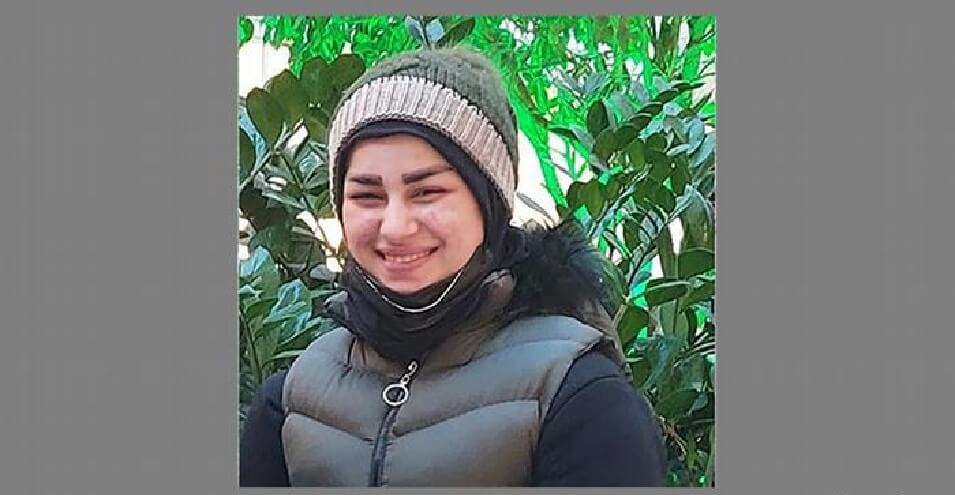
Reactions to the brutal murder of a 17-year-old woman from Ahvaz by her husband continue. Responsible officials in the Islamic Republic have expressed completely contradictory statements regarding the legal problems concerning violence against women in Iran.
Hossein Hatami, a member of the Social Commission of the Islamic Consultative Assembly, on Monday, 18 Bahman (7 February), in an interview with the Iran Watch website, in response to the murder of a 17-year-old woman by her husband in Ahvaz, emphasized that “we do not have a legal gap in matters of violence against women” and said: “This incident sometimes happens in society and is not something new.”
A young man from Ahvaz who has been referred to in the media by the name “Sajad,” on the evening of Saturday, 16 Bahman, with the assistance of his brother, cut off the head of his 17-year-old wife with the motivation of “honor” and dragged it through the streets. The two, who were the victim’s cousins, were arrested hours after the crime.
According to reports, the victim, named Mona (Ghazal) Haidari, was forced into marriage with her cousin at age 15 and had previously been subjected to domestic violence multiple times.
Hossein Hatami, a member of the Social Commission of the Assembly, in his interview with Iran Watch, stated that this murder has nothing to do with the bill to protect women against violence.
Stating that in the laws of the Islamic Republic regarding “honor killings” there is also “no legal gap,” he concluded that “we have no problem in this regard.”
In another reaction to the brutal murder of Mona Haidari, Ali Asghar Enabestan, another member of the Social Commission of the Islamic Consultative Assembly, in response to a question about the need to review laws on child marriage, said: “This murder was not related to child marriage, and we should not connect all issues together.”
He also rejected the existence of legal defects in combating violence against women and added, “For these types of violence, we have complete Islamic penal law.”
Enabestan, noting that currently a bill called “Preserving Dignity and Protecting Women Against Violence” is being reviewed in the commissions of the Islamic Consultative Assembly, called for this murder to be examined by experts and said that “we cannot blame all faults on legal defects.”
The statements of Hatami and Enabestan were made while Elham Azad, a member of the Women’s Faction of the Islamic Consultative Assembly, in an interview with ILNA news agency, pointed out that in Iran, for the protection of women against violence, “there is no law that has executive guarantee.”
She expressed hope that with the passage of the “bill to ensure women’s security against violence,” such brutal murders would be prevented from recurring.
Azad predicted that this bill would be reviewed in the Islamic Consultative Assembly in the coming year.
In this regard, Anisa Khazaeli, Deputy for Women and Family Affairs of the President, also in a tweet, called for immediate action by the Islamic Consultative Assembly “in addressing some of the legal gaps” to improve the level of public culture related to women.
In another reaction, Ali Motahari, former Vice Speaker of the Islamic Consultative Assembly, in a tweet referring to this murder in Ahvaz as well as the recent murder of a police officer in Shiraz, called both perpetrators “criminals” and called on the judiciary to immediately “hang them publicly.”
During the Shiraz incident, a law enforcement officer died on Thursday, 14 Bahman, following knife wounds. Police authorities in Fars province announced a day later that the killer had been arrested.
Mother of Mona Haidari’s Killer: My Son Displayed His Wife’s Head to Prove He Is Not Dishonorable
Meanwhile, Farsnews Agency, in a report from its correspondent sent to Ahvaz, quoted Sajad’s mother—the killer of Mona Haidari—as saying that with Mona’s departure to Turkey and her marriage to a Syrian man, “those around Sajad kept instigating his honor and manhood from all sides.”
Sajad’s mother said, “In every neighborhood and street where Sajad was stigmatized as dishonorable, he displayed Ghazal’s head to tell everyone that I am not a dishonorable man.”
In recent years, numerous cases of “honor killings” and domestic violence against women in Iran have been reported.
Among them, we can mention the beheading of Romina Ashrafi, a 13-year-old girl from Talash by her father, and the murder of Shakiba Bakhtiar, a 16-year-old girl from Kermanshah, by her father’s knife blows.
It is worth noting that even artistic works related to the subject of violence against women and “honor killings” face many restrictions from authorities in the Islamic Republic.
For example, the film “Paternal House” directed by Kianush Ayari with the subject of honor killings, produced in 1389 (2010), was banned for nearly a decade. After the temporary ban was lifted and the film was screened, it was banned again two years ago, and its makers were subjected to legal prosecution.
According to official statistics, 20 percent of murders in Iran are considered “honor killings.” According to some experts, half of family murders in Iran are “honor killings.”
The bill called “Preserving Dignity and Protecting Women Against Violence” has been pending passage and conversion into law for more than 10 years. After numerous back-and-forths, this bill was approved by the cabinet in Dey 1399 (December 2020) and was submitted to the Islamic Consultative Assembly on 30 Dey. However, the assembly delayed announcing receipt of the bill for five months, and finally on 29 Ordibehesht 1400 (May 19, 2021) announced its receipt and referred it to the Legal and Judicial Commission of the Assembly with an expedited tag.
Source: DW