Corona in Iran; 5 provinces record death toll, traffic fails to decrease

According to the spokesperson for the Ministry of Health, in several Iranian provinces the rate of hospitalization and deaths from corona is significantly higher than the national average. The deputy for research at this ministry, who resigned with criticism of corona management, has faced accusations.
The Ministry of Health spokesperson announced on Sunday, the 2nd of Azar, that in the past 24 hours, 13,053 patients with COVID-19 were identified in Iran and 475 infected persons died.
Sima Sadat Lari says that currently nearly 5,800 corona patients are under care and treatment “in severe condition of this disease.”
The third wave of corona outbreak in Iran, which began in late Shahrivar, continues with intensity. In the past week, no day except Saturday has had fewer than 13,000 newly identified cases. On Saturday as well, the number of identified cases was very close to this figure.
From the beginning of the third wave of corona to now, 27 Iranian provinces have constantly been in red condition and four provinces in warning condition, but the severity of infection and mortality varies in different areas.
Provinces with record deaths and hospitalizations
The Ministry of Health spokesperson says that in recent days, the highest rate of death from corona has been related to five provinces: Yazd, South Khorasan, Ilam, West Azerbaijan, and Semnan.
He added that except for West Azerbaijan, in the other four provinces, cases of hospitalization of patients with COVID-19 disease have been “considerably” higher than the national average.
The Ministry of Health spokesperson said: “Victory over corona requires a campaign based on solidarity between the government and citizens, and today more than ever we need to strengthen national determination to fight the disease.”
Apparently, solidarity between the government and citizens is not very strong, and public distrust of government officials is cited as one of the main reasons.
Distrust of government and failure to reduce traffic
Ineffectiveness, lack of transparency, concealment, contradictory statements, non-professional decision-making, and interference of power centers in policies related to combating the spread of the corona pandemic are criticisms that are frequently repeated in virtual space and media.
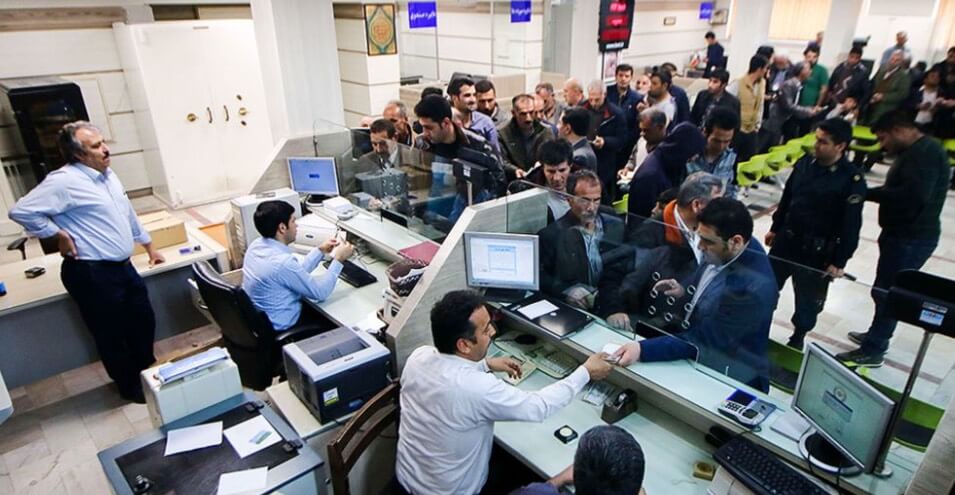
In some cases, citizens’ disregard for health guidelines can be on one hand a reflection of this distrust and on the other hand a consequence of government institutions failing to provide necessary infrastructure. Part of the crowding in public transportation is the result of a severe shortage of metro cars and buses, which the mayor and head of the Tehran City Council have complained about repeatedly.
According to ISNA news agency, the head of the Corona Combat Command Center in Tehran metropolis says that the severe restrictions announced since the beginning of Azar have not led to reduced traffic.
Aliresa Zali meanwhile said it is still too early to judge, and if the restrictions are “successful, effective and efficient,” their effect on mortality will be evident in one to 40 more days and in reducing the disease progression at least three more weeks.
He emphasized that the only case in which the effectiveness of restrictions might be seen sooner is in the outpatient visits of patients to medical centers, which will also be evident in 14 to 15 more days and after the incubation period of COVID-19 disease has passed.
File-building against critical and resigned deputy
Criticism of government policies in combating the spread of corona is not limited to some citizens and some experts. Three days ago, Reza Malekzadeh, then deputy for research and technology at the Ministry of Health, resigned from his position with severe criticism of “very wrong and flawed management in the corona pandemic.”
Malekzadeh in a letter to Saeed Namaki, the Minister of Health, referring to his recent statements that Iranian experts will soon make a breakthrough in corona vaccine production, cited one of the reasons for his resignation as “unscientific statements and resulting from the hastiness of Your Excellency regarding the production of Iranian corona vaccine, which is still in its initial stages and you have claimed to make a breakthrough in its production.”
With Malekzadeh’s resignation, harsh attacks by hardliners against him began to the point that the Mashriq website accused the resigned deputy minister of health of giving classified information to foreigners. Some financial accusations are also being leveled at Malekzadeh.
A number of Basiji student organizations at medical science universities also expressed doubt in a statement that the deputy minister’s resignation “would not be an excuse to shirk responsibility and failure to account for actions and omissions during the period of responsibility.”
Basiji students asked Malekzadeh to explain allegations such as “establishing a pharmaceutical company and serving as chairman of its board of directors, simultaneously with serving as deputy minister and prescribing some ineffective drugs for treating corona.”
The Minister of Health has repeatedly claimed that Iran has achieved great successes in fighting corona and the greatest reason for this has been “the incomparable support of the Supreme Leader.” With such statements, hardliners’ support for Saeed Namaki has intensified greatly.
Based on this, some observers do not consider hardliners’ attacks on the former deputy minister of health as unrelated to political issues. Reza Malekzadeh is a senior member of the Executives of Construction Party, and Hossein Mareshi, the party’s spokesperson, recently introduced him as one of the possible candidates for presidential election candidacy in 1400.
Source: DW