Crisis in Crisis Management
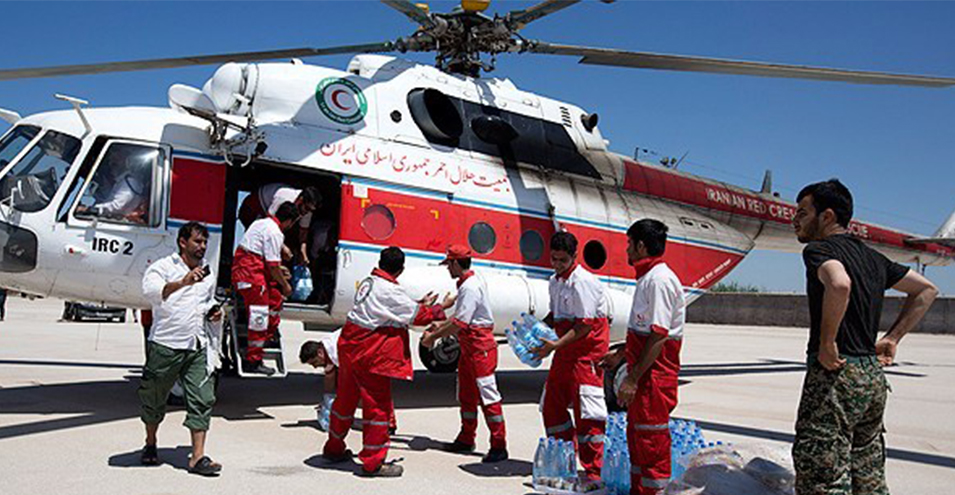
Given the sensitive nature of this management and its special and vital role and in order to bring clarity , illuminate the problems and deficiencies in the country’s crisis management let us take a fundamental look at this organization , the type of appointments and how it operates:
Definition of Crisis Management :
Crisis management is a set of solutions and decisions made in dealing with a crisis, and its goal is to reduce the pace of crisis, control the crisis, and reduce and eliminate it. All measures related to prevention and risk management, organization and management of resources needed in response to a crisis. Crisis management includes: programs, creation of structures and formulation of regulations that lead to assisting and aiding government and non-governmental organizations in dealing with emergencies. In another definition, crisis management can be said to be the process of predicting and preventing the occurrence of a crisis, dealing with and intervening in the crisis and remediation after the crisis occurs.
The Method of Appointing the Current Crisis Headquarters Director :
“Najjar” who happens to be a Turkmen and also “his brother-in-law’s cousin” ….., had extensive background in the previous government and specifically had special connections with Esfandiar Rahim Mashaei and was one of his staunch supporters.
At a time when the efforts of the moderate stream had prevented Ismail Najjar from heading the governorship of Khorasan Razavi, he formally became Deputy Minister of Interior. Najjar’s varied background in unconditional support for the “Mashaei movement” makes his appointment to such an important position even more bizarre.
If you are not yet aware of the matter and do not know about what person and what astonishing statements we are talking about, let us go back a bit and begin the narrative of the recent masterpiece of “Ismail Najjar” from reviewing the strangest flattery of recent years; from statements made after the Kerman earthquake disaster and during this person’s tenure as governor of that region;
Ismail Najjar in a meeting of the Crisis Headquarters of Kerman Governorship: “The people of the earthquake-stricken area had very high faith and belief. For example, in our inspections, we saw a house where three of its walls had collapsed due to the earthquake and one wall that had a picture of Dr. Ahmadinejad attached to it, and the people themselves with firm and steadfast belief acknowledged that our beloved and compassionate president has provided and continues to provide many services to the people, especially rural people, and their belief was that it was God’s grace and attention that this wall did not collapse.” /ISNA December 2, 2010
He is now not only Deputy Minister of Interior but also the head of the sensitive and vital organization called the Crisis Management Organization.
An organization that, if it had importance, would not seem like a good choice for someone who, in flattering the then-president, attributed the non-collapse of a wall to a picture of him being attached to it. A person who has special expertise in seeing special beauties and hearing and presenting bewildering interpretations and whose result of his visits to flood-affected areas is seeing washed leaves from trees and rivers swelling and consequently people’s joy, not the damages and crises that should be managed and compensated for under his guidance and the work of the group under his command!
A government-supporting website, in criticizing Najjar’s appointment as Deputy Minister of Interior, only referred to one of his family relations with Rouhani and called him a Turkmen and “his brother-in-law’s cousin” ….. ” To describe the ellipsis, it is enough to pay attention to the blurred photo published in this news, which clearly shows that Hossein Feridon is the influential brother of Hassan Rouhani. The closest relation Najjar has with Hassan Rouhani’s family is his brother’s relation to the president, in fact Hassan Najjar is Hassan Rouhani’s brother-in-law.
So the head of the crisis headquarters is appointed non-professionally and based on connections and in fact his view of this headquarters is not only not crisis-oriented but is very poetic and delicate.
Today’s statements by Mr. Najjar in the Parliament debate regarding the performance of the Crisis Management Organization also demonstrate poor planning , ineffectiveness and lack of foresight and planning on his part :
Najjar: We do not have the readiness to deal with a possible Tehran earthquake. Despite the work done in Tehran for major events, ultimately there is only 15 to 20 percent readiness. If a crisis occurs, people are the basis of the work.
Najjar: My question is here, who is responsible? Are all responsibilities directed at the Crisis Management Organization and the Ministry of Interior? No. All agencies are involved. The Crisis Management Organization in its current situation does not have the ability to provide services in all areas. Yes, if a large organization is created and all capabilities and equipment are placed at the disposal of this organization, they can expect accountability from us.
So Mr. Najjar, head of the crisis headquarters, is not accountable as long as all conditions and facilities are not provided. And in effect, the crisis headquarters is only a management and a name, nothing more.
An expert has described management as the art of accomplishing tasks through others and has emphasized the role of others and acceptance of goals by them.
Another group has expressed management in the context of performing tasks such as planning, organization, coordination, etc. Some have also defined management as follows: Management can be defined as the science and art of consistently and harmoniously coordinating, leading and controlling collective activities to achieve desired goals with maximum efficiency.
Others have also defined management as follows: Management is the maximum optimal use of available resources (human resources – financial and physical capabilities) through the application of management principles or system (planning – organization – guidance and leadership – supervision and control and coordination) to achieve a specific goal.
Therefore, when the definition of management is clear and an organization is formed in this regard, while appointing a specialized, skilled, active and competent manager, by implementing appropriate management methods and examining effective behavioral patterns in human societies with strong and compassionate will, we should prepare to deal with potential dangers.
However, it is very regrettable that in our country the appointment of an unspecialized person, who instead of pursuing the reform of urban planning principles and considering safe exit points and creating coordination at different implementation and financial levels, only in his room and behind his desk with despair has prevented the development of the organization’s performance.
To continue: What happens in crisis headquarters meetings ………