Deadly danger beyond borders; Islamic Republic's policies also threaten the lives of its neighbors

The deadly threat from the Islamic Republic has gone beyond borders and now directly threatens the lives of civilians and refugees in neighboring countries.
In the wake of regional tensions and just days after the ceasefire was announced, drone attacks by Iranian military forces on the border areas of the Iraqi Kurdistan Region once again revealed worrying aspects of the Islamic Republic's cross-border policies; policies that, according to critics, pose a serious and de facto threat not only to citizens within the country but also to residents of neighboring countries.
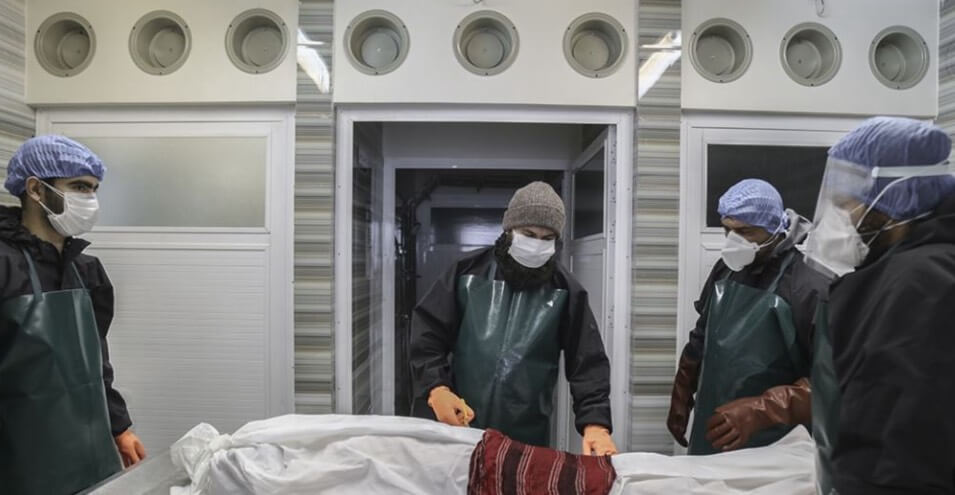
In one of these attacks, Ghazal Mulan, a young member of the Komala party, was seriously injured and died hours later. What makes this incident particularly shocking is not just the attack itself, but the chain of events that led to his death, from the drone strike to the refusal of medical facilities to admit him in a timely manner.
According to published reports, the individual was transferred to several medical centers in the early hours after his injury, but was denied immediate treatment on the grounds that there was a possibility of further attacks. In this context, it has been emphasized: “No security or political consideration can override the vital priority of the ‘right to health’ and the ‘right to life’ in these circumstances.”
This event can be examined from two perspectives: first, a military attack on the territory of another country that directly contradicts the fundamental principles of international law, and second, its humanitarian consequences that have even spread to the host country's healthcare system.
Legal experts believe that the repeated attacks on the Kurdistan Region are a clear example of violating the principle of prohibiting the use of force and undermining Iraq's national sovereignty. At the same time, the creation of an atmosphere of fear and insecurity has reached such a level that even medical centers have hesitated to carry out their basic duties, an issue that has led to serious violations of patients' rights.
What is most worrying is the broadening of the threat. Attacks targeting specific groups are now affecting the entire region, from political asylum seekers to ordinary citizens and even medical personnel.
Statistics released by human rights organizations show that in recent months, dozens of attacks have been carried out on Kurdish-held areas in Iraq, resulting in the deaths and injuries of numerous people. This trend paints a picture of a recurring pattern in which geographical borders are practically ignored.
In such circumstances, the main question is who bears the responsibility for protecting human lives, especially refugees and political activists: the host government, the international community, or the perpetrators of these attacks?
Human rights organizations have warned that the continuation of this situation could turn the Kurdistan Region into a scene for proxy conflicts, a situation that calls into question not only the security of the region, but also the credibility of the international legal system.
The recent incident is not just an incident, but a sign of a broader trend: "the spread of insecurity from within Iran's borders outwards and its transformation into a regional threat."
When military operations spill over into other countries and their consequences even reach hospitals and civilians, it is no longer a domestic crisis. This situation clearly shows that the consequences of the Islamic Republic's policies have now gone beyond borders and are endangering human lives throughout the region.