Detailed Report of the Memorial Session for Political Prisoners Executed in the 1960s in Iran
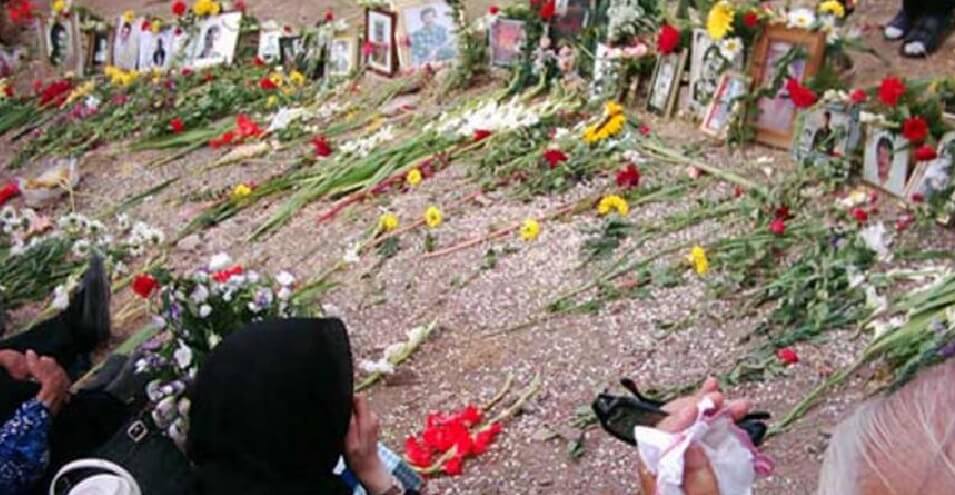
The “Network of Iranians in Diaspora” (SHAD) held an online memorial session on Wednesday, September 1st for political prisoners executed in the 1960s in Iran through the Clubhouse network, with the participation of human rights activists, former political prisoners, and families of the victims of these executions.
Nargess Mohammadi, Shirin Ebadi, Kaveh Shahrouz, Nina Toubai, Amir Kheedir, Reza Meridi, Ladan Bazargan, and Majid Jamshidiyan were among the participants in this virtual session.
In 2013, the Canadian Parliament unanimously recognized the executions of political prisoners in the summer of 1367 (1988) as “crimes against humanity” and designated September 1st as “Solidarity Day with Political Prisoners in Iran.”
- Shirin Ebadi: The government’s claim that the 1967 executions occurred after Operation Eternal Light is completely false
Shirin Ebadi, Nobel Peace Prize winner and former Iranian lawyer, spoke about the 1967 executions: “The government always says we were at war with a foreign enemy and the Mujahedin organization had declared armed conflict. The Mersad operation or Eternal Light operations occurred. In a state of war, these were prisoners. The Swedish court also considered this a war crime. To whatever extent we can provide punishment for these criminals, it is good.”
Ms. Ebadi, noting that her brother-in-law named Foad Tossolian was arrested at age 17 while a student for reading the Mujahedin newspaper and was executed despite being sentenced to 20 years in prison, said: “Two or three months before the Eternal Light incident, all visits were cut off… The claim that this massacre of 1967 occurred after the Mersad incident is completely false.”
Shirin Ebadi, stating that individuals affiliated with or members of socialist groups were buried in mass graves in Khavaran without ceremony, said: “With great sorrow I must say that only Tehran has Khavaran. There are also mass graves in other cities. We shouldn’t only focus on Tehran; there are cemeteries in other cities belonging to these people. The story of the 1967 massacre should be passed on from generation to generation so future generations don’t forget and it won’t be repeated.”
- Nargess Mohammadi: Full disclosure of truth is necessary for achieving justice
Nargess Mohammadi, Vice Chair and spokesperson of the Human Rights Defenders Center, recalling personal accounts of executions and torture of her relatives, said that alongside addressing executions, torture and imprisonment—which is very necessary for Iran’s history—examining the effects and consequences these events had on society and families is also very important. According to Ms. Mohammadi, “These events don’t only involve the victims; families also suffer greatly.”
This human rights defender considered documenting the narratives and statements of “survivors of these crimes” very important and necessary for achieving justice, and said: “Full disclosure of truth is necessary for achieving justice.”
Referring to hacked videos from Evin prison security cameras “which human rights activists describe as the tip of the iceberg in the ocean of Islamic Republic crimes,” she said that even when “the hacked camera footage shows only a small part of reality, some still doubt saying is such a thing possible?”
Ms. Mohammadi also, referring to some of the executed being under 18 years old, “as testified by many prisoners,” emphasized: “We must examine from the beginning whether the executed could defend themselves? What trials did they go through? Were they involved in armed operations?”
According to Ms. Mohammadi, “Justice will be achieved through revealing the truth and keeping it alive from generation to generation so humanity can move past these acts of violence and reach a world free of violence and at peace.”
- Mohammad Tajdolati: The characteristic of a crisis-stricken society is that it doesn’t allow people to remember events
Mohammad Tajdolati, one of the organizers of this session, stating that the Islamic Republic has imposed many events on people over these four decades and “one of the most tragic of them is the massacre of the 1960s,” said that a characteristic of a crisis-stricken society is that it doesn’t allow people to remember events and have them recorded in history.
He emphasized that making a political system accountable—”whose agents and planners created these tragedies”—is a civic responsibility so that future generations don’t witness such atrocities.
Mr. Tajdolati, emphasizing that “one of the main perpetrators of the summer 1967 massacre and a member of the death committee sits in the presidency of Iran,” referred to Hamid Noori’s trial in Sweden and called for “documenting these atrocities” and linking it to the major justice movement.
- Kaveh Shahrouz: Human rights activists must continuously discuss the connection between the 1967 executions and subsequent events
Kaveh Shahrouz, human rights activist and member of the McDonald Laurier Institute, referencing his own role in the Canadian Parliament’s recognition of September 1st as a memorial for the 1967 massacre and crimes against humanity in Iran in 2013, said that many political and human rights activists at that time did not support this move and “thought it was a symbolic decision.”
He emphasized that the duty of human rights activists, regardless of ideological orientation, wherever in the world is to work with governments and convince them that human rights should be their primary concern, and “now that Ibrahim Raisi, a member of the death committee, is president, the existence of this occasion enables us to demand answers from politicians in Canada and around the world.”
According to Mr. Shahrouz, “The 1967 massacre is only part of the Islamic Republic’s crimes and continues, and it’s wrong to view it separately from other crimes. It’s the duty of human rights activists to constantly discuss the connection between the 1967 massacre, University Avenue, 2009, and November 2019.”
- Amir Kheedir: The memorial of the 1967 massacre is a means to limit the Islamic Republic’s ability to normalize relations
Amir Kheedir, former spokesperson of the Bloc Québécois and former Quebec Parliament member, considered the designation of this day as a memorial for crimes against humanity as a means to limit the Islamic Republic of Iran’s ability to normalize relations “at a time when human rights violations were continuously occurring in that country.”
Referring to Hamid Noori’s trial in Sweden, he called the trial a result of civil society activities to “pursue his role in the death committee and expose the role of other officials, including Raisi and Khamenei.”
Mr. Kheedir said: “We can only count on international measures to hold the Islamic Republic of Iran accountable for responsibility in these past crimes when civil society can organize itself and advance these cases.”
- Majid Jamshidiyan: The President of Iran is “a serial killer of thousands”
Majid Jamshidiyan, a former political prisoner in the 1960s, stating that “the greatest pain of our country is forgetting,” said: “Today the president of that country is a serial killer of thousands.”
He, by broadcasting a portion of statements by Asadollah Lajevardi, former head of Evin prison and revolutionary prosecutor of Tehran in the 1960s, and his public confession to hasty executions and his statements about executing individuals on the day of their arrest, considered this the greatest evidence proving the crime.
He called Hamid Noori “just one of the underlings of that massacre” and, emphasizing “the continuation of Islamic Republic crimes,” said: “The system is the same and only its methods have changed. And only forgetting has caused its repetition.”
Mr. Jamshidiyan, referring to Ibrahim Raisi’s presidency, said “his decision in a moment in the death room” determined who would stay and who would go, and now “a killer of tens of thousands” sits on the presidential seat and the world watches him.
- Ladan Bazargan: We still stand by our demands for justice
Ladan Bazargan, human rights activist and member of the families of those who died in the 1960s, remembering her brother Bijan Bazargan, said: “First they executed the Mujahedin prisoners and then they executed the leftists from September 26 to 29, and we found out at the end of December.”
This former political prisoner, referring to writing a letter to the Minister of Justice in December 1967, said that the letter indicated that the executions “were contrary to international law” and “those executed all had prison sentences and had not committed new crimes.”
Ms. Bazargan, stating that in that letter they “requested investigation by international bodies” and trial of “perpetrators and planners of crimes,” emphasized that “we still stand by our demands.”
This human rights activist, also citing details from Hamid Noori’s trial in Stockholm, Sweden, referred to the statements of Noori’s defense lawyer regarding the lack of evidence and said: “They covered it up for 30 years and didn’t give us the bodies of our loved ones, and now in court they’re asking for evidence.”
- Nina Toubai: Survivors of executions live in anxiety, fear and sorrow as long as they live
Nina Toubai, political activist and member of families of those who died in the 1960s, recounting personal accounts of the execution of three young family members from 1960 to 1968, said: “From the day a family member is arrested, the family lives in anxiety, fear, terror and sorrow and as long as they live must live with these bad memories. Some say we should forget but we really can’t forget.”
According to Ms. Toubai, “The massacre of 1967 prisoners began with a simple Khomeini fatwa in all prisons of the country.” She said the massacre was carried out in complete silence and “our loved ones had no rights, no will, no lawyer, no family visits, and not even a tombstone.”
- Reza Meridi: “The Killing Ayatollah” sits on the presidential seat
Reza Meridi, former Minister of Science and Technology of Ontario, Canada, was another speaker at this session. He considered naming the “Day of Solidarity with Political Prisoners in Iran and the Massacre of Iran’s 1960s” “a very important action” and, calling Ibrahim Raisi the “Killing Ayatollah,” said that he “now sits on the presidential seat as one of the founders of this crime.”
Mr. Meridi said that if parliaments of other countries also recognize the 1967 executions as “crimes against humanity,” it could be very effective.
- Behnam Darabizadeh: The Islamic Republic’s claim about Mujahedin prisoners’ intent to rebel is a “story”
Behnam Darabizadeh, jurist and human rights activist who was one of the organizers of this session, said that the Islamic Republic, in its narrative of the mass execution of political prisoners, tried to link this massacre to the Mujahedin’s Operation Eternal Light, while the leftist and Marxist prisoners “had essentially no organizational affiliation with the Mujahedin” and were “buried in unmarked mass graves.”
Mr. Darabizadeh emphasized that there is no evidence supporting the claim that Mujahedin prisoners intended to rebel and this is a “story” that “you also see in the Islamic Republic’s propaganda section and in cinema.”
Mr. Darabizadeh expressed hope that “we reach truth-finding and the perpetrators of the massacre appear at the trial table and accept responsibility.”
- Zarin Mohi-al-Din: Khomeini’s speech at Behesht-e Zahra was a message to turn Iran into “a fundamental cemetery”
Zarin Mohi-al-Din, another organizer of this memorial, said that “the 1967 massacre was one of the worst crimes of the Islamic Republic” that took the lives of several thousand people in a short time.
Recalling Ayatollah Khomeini’s speech at Behesht-e Zahra upon his arrival in Iran, he said that “certainly” this was “a message” that he wanted to turn Iran “into a fundamental cemetery,” as he started executions from the roof of the Refah school and “today fires at a passenger airplane and kills 176 people.”
- Shahram Tabe-Mohammadi: The opposition should use its limited capacity for unity instead of conflict with each other
Shahram Tabe-Mohammadi, member of the Network of Iranians in Diaspora, said that forces opposed to the Islamic Republic should “be aware of their own power” and know that they don’t have “unlimited capacity” and cannot “rely on support from Western governments.” He called for not wasting “this limited capacity on fighting and conflicting with each other” and to “respect differences of opinion” and know that “no single ideology can overcome the Islamic Republic.”
Referring to the rift the Islamic Republic tries to create between inside and outside Iran, he emphasized that “leftist and rightist groups, monarchists and republicans, Mujahedin and communists can sit together while maintaining respect and work together.”
Some other participants in this session also accompanied the speakers by recounting personal narratives of the 1967 massacre.