Details from UN Secretary-General’s Report on Human Rights Situation in Iran; High Execution Statistics and ‘Brutal Crackdown’ on Protests
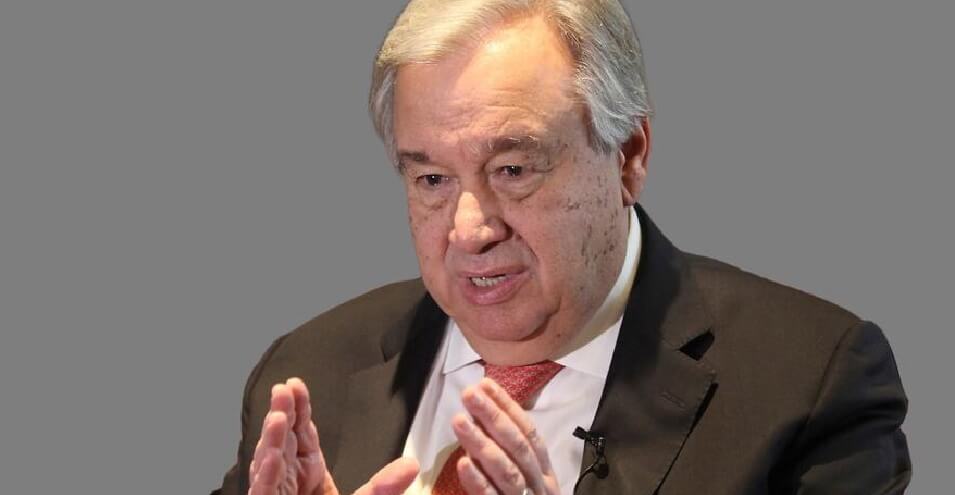
António Guterres, Secretary-General of the United Nations, presented a report on the human rights situation in Iran at the seventy-fifth session of the organization’s General Assembly.
The information in this report was compiled through the Islamic Republic of Iran’s government, non-governmental organizations, media outlets, and based on interviews conducted by the UN High Commissioner for Human Rights with individuals including victims of human rights violations, their families, and their lawyers.
This report covers information obtained from September 30, 2019 to June 11, 2020 and includes cases, some of which are referenced here:
Death Penalty and Fair Trial Rights
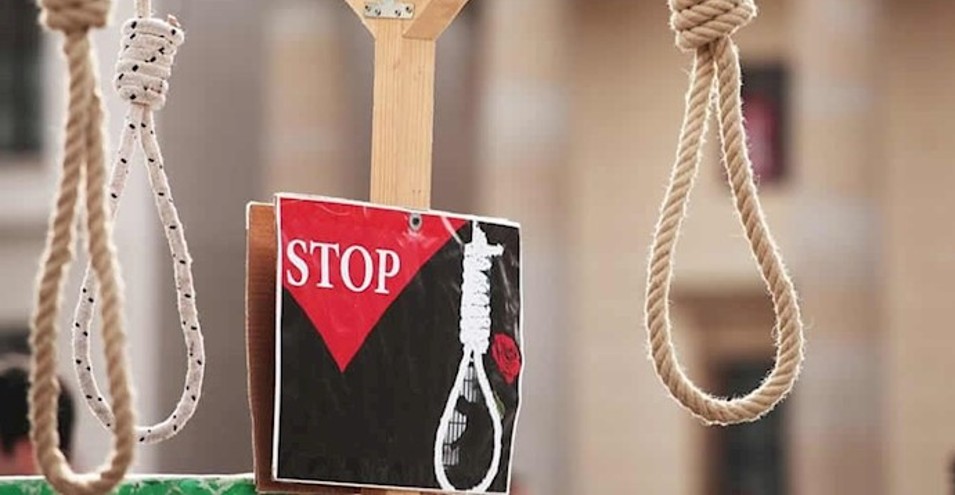
The UN Secretary-General expressed concern in this report about the issuance of death sentences in the Islamic Republic of Iran for a wide range of offenses, some of which include legitimate human rights activities, as well as the high rate of executions in Iran.
The report states that according to the International Covenant on Civil and Political Rights, the death penalty can only be imposed for “most serious” crimes, while in the Islamic Republic of Iran, consensual sexual relations, drug-related offenses, and crimes such as “corruption on earth” which have vague definitions are subject to capital punishment.
This section of the report also references an increase in execution rates.
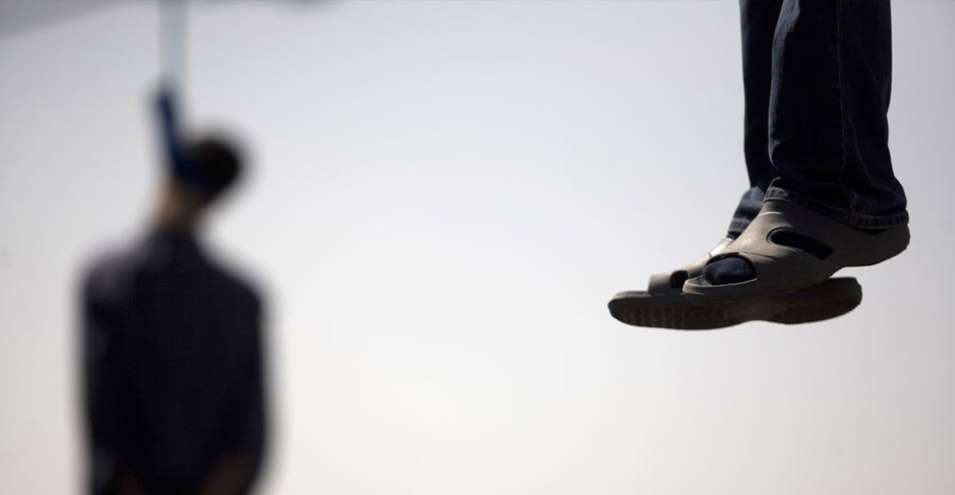
In 2019, at least 280 people were executed, of which 13 were carried out in public. Additionally, at least 30 executions were for drug-related charges, compared to 24 in 2018. At least 84 executions took place between December 31, 2019 and May 21, 2020.
In the UN Secretary-General’s report, deficiencies in criminal justice proceedings in the Islamic Republic of Iran are mentioned, including judicial independence, jurisdiction of courts, inequality before the law, and access to legal counsel.
The UN Secretary-General expressed concern in this report about the high number of death sentences imposed on child offenders, stating that on June 11, 2020, at least 90 child offenders were awaiting execution.
Also, in 2019, at least four child offenders were executed, all of whom were between 15 and 17 years old at the time of the alleged murders.
The report references the execution of Majid Esmaeilzadeh in Ardabil Prison following forced confessions under torture, as well as the execution of Shayan Saeidpour—a child offender who had escaped from Saqqez Prison—without considering his psychological issues in the sentencing.
It also mentions the death of Danial Zein-Aabedini—a defendant who was under 18 at the time of the crime—in Miandoab Prison, which was reported by the government as “suicide.” Mr. Zein-Aabedini had been transferred to Miandoab Prison along with several other inmates after protesting conditions at Mahabad Prison during the coronavirus crisis.
The UN Secretary-General emphasized in his report that a state’s responsibility for deaths in custody can only be rejected if an independent institution conducts a transparent, impartial, and thorough investigation.
Mr. Guterres expressed regret that the Islamic Republic of Iran accepted only two out of 39 recommendations regarding abolishing capital punishment or limiting it to most serious crimes, and only one out of 23 recommendations regarding capital punishment for child offenders, and even that only relatively.
Status of Dual-National Citizens and Detained Environmental Activists in Iran
The UN Secretary-General also expressed concern about the status of dual-national citizens who were still imprisoned in Iran until June 10, 2020, including Ahmadreza Jalali, Masoud Mossahebi, Morad Tahbaz, Kamran Qaderi, Siamak Namazi, and Baquer Namazi, who is undergoing medical treatment and is not permitted to travel.
The report states that the Islamic Republic of Iran accepted only one, and relatively, out of three recommendations regarding the status of imprisoned dual-national citizens.
The UN Secretary-General also addressed the situation of arrested environmental activists, including Niloufar Bayani, and stated: “Ms. Bani was convicted for activities she conducted for the United Nations, and part of her sentence involves paying a fine equivalent to the income she received from this organization.”
Right to Freedom of Peaceful Assembly
In a section of the UN Secretary-General’s report, reference is made to the violent suppression of November protests and the lethal use of force by security forces.
The UN Secretary-General states that the root of the protests was public dissatisfaction with the political system and economic conditions, but the government described the protesters as “ruffians separate from ordinary people.”
The report references the killing of at least 304 people, including 23 children (22 boys and 1 girl) and 10 women, between November 15-19, 2019 (November 24-28, 2019) in 37 cities in Iran.
The UN Secretary-General also referenced in his report the Interior Minister’s response to a representative questioning the shooting of protesters in the head, stating “they were also shot in the legs.”
Another section of this report addresses the admission by the Qods District Governor regarding orders to shoot at protesters and statements by a parliamentary representative who said at least seven thousand people were arrested during the protests.
The UN Secretary-General referred to reports of detained protesters being deprived of medical care, torture and mistreatment, and forced to make false confessions.
Mr. Guterres expressed serious concern about the arrest of children (under 18) during the protests, stating that from Khuzestan Province alone, one thousand cases of child arrests were reported.
A section of this report addresses the arrest of protesters in December 2019 following the Iranian Revolutionary Guards’ missile attack on a Ukrainian passenger plane, and mentions mistreatment of detainees in prison and the issuance of sentences ranging from six months to five years imprisonment for at least 13 people for participating in protests or taking photos and videos from candlelit ceremonies commemorating victims.
Right to Freedom of Expression and Opinion
In this section of the UN Secretary-General’s report, while referencing the incompatibility of the Islamic Republic of Iran’s constitution with the right to freedom of expression, the expansion of government control over information in cyberspace and internet censorship is discussed.
Among the cases this report references are the widespread internet shutdown from November 25, 2019 in response to protests, as well as government censorship and harassment of journalists in attempts to limit information about these events.
The UN Secretary-General also expressed concern about harassment and intimidation of families of journalists working for Persian-language media outlets outside the country, stating that the Islamic Republic of Iran accepted only 4 out of 25 recommendations regarding freedom of expression and peaceful assembly.
Status of Detainees During the Coronavirus Pandemic
The UN Secretary-General expressed concern about the lack of sanitary facilities in Iranian prisons and failure to address the situation of prisoners to prevent coronavirus infection, including overcrowding in cells and failure to quarantine coronavirus patients.
Mr. Guterres stated that Iran has accepted all UN recommendations for preventing virus spread in prisons and must immediately implement them, including releasing individuals who are eligible for temporary release, as many have been unable to benefit from this right due to high bail amounts, and according to reports, temporary release has not included many political and ideological prisoners.
The UN Secretary-General also referenced the deprivation of some prisoners such as Nasrin Sotoudeh, a human rights lawyer, and dual-national prisoners such as Siamak Namazi, Masoud Mossahebi, Morad Tahbaz, and Kamran Qaderi of medical facilities while some of them have been exposed to the coronavirus.
Status of Women and Girls
The UN Secretary-General referenced the continuation of legal and practical discrimination based on gender, including in family matters, freedom of movement, employment, culture and sports, and access to political and judicial positions.
The report states that the government of the Islamic Republic of Iran accepted only 19 out of 85 UN recommendations regarding the status of women and girls, either fully or partially.
Status of Minorities
The UN Secretary-General expressed concern in a section of his report about the failure to take action to review the constitution and eliminate religious discrimination, including against Baha’is, and stated regret that the Iranian government accepted only 9 out of 25 recommendations regarding freedom of religion, either fully or partially.
Economic Challenges
In the final section of the UN Secretary-General’s report, reference is made to dire economic conditions in Iran and the government’s failure to control coronavirus spread in the country.
Mr. Guterres emphasized the importance of assessing the human rights situation in relation to the severe economic crisis, including deteriorating living conditions, high inflation, unemployment, corruption, and mismanagement in public budgets, which has led to public dissatisfaction since December 2017.
Source: Voice of America