Does the Law Have No Responsibility Towards Foreign Child Laborers?
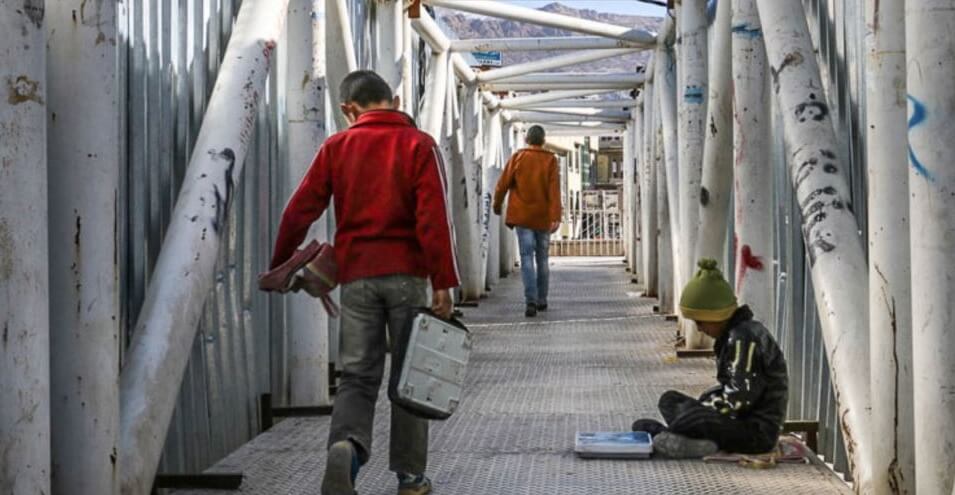
Officials in Iran have repeatedly stated that a significant portion of child laborers and street children, particularly in Tehran, are foreign nationals—or as is common in Iranian government terminology, “foreign nationals.” According to the Deputy Interior Minister, two-thirds of such children in Iran are foreign citizens.
But what does this statistic explain, assuming it is accurate? Does the nationality of a child who is deprived of childhood and basic human rights on the streets of our city matter?
If this child is not Iranian, is there a problem with them working on the unsafe streets of the city? Does being a foreign child laborer nullify the state’s duties and responsibilities towards them?
Hamed Farmand, a child rights activist, tells Radio Farda’s Jame’eh magazine: “The Convention on the Rights of the Child has a very important principle: that a child is first and foremost a child. This means that all circumstances a child experiences—being a migrant, being a refugee, being undocumented, or even possibly committing a crime and facing the law—all of these come after this principle. Every child, by virtue of being a child, is vulnerable and has the right to protection, to welfare, and to all legal rights stipulated in the Convention on the Rights of the Child and those that countries must have in their laws. Moreover, every citizen also has a serious responsibility towards these children.”
Mr. Farmand views the government’s emphasis on the foreign nationality of some child laborers in Iran as a product of the state’s efforts to “otherize” members of society: “Unfortunately, the government’s approach of othering has done its work, and parts of the government’s laws, terminology, and behaviors are based on and reinforce this approach. But fortunately, the new law has a more general and comprehensive perspective on children, and we can hope that this law will have an educational aspect as well.”
Meanwhile, Moein Khazaeli, a legal expert, referring to the new law on the protection of children and adolescent rights that was finally passed in June after a decade of going back and forth between parliament and the Guardian Council, discusses the legal duties of officials regarding child laborers and child laborers who are foreign nationals: “In the new law—the new law on the protection of children and adolescents—in Article 3, it is very clearly stated where the legislator defines a dangerous situation, declaring that in fact any harmful situation resulting from severe poverty, homelessness, migration, or statelessness is considered a dangerous situation. This law covers all individuals up to the age of 18. This means that a child or adolescent in such a dangerous situation, the responsible organizations—the judiciary and welfare—are obligated to immediately intervene to protect the legal rights of the child or adolescent.”
Mr. Khazaeli’s reference is to clause “r” of Article 3 of the new law protecting children and adolescents, which specifically addresses the situation of refugee, migrant, or stateless children living in Iran. Though this law has not yet been implemented, there are still ways to pursue the rights of child laborers, including foreign child laborers, by invoking this law.
Moein Khazaeli says: “The only way that can currently be hoped for is to pressure the government to implement this law as soon as possible. One way to pressure the government is through parliament representatives who can pressure the government to approve and send executive regulations for implementation as soon as possible. Another venue is the Administrative Justice Court, which can compel organizations to implement the law. In this law, there is also a provision that if government and state organizations refuse to implement this law, they bear responsibility. That is, the same welfare organization that speaks about child laborers not being Iranian and denies responsibility towards them, this can later be used against them in the Administrative Justice Court. Because they are preventing the implementation of a law that has been passed and must be implemented.”
I ask him whether officials are unaware of the new law that places new duties regarding child laborers, including foreign child laborers, on their shoulders?
He responds: “Given that this law has not yet been implemented and the minds of Islamic Republic officials are still before this law, and they imagine they can easily shirk their duties with this excuse, they use these excuses. However, according to the law, being in these conditions—that is, being a refugee, migrant, or stateless child—is fundamentally part of those requirements for immediate intervention. That is, not only begging or work by a stateless or migrant child, but even their being in this stateless condition if it leads to their harm or victimization requires immediate intervention. Now, the matter of work further doubles this obligation and compulsion.”
Meanwhile, what role can we citizens play? Hamed Farmand, a child rights activist, speaks about civic responsibility towards vulnerable children in society: “A child who is placed in the position of a child laborer due to economic and social inequalities is in a more vulnerable position and more deserves the protection of all citizens. On the other hand, a working child who is also a migrant is in a more difficult position and needs more support. Apart from laws, we as citizens with the privilege of being first-class citizens have this duty and responsibility towards children who do not have this privilege.”
You can contact responsible institutions if you see a foreign child laborer who needs social and legal support. Contact the welfare organization, the judiciary, parliament representatives, and even the Administrative Justice Court.
Government organizations that are recognized in the text of the law on the protection of children and adolescents as the principal authorities responsible for addressing the situation of child laborers are obligated to listen to your reports, follow up on the status of child laborers, and address the problems of these children, regardless of their nationality and citizenship.
Responsible institutions shirking this legal duty bears legal responsibility for them and can even be reviewed in venues such as the Administrative Justice Court.
Moein Khazaeli, a legal expert, emphasizing the new law, speaks about the role and civic responsibility of ours: “This law mentions that if a child is in a dangerous situation or imminent danger and a person is aware of these conditions and does not report them to the responsible organizations and institutions—the judiciary and the welfare organization—this failure to report itself is a crime.”
A child who, due to adverse family or national conditions, is forced to seek asylum and live without citizenship during childhood has the right to benefit from all social and legal protections like all children to improve their conditions.
It is not whether child laborers are Iranian or foreign that determines the duty and responsibility of citizens, civil society, and states towards them. What imposes this responsibility on all of us based on the Convention on the Rights of the Child is childhood, not citizenship.
Source: Radio Farda