Dollar Price in Iran Reaches 24,000 Tomans Mark
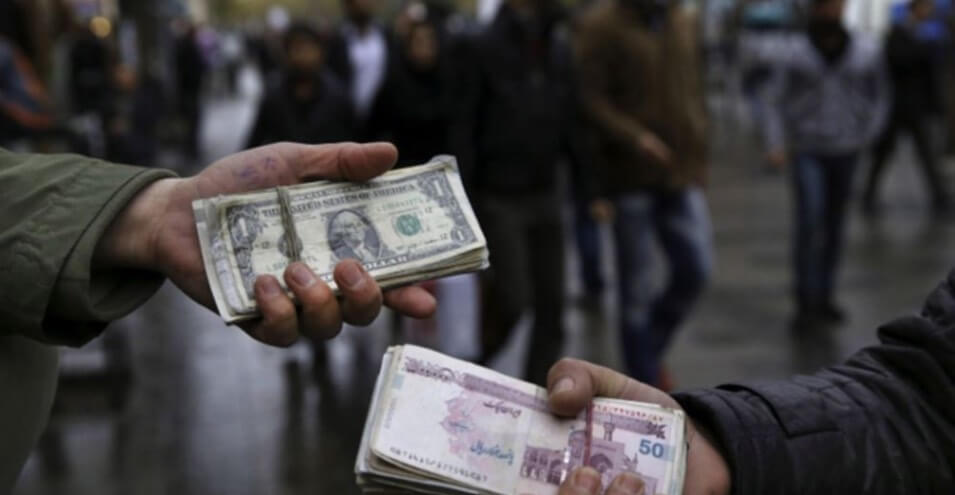
The dollar exchange rate on Wednesday, July 25th, surged to 23,970 tomans, marking a 270-toman increase compared to the previous day.
Over the past week, the dollar rate against the Iranian rial has grown more than 7 percent. The dollar price at the beginning of the current year was 16,000 tomans, and at the beginning of 2018 it was around 4,700 tomans.
Despite promises made by Abdolnasser Hemmati, governor of the Central Bank of Iran, to control the foreign exchange market in recent weeks, the depreciation of the Iranian national currency continues unabated.
The price of Bahar Azadi gold coin also reached 10 million and 200,000 tomans on Wednesday, with a 1 percent increase (equivalent to 100,000 tomans).
The gold coin price has increased 39 percent compared to a month ago and 111 percent compared to a year ago.
It appears that alongside the collapse in the country’s exports, the government’s inability to inject currency into the market and the unbridled growth of liquidity have accelerated the rise in exchange rates.
Mr. Hemmati recently announced that 280 billion dollars in currency has been injected into the market over the past 15 years. This means an annual injection of 18 billion dollars in currency to control the market.
However, this year for the first time, Iran’s foreign trade balance is expected to become severely negative. The International Monetary Fund says Iran’s total exports this year will be 46 billion dollars, which is 18 billion dollars less than the country’s imports.
Iran previously had billions of dollars in positive trade balance annually.
For example, according to International Monetary Fund statistics, in 2017 when the United States had not yet implemented sanctions against Iran, Iran’s total exports were close to 110 billion dollars and the country’s imports were 93 billion dollars. In 2018, Iran’s exports were also 7 billion dollars more than imports, but last year Iran’s foreign trade balance nearly broke even, and this year it will be severely in deficit.
Therefore, based on International Monetary Fund calculations, Iran’s foreign exchange reserves are likely to decrease by approximately 19 billion dollars in 2020 compared to last year, falling to 85 billion dollars, and will decrease again next year, plummeting to 69 billion dollars.
Additionally, according to Central Bank of Iran statistics, the volume of liquidity in March 2020 increased more than 31 percent compared to the corresponding period last year, reaching 2,472 trillion tomans. Liquidity has increased nearly two and a half times compared to 2015. Liquidity also grew more than seven percent in spring of this year.
Liquidity is the most important factor in inflation and the depreciation of Iranian currency.
Source: Radio Farda