Dust storms engulf 20 provinces; 355 people hospitalized in Sistan and Baluchestan
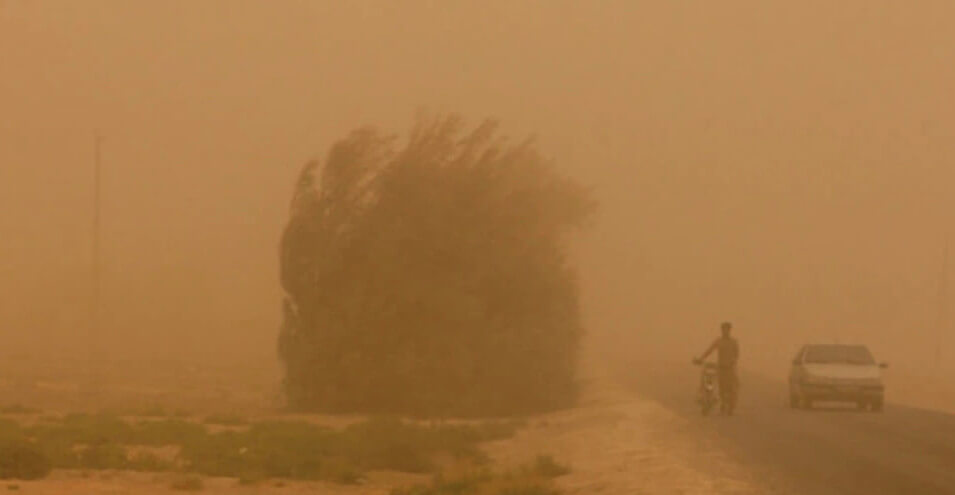
Following a renewed outbreak of dust and sand in numerous Iranian provinces, dozens of people in Sistan and Baluchestan province were taken to medical centers.
The Crisis Management Headquarters of Sistan and Baluchestan announced on Thursday, July 7, that over two days, 355 people in the Sistan region sought treatment at medical centers and hospitals due to the effects of dust and sand, with 48 of these individuals hospitalized.
The Meteorological Organization announced on Wednesday, July 6, strong winds accompanied by dust and sand over two days in 20 provinces across the country.
The organization also warned about dust conditions and winds in some provinces, including Sistan and Baluchestan, and an increase in wave heights on the coast and offshore between two to three meters from Thursday, July 7, to Saturday, July 9.
Coinciding with these warnings, offices in the Sistan region were closed on Wednesday, and working hours in five cities of this region were changed to 10:00 AM on Thursday.
Regarding the latest dust situation in Iran, Amirhossein Naqshine, a meteorological expert, told the ISNA news agency that the source of dust in the western and southwestern regions of the country is “foreign,” and in other areas is “domestic,” adding that the dust currently in the country will create “unhealthy” conditions in some areas and “very unhealthy” conditions in others.
According to Mr. Naqshine, the provinces of Sistan and Baluchestan, South Khorasan, Semnan, western Khuzestan, Ilam, eastern and southern Razavi Khorasan, northern and eastern Isfahan, and eastern Kerman are experiencing more severe dust conditions, and in these areas severe visibility reduction and potential damage to dust-sensitive facilities, agriculture, and possible flight cancellations are expected.
The dust storm system, whose main centers are in countries west of Iran, occasionally enters the country and usually covers a wide area of the nation. However, according to experts and officials, domestic dust sources in Iran are also expanding rapidly.
Including Abbas Ali Nobakht, the new head of Iran’s Natural Resources and Watershed Management Organization, announced on June 26 a 66 percent increase in desert provinces in the country, stating that the number of desert provinces in Iran has increased from 14 at the beginning of the 20-year outlook plan to approximately 21 provinces, and critical areas for dust also increased to 43 percent.
Climate change, multiple droughts, improper water and soil management, reduced vegetation cover, and unscientific exploitation of agricultural lands are the most important factors in soil erosion and the occurrence of dust storms and fine dust phenomena.
Despite all warnings, due to lack of measures by regional countries including Iran, over the years the time intervals between the formation of this phenomenon have shortened, and its scope has extended throughout all seasons.
Source: Radio Farda