Economic Activity Program Will Not Fall Behind Despite Warnings
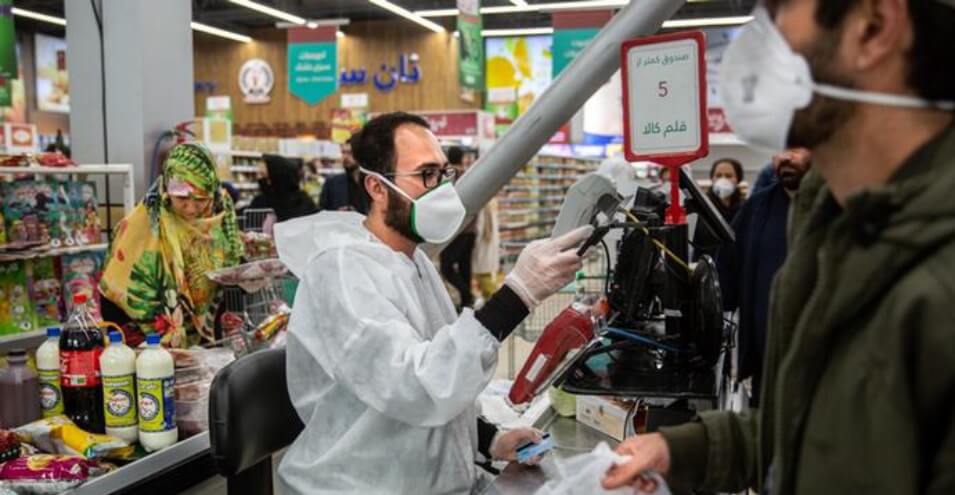
The Health Minister says the coronavirus crisis in Iran has not been contained and warns against falling into “illusion.” However, the Interior Minister spoke of declining disease in the parliament’s open session and defended the implementation of the economic activity launch program from April 12.
Abdolreza Rahmani Fazli, Iran’s Interior Minister, on Tuesday, April 11 (19th of Farvardin) in an open parliamentary session, spoke of the declining trend of coronavirus in the provinces of Gilan, Mazandaran, and Khorasan. The government’s plan to begin economic activities involves “implementing a new smart distancing plan for businesses,” which the Interior Minister divided into three categories with “low,” “medium,” and “high” risk levels. He stated that from April 12, low-risk businesses except in Tehran will begin operations. The government’s plan will begin in Tehran from April 19. Regarding holding gatherings and the closure of schools and universities, he said decisions will be made after this date, with closures continuing until the end of Farvardin.
Although some parliamentarians, before the parliament’s reopening, criticized the start of economic activities from this date and wanted a three-emergency plan to extend the closure of government offices and economic centers for another month, ultimately most of them sided with the government; arguing that “no one asks where we will get money from if we shut down the country for a month.” This question was raised by Ferdin Farmandfar, a representative from Markazi Province, and at the same time criticized the government saying, “today we held this session to think about the country’s situation, but the government has not brought a bill to solve a problem.”
Health Minister: Some Should Not Fall Into Illusion
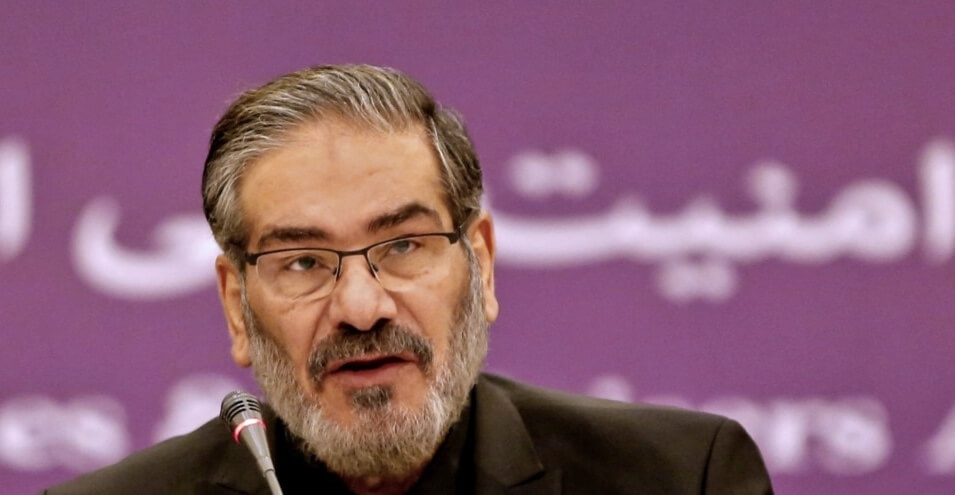
Another minister who was present in parliament on Tuesday was Saeed Namaki, the Health Minister. Unlike the Interior Minister who promised a declining trend, he said: “We have not yet reached the stage of containment and control. Some should not fall into illusion. We are in the stage of disease management.”
The Health Minister in his remarks emphasized the necessity of social distancing and also addressed the economic situation. He dealt with the plight of millions of people in Iran living below the poverty line and said: “We cannot abandon a sock seller who makes his living by selling socks; either we must support him or let him continue his business. For this reason, we cannot shut down industry and production.” He added that the reason for explaining “smart distancing” is so that “we can avoid economic collapse while controlling coronavirus.”
Regarding how practical the smart distancing plan is in government offices, metro and public transportation, private companies, and other areas of business, there is still no clear answer. The Health Minister warns that “managing coronavirus may take longer than we have pictured for ourselves,” and emphasizes: “No phenomenon is more serious for the economy than the prolongation of coronavirus. We must work to ensure that this matter is contained in the minimum time so we have also helped the economy.”
He also said that details related to the spread of coronavirus and COVID-19 should be discussed in a closed parliamentary session; a disease that according to him has existed in Iran since the beginning of last November and has claimed the lives of more than 3,700 Iranians.
Concerns Over Public Discontent
The Young Journalists Club reported that Alireza Zali, commander of the COVID-19 headquarters in Tehran, said: “One of the public’s concerns with new interventions is that the economic cycle is disrupted; this disruption creates public discontent.” According to him, although after the peak of the disease we reach the lowest point of illness, “after that we reach an upward slope and we must know that the longer this time takes, the more disruption the economic cycle experiences.” He recommended that one should “avoid hasty decisions, because this form of decision-making causes more harm.” According to him, if in the early days “interventions had been serious, the economic blow would have been less.”
Alireza Zali says Tehran is still in the upward slope phase of coronavirus and “any rushing will expose us to new crises.” He predicted that Tehran will face a larger number of infected people next week and referred to the presence of many citizens in the capital in the past three days, whose effects and consequences will become clear within the next nine days.
One of the senior officials of the Islamic Republic who reacted to Hassan Rouhani’s plan to start “low-risk” economic activities from April 12, just three days away, was Ebrahim Raisi, the Head of the Judiciary, who criticized saying, “wisdom requires that in the conflict between people’s health and opening businesses, preserving people’s lives should be prioritized.”
Health Minister’s Letter to Other Ministries
Although the Health Minister now supports the distancing plan with the President, he was one of those who had previously written to Rouhani: “Any future hasty decision-making by any government agency, non-governmental, cultural, religious organization, etc. that is not approved will quickly spread its flames to the country’s health system and subsequently the economy.” He had warned that “the smallest unbalanced and impractical move will bring irreparable harm.”
IRNA news agency on Tuesday, April 11, reported on his new letter to ministries and executive agencies in which “guidelines for the second phase of fighting COVID-19 were issued and emphasized for implementation.”
In this letter, he emphasized maintaining at least one meter of physical distance, saying that observing this distance is necessary and must continue as long as the disease is circulating in society. The letter stressed that “given the high transmissibility of the new coronavirus, even one person’s infection and failure to maintain appropriate distance in a population can explosively cause virus transmission among members of that population.”
Based on a statement released by the coronavirus task force on Tuesday, administrative centers from April 12 “while observing health principles, will instead of one-third, operate with two-thirds of their employees, and working hours will be from 7 a.m. to 2 p.m.”
Among officials at the Health Ministry and those in charge of fighting coronavirus, no one has yet made a statistical prediction about what situation they will face in one or two weeks after the implementation of the government’s plan begins.
Source: DW