Economy Minister: Dabash Tea Company Paid Back Foreign Currency
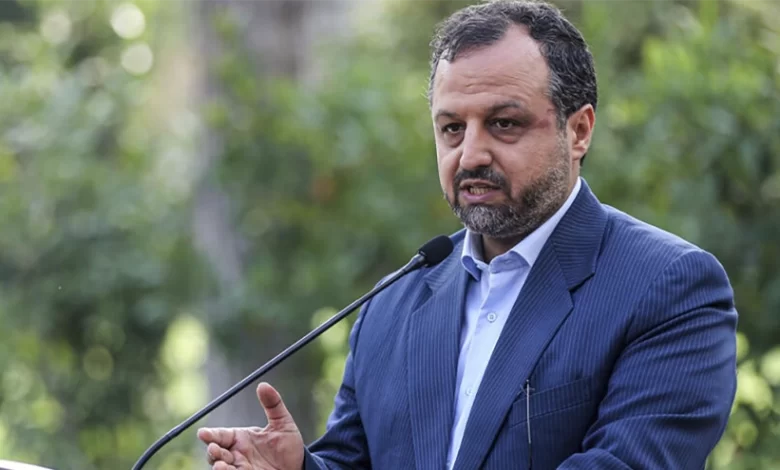
The Economy Minister regarding the Dabash Tea corruption case stated: Dabash Tea Company has paid back the foreign currency it received for imports, and people’s assets have not gone anywhere.
According to ISNA, Seyyed Ehsan Khandouzi, the Economy Minister, in a meeting attended by members of the Iran Front, stated: “Certainly corruption has occurred regarding Dabash Tea and no one is seeking to cover up this matter. As soon as the corruption in the relevant sector was discovered, a reaction and measures were taken. The case has been referred to the Judiciary, and God willing, the Judiciary will issue a firm and final ruling.
It is important for the people to know that no one is saying that Mr. So-and-so is a red line for us, so do not deal with him. People should know that the government and parliament this time do not intend to hide dirt under carpets, they do not intend to cover up corruption, and it is not intended that certain groups remain in a safe zone.”
Regarding the Dabash Tea imports and the loss of people’s money, he added: “Dabash Tea Company has paid the money it received for foreign currency for tea imports, and people’s assets have not gone anywhere. This company gave money to the Central Bank and received foreign currency, and it was supposed to import goods and equipment with that currency, of which it imported half and did not import the other half. It did not take money out of the country, and the buildings and machinery related to it are in the hands of the Judiciary. However, to prevent this level of violation that has occurred, from Farvardin of the current year, a system was created so that any company that wants to receive currency allocation must register in the system so that it becomes clear how much it received last year or two years ago.”
Khandouzi also, while referring to the current economic situation in Iran and people’s inability to purchase, stated: “If people are dissatisfied with the issue of decreased purchasing power and the shrinking of their table compared to five to ten years ago, this is due to the fact that the issue of production and economic growth has continuously been weak and weaker in recent years. In 1390 we had the best conditions for household income earning power, but after the first round of sanctions, this power began to decline. In the mid-1390s, due to increased oil exports, incomes grew, but in 1397 we again faced negative growth and high inflation, and this issue continued in subsequent years.”