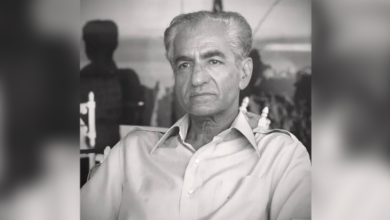
Execution of Death Sentence Carried Out Against Mohammad Amini-Dehghani, a Protester from December

The execution of Mohammad Amini-Dehghani demonstrates that the killing of protesters in the Islamic Republic has not ended with the conclusion of street demonstrations. Those who survived the bloody crackdown of December but remain in detention are being killed in prisons today through execution sentences; a sign that the government’s repression machinery continues to claim victims relentlessly.
The execution of Mohammad Amini-Dehghani, one of those detained during the nationwide protests of December 1404 [September 2025], has once again drawn attention to the escalating process of issuing and carrying out death sentences against protesters in Iran. The official media of the Judiciary of the Islamic Republic announced on Wednesday, 24 Tir 1405 (15 July 2026), that the execution of this citizen from Dehghanan in Isfahan Province has been carried out. According to the judiciary’s claim, he was sentenced to death for setting fire to an administrative building and destroying public property during the protests.
However, what has made this case a concerning example is the complete silence regarding the process of his detention and case proceedings. Prior to the announcement of the execution, no official or independent information was released about the time of his arrest, place of detention, court sessions, or the legal status of Mohammad Amini-Dehghani. This has heightened concerns about his deprivation of basic rights, including access to an independent lawyer and enjoyment of fair trial.
Human rights organization Hengaw, condemning this execution, called it an “organized judicial crime” and announced that the secret execution of death sentences against protesters is part of the Islamic Republic’s policy to silence the voices of dissidents. The organization also called on the international community to take more effective and urgent measures to stop the escalating process of executions in Iran.
The execution of Mohammad Amini-Dehghani comes at a time when human rights institutions have repeatedly warned over recent months about the increasing issuance of death sentences against those detained in the protests. Many of these cases are based on charges such as “enmity against God” (moharebeh) or “corruption on earth” (efsad fi-al-arz); charges that, according to human rights activists, are often reviewed based on reports from security agencies and without observing the standards of fair trial.
The case of Mohammad Amini-Dehghani is a reminder of the bitter reality that the Islamic Republic’s repression was not limited to the days when security forces fired on protesters in the streets. Many of those detained who survived that crackdown now face heavy sentences and executions in prisons. In this way, the cycle of repression has not stopped or ended; rather, it has been transferred from the streets to solitary cells, Revolutionary Courts, and gallows.