Office of Prince Reza Pahlavi Calls for Global Campaign to Save Benjamin Nakhaei
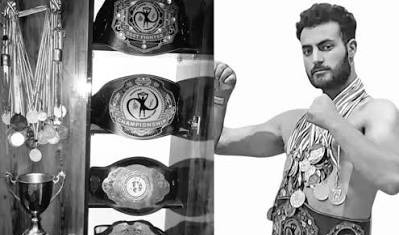
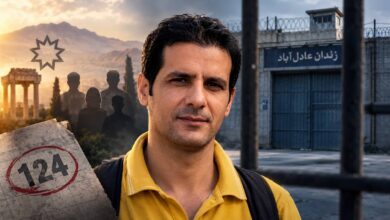
As executions of protesters in Iran escalate, the press office of Prince Reza Pahlavi released a video of Benjamin Nakhaei, a 26-year-old athlete sentenced to death, and called on the international community to take action to save his life by pressuring the Islamic Republic to halt the execution of the young athlete.
As concerns grow over increased executions of protesters and political prisoners in Iran, Prince Reza Pahlavi’s press office on Monday, August 3, corresponding to Mordad 12, released a video of Benjamin Nakhaei, a 26-year-old athlete specializing in kickboxing and Muay Thai, warning of the imminent danger of his execution.
In this video, Prince Reza Pahlavi’s press office emphasizes that Benjamin Nakhaei’s only wish was to “live in a free Iran”—a country where he could speak freely and support his family with dignity. Simultaneously, the office called upon public opinion, athletes, international organizations, and democratic governments to take action to prevent his execution.
In a message accompanying the video posted on the social media platform X, human rights advocates have been urged to share Benjamin Nakhaei’s story and contact sports federations, prominent athletes, human rights organizations, and democratic governments to create international pressure to save his life before it is too late.
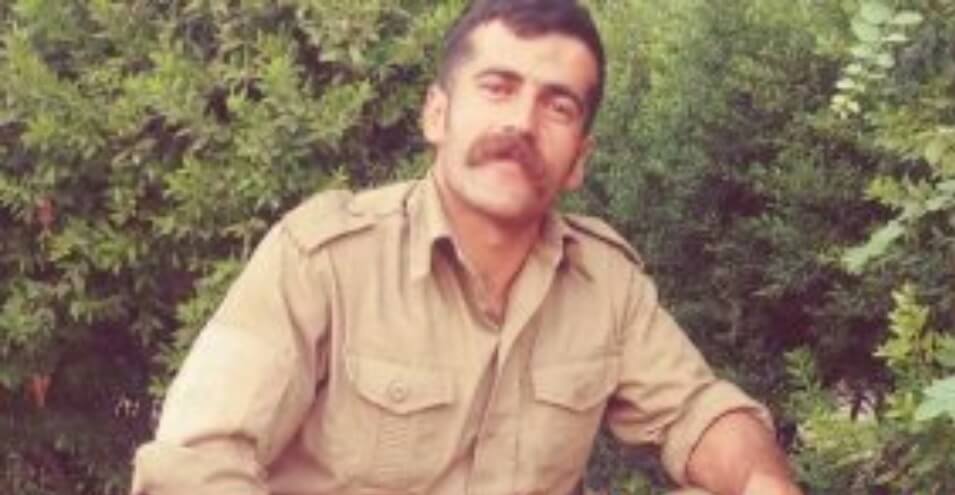
This appeal was released just two days after Prince Reza Pahlavi’s press office announced the execution of Arvin Kheirkhaah, a 20-year-old protester arrested during nationwide demonstrations, and warned of the danger of execution facing other detainees.
The statement said that Arvin Kheirkhaah, before his execution, told his family in his last contact: “Do not let me be forgotten. We rose up for the freedom of our homeland. Do not let the path we chose be silenced.”
Prince Reza Pahlavi’s press office also named “Javad Ajam,” “Morteza Zamani,” “Mehdi Ranjbar,” “Farshid Rahmani,” “Alireza Sagheri,” and “Pouya Sagheri,” announcing that these prisoners also face the risk of execution, and called on the international community to respond to their situation before it is too late.
According to released information, Arvin Kheirkhaah was detained during December protests and several months later was sentenced to death by a Revolutionary Court. Reports also indicate that at least two other protesters, Mehdi Ranjbar, 18, and Morteza Zamani, 27, also face death sentences.
The new warning regarding Benjamin Nakhaei comes at a time when human rights organizations have repeatedly stated that the Islamic Republic has increased the use of capital punishment against protesters and political prisoners in recent months. According to these organizations, many of these cases have involved security charges, forced confessions, restricted access to lawyers, and trials that do not meet fair trial standards.
In recent months, UN special rapporteurs and international human rights bodies have repeatedly warned against the Islamic Republic’s use of capital punishment to instill fear and silence protests, and have called on Tehran to halt executions, particularly in cases related to demonstrations.
From the perspective of human rights activists, the request of Prince Reza Pahlavi’s press office for the formation of a global campaign is an effort to increase the political cost of implementing these verdicts and to draw international public attention to the situation of prisoners facing execution—prisoners who, according to human rights defenders, face the danger of irreversible sentences being carried out more than ever each day.